Comprehensive Guide to Clogged Toilets on the Gold Coast
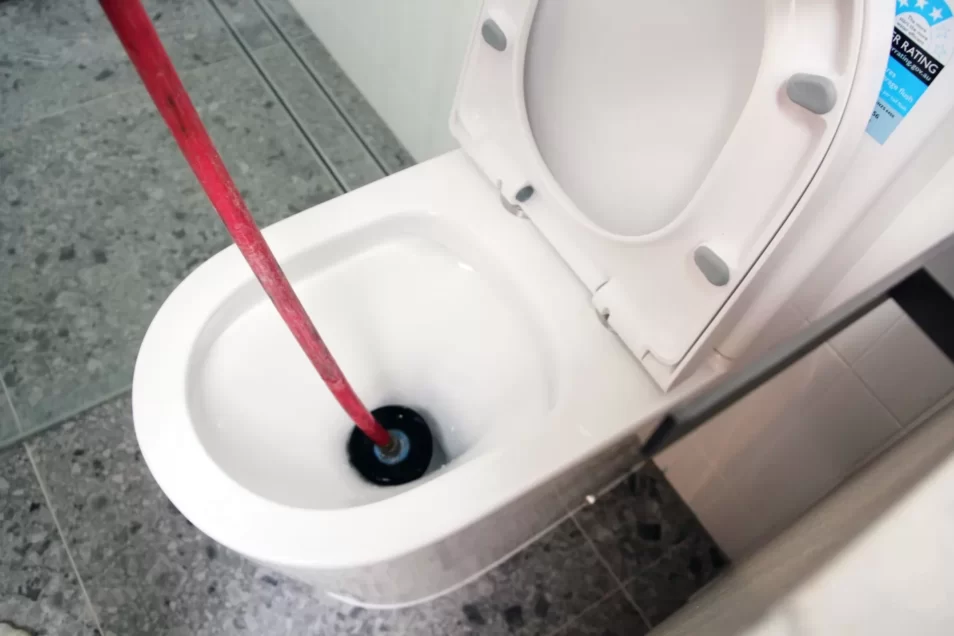
Most Gold Coast residents will deal with a clogged toilet at some point — and most will wonder whether it’s something they can fix themselves or whether they need a plumber. The answer depends on the cause, and causes vary more than people expect: from something flushed that shouldn’t have been, to tree roots working their way into sewer lines beneath older Gold Coast properties.
This guide walks through the warning signs of a blocked toilet, the most common causes, DIY solutions worth trying, prevention strategies, and when professional help is the right call. We specialise in unclogging blocked toilets on the Gold Coast, with no call out fee, and we’re available around the clock.
Warning Signs Your Toilet Is Blocked
Knowing the signs of a blocked toilet early makes a real difference to how straightforward the fix ends up being. A partial blockage caught at the slow-draining stage is usually something you can tackle yourself. A full blockage that’s been ignored long enough to affect your sewer line is a different job entirely. Here’s what to look for on the Gold Coast, starting with the toilet itself.
Signs the Blockage Is in the Toilet Itself
When only one toilet in the house is affected, the blockage is most likely localised — sitting in the toilet pan, the U-bend, or the drain connection just below the bowl. These are the most common signs:
- The toilet is draining slowly. Water clears from the bowl after flushing, but noticeably slower than normal. This is often the first sign of a developing blockage — toilet paper or a partial obstruction is building up in the trap or drain. A toilet not draining properly on the Gold Coast is worth addressing early before it progresses to a full blockage.
- Water rises higher than normal during a flush. The bowl fills up and sits high before slowly settling back down. This indicates something is restricting flow downstream — waste and water have nowhere to go quickly enough.
- The toilet won’t flush, or flushes weakly. Either the cistern isn’t generating enough pressure, or there’s an obstruction preventing waste from moving through. A toilet that won’t flush on the Gold Coast and has been slow for days beforehand is usually a blockage rather than a mechanical fault.
- Gurgling sounds from the bowl. A gurgling toilet on the Gold Coast is one of the more telling signs. The noise happens when air is being displaced by water trying to push past an obstruction in the drain. It often accompanies slow drainage rather than appearing on its own.
- Foul odour from the bowl or drain. A persistent smell that doesn’t clear after flushing can indicate decomposing waste trapped in the pipe behind a partial blockage. It’s a sign the blockage has been building for a while.
If you’re seeing one or more of these signs in a single toilet, it’s worth attempting DIY methods before calling a plumber — the causes and solutions sections below cover both. If the same toilet keeps blocking after you’ve cleared it, or if you’re also noticing problems elsewhere in the house, read the next section.
Signs the Blockage Is in the Sewer Line
When the problem isn’t limited to one toilet, the blockage is likely further down — in the main sewer line connecting your home to the street. This changes things significantly. A sewer line blockage is not a DIY job, and the signs are usually hard to miss once they appear.
- Multiple drains are backing up at the same time. If your toilet is slow or blocked and your shower, bath, or laundry sink is also draining poorly or backing up, the obstruction is almost certainly in the shared sewer line rather than in any individual fixture. Running a tap or doing a load of laundry and watching the toilet bubble or rise is a reliable test.
- Gurgling from floor wastes when you flush the toilet. When flushing causes gurgling from a floor drain or shower waste in another part of the house, air is being pushed back through the system by a downstream blockage. This is a sewer line symptom, not a toilet pan symptom.
- Foul sewer smell throughout the house. A localised odour near one toilet usually points to a pan-level blockage. A sewage smell that spreads through multiple rooms or appears at different drains suggests decomposing waste is trapped in the main line and gases are working their way back up through the system.
- A wet patch or unusually lush section of lawn. If part of your yard is greener than the rest, or the ground feels soft and saturated without recent rain, it can indicate a cracked sewer pipe leaking beneath the surface. Tree roots are a common cause of this on the Gold Coast, particularly in established suburbs with older clay pipe infrastructure.
- The overflow relief gully is activating. Every Queensland home has an overflow relief gully — a capped drain point, usually in the yard, designed to release sewage externally before it can back up inside the house. If you see water or sewage escaping from the ORG, the main sewer line is blocked and the system is under pressure. This is an urgent situation.
Any one of these signs points to a problem that needs a licensed plumber with the right equipment to diagnose and fix. The when to call a blocked toilet plumber section below covers what to expect from that process and what our team uses to clear sewer line blockages on the Gold Coast.
Common Causes of a Clogged Toilet on the Gold Coast
Understanding why toilets block is the first step toward preventing them. The causes range from what goes down the drain day to day, through to structural issues beneath the ground that most homeowners never see coming. On the Gold Coast specifically, a combination of subtropical tree growth, aging pipe infrastructure in established suburbs, and hard water minerals gives blocked toilet drain problems here some distinct local characteristics. Here are the most common causes — and why each one matters.
What Not to Flush Down Your Toilet
The single most common cause of a clogged toilet across Australia is also the most preventable: flushing items that don’t belong in the toilet. Urban Utilities reports around 3,500 blockages per year in South East Queensland’s sewer network, with approximately 120 tonnes of wet wipes pulled from pipes annually at a cost of over $1 million — and that’s just one water authority’s network.
- Toilet paper buildup. Toilet paper is designed to break down in water, but too much flushed at once — or paper that’s slow to dissolve — can accumulate in the U-bend or toilet trap and create a blockage. The fix is usually straightforward, but repeated overloading of the trap is a common cause of toilets that seem to block for no obvious reason.
- Wet wipes and “flushable” wipes. This is the biggest contributor to blocked toilet drain problems across Australia. Despite the labelling, most wet wipes — including products marketed as flushable — do not break down the way toilet paper does. Under the AS/NZS 5328:2022 standard, a product must pass a rigorous disintegration test to be genuinely flushable. Most wipes sold in Australian supermarkets do not meet that standard. They travel far enough down the pipe to seem harmless, then catch on joints, bends, and existing buildup until the line is blocked.
- Sanitary products and baby wipes. Pads, tampons, nappies, and cotton products absorb water and expand inside pipes. They don’t break down, and they don’t move through the system — they lodge and stay. Baby wipes behave the same way as wet wipes and are one of the more frequent causes of toilet blockage causes we see on the Gold Coast, particularly in households with young children.
- Foreign objects. Children’s toys, toothbrushes, soap wrappers, and small bathroom items accidentally dropped or deliberately flushed are a more common cause of blocked drains than most people expect. A foreign object lodged in the toilet trap or drain connection won’t respond to a plunger — it needs to be retrieved, usually with an auger or by lifting the toilet.
The rule is simple: only flush the three Ps — pee, poo, and paper. Everything else goes in the bin.
Tree Roots in Your Sewer Line
Tree root intrusion is one of the most destructive — and most common — causes of a blocked toilet drain on the Gold Coast, and it’s a problem that’s more acute here than in cooler southern cities. Queensland’s warm climate means tree roots grow year-round without the dormancy periods that slow root systems down in Melbourne or Sydney. A root that finds a hairline fracture or a deteriorating joint in a sewer pipe will exploit it, enter, and branch rapidly inside the pipe — catching toilet paper, wet wipes, and debris until the line is fully blocked.
The species most commonly implicated in Gold Coast sewer blockages are ficus (fig varieties) and poinciana — both widespread in established streets and gardens across the region. Suburbs like Benowa, Ashmore, and Bundall are particularly vulnerable because many homes in these areas still have aging clay pipe infrastructure that is more susceptible to cracking and joint separation than modern PVC. A blocked toilet drain in these suburbs that keeps coming back after clearing is frequently a tree root intrusion problem rather than a surface-level blockage.
Warning signs include gurgling drains, slow drainage that worsens gradually over weeks, and repeated blockages that clear temporarily then return. Root intrusion requires professional assessment — a CCTV drain inspection is the only reliable way to confirm it and determine the extent of damage before deciding on a repair method.
Hard Water and Mineral Buildup in Your Pipes
The Gold Coast water supply contains calcium and magnesium, and over time those minerals don’t just pass through your plumbing system — they deposit on the interior walls of pipes as pipe scale. These hardened mineral deposits gradually narrow the pipe’s internal diameter and roughen its surface, meaning debris, toilet paper, and waste catch and accumulate where water once flowed freely.
Mineral buildup is a slow and largely invisible cause of recurrent blockages. There are no dramatic warning signs — the toilet just becomes increasingly prone to partial blockages over time, with no single obvious cause. It’s one of the harder toilet blockage causes to diagnose without a CCTV drain inspection, which is why it’s often only identified when a plumber is investigating a seemingly unexplained pattern of repeated drain problems.
Aging Pipes and Weak Flush Mechanisms
Two separate causes that often appear together in older Gold Coast properties — and both lead to the same outcome: repeated partial blockages that gradually escalate.
- Aging or cracked clay pipes. Many Gold Coast homes built before the 1990s were plumbed with clay sewer pipes. Clay is brittle — it cracks under soil movement, root pressure, and general age. A cracked or partially collapsed pipe restricts flow, traps waste, and creates a point where debris accumulates with every flush. The toilet may clear initially after plunging, but the blockage returns because the underlying pipe is compromised.
- Low-flow toilets and weak cisterns. Older cisterns and some low-flow water-saving models don’t generate sufficient flush pressure to reliably move waste through the drain. If the toilet was installed before 2000, or if the cistern has never been serviced, a weak flush could be contributing to a pattern of partial blockages — waste isn’t being pushed far enough down the line with each flush, and buildup follows.
Both issues are worth raising with a plumber during an inspection rather than continuing to clear blockages that will keep returning. For a more in-depth look at the causes, read our guide, Common Causes of Blocked Toilets — And How to Avoid Them.
How to Prevent Toilet Blockages
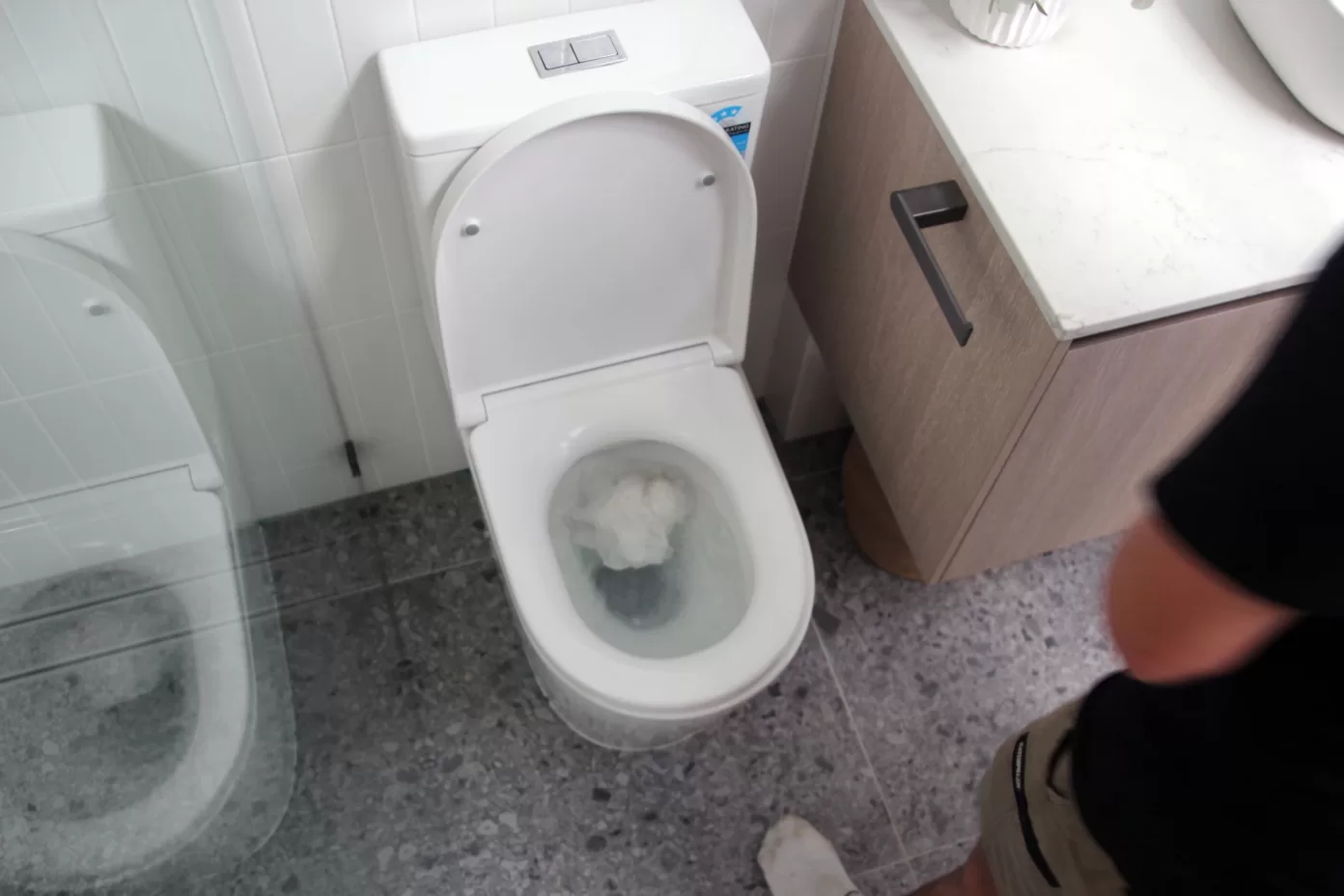
The most effective way to deal with a clogged toilet on the Gold Coast is to avoid one in the first place. Most toilet blockage causes are preventable with a few consistent habits and some straightforward maintenance — and for Gold Coast homeowners who’ve already dealt with a blocked toilet drain, prevention is far cheaper than a repeat call-out. Here’s what actually makes a difference.
Only Flush the Three Ps
The simplest rule for preventing toilet blockages is also the most reliable: only flush pee, poo, and paper. Everything else — regardless of how it’s labelled — goes in the bin.
That means wet wipes, even those marketed as flushable. It means sanitary products, cotton balls, dental floss, nappies, and paper towels. None of these break down in water the way toilet paper does, and all of them are proven contributors to blocked toilet drain problems across Queensland’s sewer network.
This is worth paying particular attention to if you manage or own a holiday rental property on the Gold Coast. Rotating guests are one of the most consistent sources of toilet blockages — unfamiliar bathrooms, no established habits, and a bin that isn’t prominently placed all increase the likelihood of the wrong things being flushed. A small sign near the toilet and a clearly visible bin will prevent the majority of guest-related blockages before they happen.
If there are young children in the home, keep the toilet lid closed when the bathroom is unsupervised. Toys, toothbrushes, and small household items flushed by curious kids are a more common cause of a blocked toilet drain than most parents expect — and a foreign object lodged in the toilet trap is not something a plunger will fix.
For a deeper look at what causes toilet blockages and how to avoid them, see our guide on Common Reasons Toilets Get Clogged and How to Avoid Them.
Don’t Wait for a Full Blockage
The best time to deal with a slow-draining toilet on the Gold Coast is before it stops draining entirely. A partial blockage that’s caught early — slow drainage, occasional gurgling, a toilet that takes longer than usual to clear — can often be resolved with DIY methods. The same blockage left for another few weeks frequently becomes a full obstruction, and if it’s being caused by mineral buildup or developing root intrusion, the underlying problem only gets worse in the meantime.
If your toilet keeps blocking on the Gold Coast despite clearing it each time, that pattern is telling you something. Repeated blockages that respond temporarily to plunging but return within days or weeks almost always have an underlying cause that needs professional assessment rather than another DIY attempt.
A few practical measures that make a genuine difference long-term:
- Upgrade an aging cistern. If your toilet cistern is older than 15 years, it may not be generating sufficient flush pressure to reliably clear waste through the drain. Modern dual-flush models are more water efficient and significantly less prone to the weak-flush partial blockages common in older Gold Coast properties. It’s a straightforward upgrade that prevents a recurring problem.
- Schedule an annual plumbing inspection. A yearly inspection through a plumbing maintenance service catches developing issues — mineral buildup narrowing your pipes, early-stage root intrusion, or deteriorating pipe joints — before they cause a blockage or require emergency work. This is particularly worthwhile for Gold Coast homes built before 1990, where aging clay pipe infrastructure and established tree cover make ongoing monitoring genuinely important.
- Consider root barriers or periodic CCTV inspection if you have large trees. Ficus and poinciana are common across Gold Coast gardens and streets, and both species have aggressive root systems. If either is growing within 10 to 15 metres of your sewer line, root barriers installed during landscaping work can deflect root growth away from the pipe. If the trees are already established, a CCTV drain inspection every three to five years gives early warning of developing intrusion — when it can be cleared mechanically before it causes structural damage or a full sewer line blockage.
How to Unclog a Toilet — DIY Methods to Try
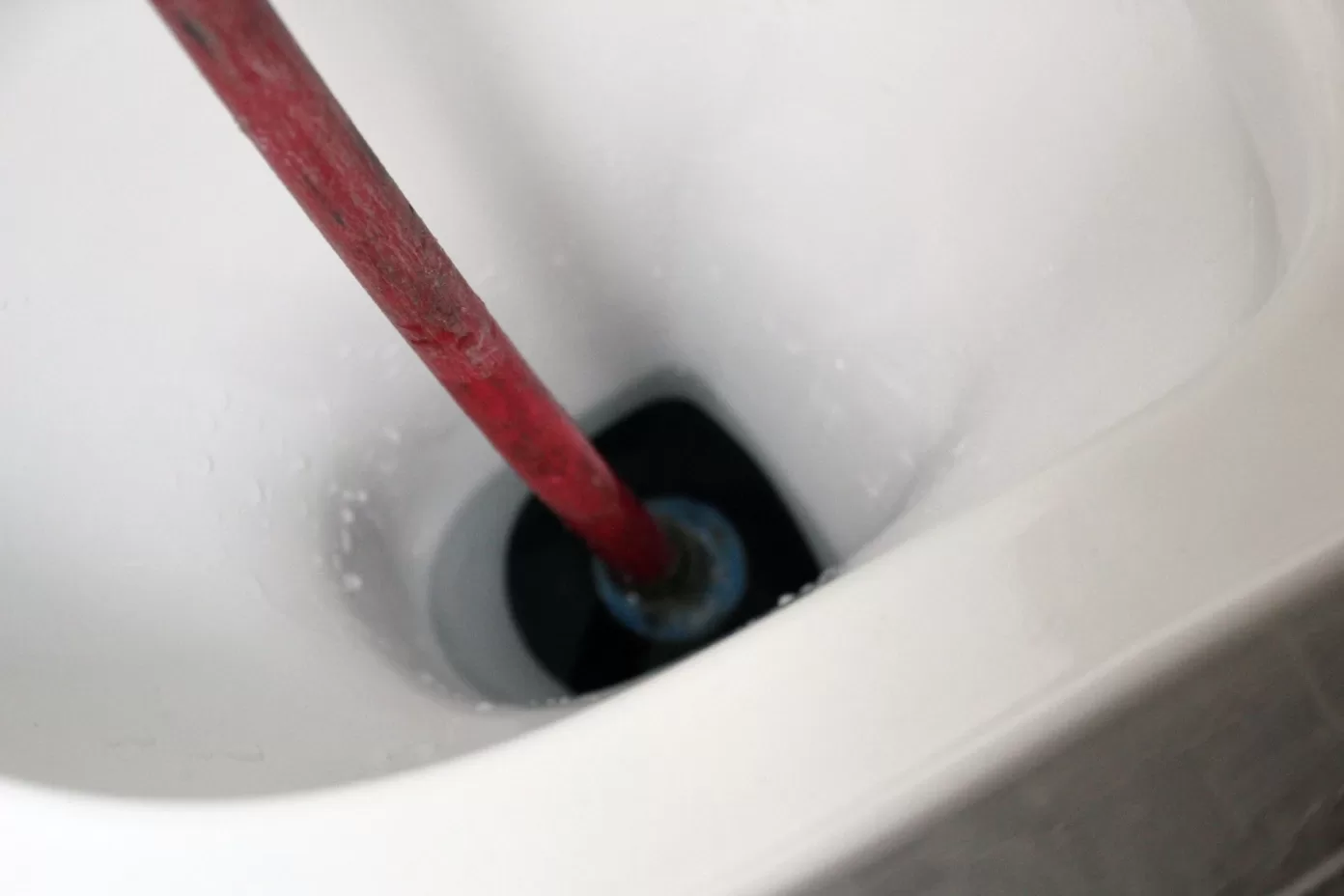
For a minor or partial blockage, there are several DIY blocked toilet solutions worth trying before calling a plumber. The methods below cover how to unblock a toilet using tools and products most Gold Coast households already have — including how to unclog a toilet without a plunger if one isn’t available. For full step-by-step instructions on each method, see our dedicated guide to DIY solutions for a blocked toilet.
Before You Start
Two things to do before attempting any DIY method:
- Stop flushing. If the first flush didn’t clear the blockage, don’t flush again. Each additional flush raises the water level and increases the risk of overflow. A manageable blocked toilet drain becomes a flooded bathroom quickly if flushing continues.
- Turn off the water supply. The stop valve is the small tap located behind the toilet near the floor — turn it clockwise to cut the water supply to the cistern. This prevents the bowl from refilling and overflowing while you work. Put on rubber gloves before you start.
Methods to Try — Least to Most Involved
Each method below is listed in order of effort and equipment required — start with the simplest and work down only if needed. Most localised blockages clear at the first or second step. If you reach the auger and the toilet still isn’t draining, that’s usually the point to stop and call a plumber rather than risk pushing the obstruction further into the line.
- Dish soap and hot water. This is the most accessible way to unclog a toilet without a plunger — most households have both on hand. Pour half a cup of dish soap into the bowl and follow with a bucket of hot water poured from waist height. The soap lubricates the blockage and the heat helps break it down. Important: use hot water, not boiling — boiling water can crack the porcelain toilet bowl. Wait ten minutes and check whether the water level drops before attempting a flush.
- Flange plunger. The most effective DIY tool for how to unblock a toilet is a flange plunger — the type with a rubber extension at the base that seats into the toilet outlet and creates a proper seal. A flat cup plunger designed for sinks won’t generate the same pressure. Work with firm, steady push-pull strokes rather than sharp jabs, and check after ten to fifteen strokes whether the water begins to drain.
- Baking soda and vinegar. A reliable method for how to unclog a toilet without a plunger when the blockage is organic — toilet paper buildup or waste accumulation. Pour one cup of baking soda into the bowl followed by two cups of white vinegar. Let the mixture fizz for 30 minutes, then follow with hot water. Do not use this method immediately after chemical drain cleaners — mixing products can release harmful fumes.
- Toilet auger or drain snake. When dish soap, a plunger, and baking soda haven’t cleared the blockage, a toilet auger — also called a closet auger or drain snake — reaches further into the drain to break up or retrieve the obstruction. Feed the flexible end into the toilet outlet and rotate the handle to work through the blockage. Bunnings stocks the Kinetic 4.5m auger, which is adequate for most household drain depths.
- Enzyme cleaner. For organic blockages that are partial rather than complete, an enzyme-based drain cleaner breaks down waste using natural bacteria rather than harsh chemicals. It requires several hours to work — best applied overnight. Enzyme cleaners are safe for PVC pipes and septic systems, unlike caustic chemical drain cleaners which can damage pipe seals and corrode older plumbing.
- Wet/dry vacuum. A less common but effective method for stubborn blockages — remove as much water from the bowl as possible first, then use the vacuum to attempt to suction out the obstruction directly. Ensure a reasonable seal between the hose and the toilet outlet for best results.
If none of these methods clear the blockage, or if the water level keeps rising despite not flushing, stop and call a plumber. Forcing a blockage deeper into the drain can turn a straightforward job into a sewer line repair.
The methods above cover the most common DIY approaches, but choosing between them isn’t always straightforward. Our guide to chemical vs. manual solutions for blocked toilets breaks down the pros and cons of each so you can make the right call for your situation
When Your Toilet Keeps Blocking — Time to Call a Plumber
DIY blocked toilet solutions work well for minor, localised blockages. But when a toilet keeps blocking on the Gold Coast despite being cleared, or when the signs point to the sewer line rather than the pan, continuing to plunge is at best a temporary fix and at worst making the underlying problem worse. Knowing when to call a blocked toilet plumber on the Gold Coast saves time, prevents property damage, and avoids turning a manageable repair into an emergency.
When DIY Isn’t Enough
For a full breakdown of every trigger that warrants professional attention, see our guide on when to call a blocked toilet plumber. In summary, stop attempting DIY and call a licensed plumber if any of the following apply:
- DIY methods haven’t worked after one or two genuine attempts. If dish soap, a flange plunger, baking soda and vinegar, and an auger have all failed to clear the blockage, the obstruction is either too far down the drain, too solid, or isn’t a simple organic blockage — it may be a foreign object, root intrusion, or a structural pipe issue.
- The blockage keeps coming back. A blocked toilet drain on the Gold Coast that clears with plunging but returns within days or weeks is not resolving itself — it’s a symptom of an underlying cause. Recurrent blockages are one of the clearest indicators that professional assessment is needed.
- Multiple drains are affected at once. As covered in the warning signs section, when the toilet, shower, and sink are all slow or backing up simultaneously, the blocked sewer line is the problem rather than the toilet itself. This is not a DIY job.
- There is sewage smell, sewage overflow, or the ORG is activating. Any of these indicates the sewer line is under pressure. Sewage overflow is a health hazard — contact a plumber immediately rather than attempting further DIY.
- The water level keeps rising despite not flushing. If the bowl continues to fill or won’t drop after stopping all flushing and turning off the stop valve, something is actively backing up through the system. This needs urgent attention.
What Our Team Uses to Unblock Toilets on the Gold Coast
When our Gold Coast plumbers attend blocked toilet sewer line jobs on the Gold Coast, the approach depends on what the inspection reveals. These are the professional methods we use for blockages that are beyond DIY fixes:
- CCTV drain camera inspection. For recurrent blockages or any situation where the cause isn’t obvious, a waterproof camera is fed through the drain to pinpoint the exact location and nature of the obstruction — root intrusion, pipe scale buildup, a foreign object, or structural damage. Our CCTV drain inspections remove the guesswork and ensure the right repair method is chosen first time.
- High-pressure water jetting. Hydro jetting uses highly pressurised water delivered through a flexible hose to cut through tree roots, break up compacted scale, and flush debris from the pipe interior. It clears the blockage and cleans the pipe walls simultaneously — restoring flow to near-original capacity rather than simply punching a hole through the obstruction.
Our blocked sewer drain services cover all of the above. We operate 24 hours a day, seven days a week across the Gold Coast — with a $0 call out fee.
Choosing a Blocked Toilet Plumber on the Gold Coast
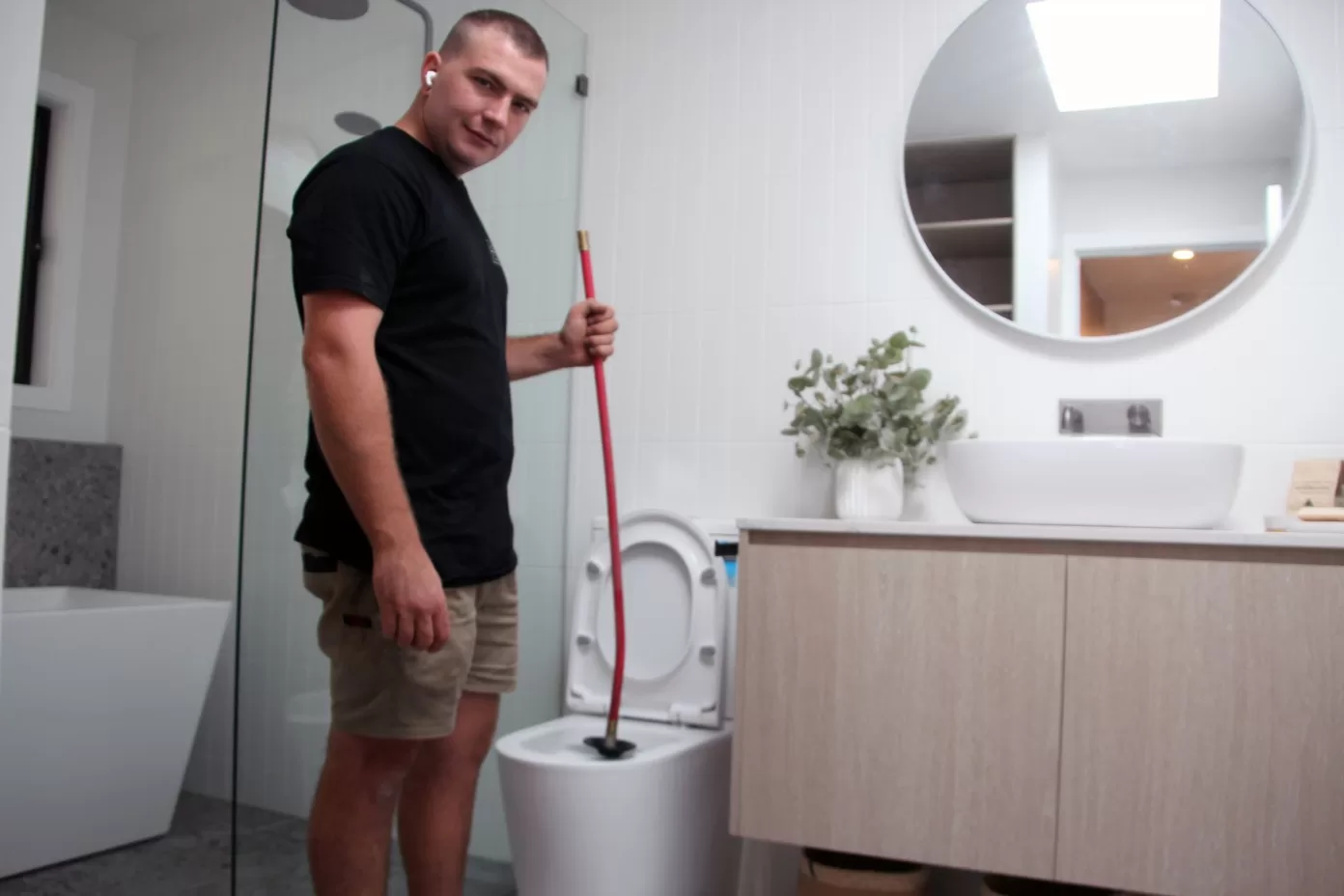
Not every plumber who advertises blocked toilet services on the Gold Coast is equally qualified or equally transparent about what a job will cost. When you’re dealing with a clogged toilet on the Gold Coast — particularly one that involves the sewer line — the plumber you choose matters.
A few things worth checking before booking anyone:
- QBCC licence. In Queensland, all licensed plumbers must hold a current licence with the Queensland Building and Construction Commission. You can verify any plumber’s licence directly through the QBCC licence register before work begins. A qualified plumber will have no hesitation providing their licence number.
- Transparent pricing and no hidden call out fees. Some operators charge a call out fee before any work is assessed or quoted. Our team charges $0 call out fee — the cost of attending and diagnosing the problem is not passed on to you before you’ve agreed to any work.
- Availability. A blocked toilet sewer line problem doesn’t wait for business hours. Our plumbers are available 24 hours a day, seven days a week across the Gold Coast — the same response applies at 11pm on a Sunday as it does on a Tuesday morning.
- Established on the Gold Coast. Local knowledge matters for blocked drain work — familiarity with the tree species, pipe infrastructure, and water quality characteristics specific to Gold Coast suburbs informs how a job is diagnosed and resolved.
If you’re weighing up who to call, our guide to what to know before hiring a toilet plumber covers what to look for and what to ask.
Tree root intrusion, mineral buildup, aging pipes, foreign objects — most clogged toilet problems on the Gold Coast have a straightforward fix when they’re caught early and diagnosed correctly. The difference between a $200 clearance and a sewer line repair is usually how long the problem was left to develop.
For professional blocked toilet services on the Gold Coast, contact Local Plumbing & Gas Co. — no call out fee, available 24/7.