Most Energy-Efficient Hot Water Systems for Gold Coast Homes
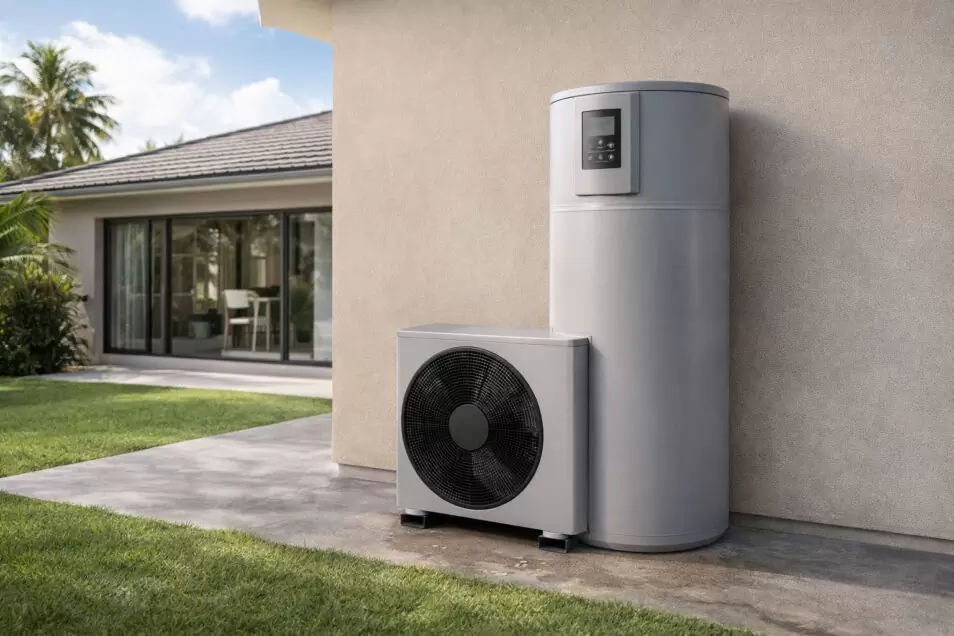
Choosing the most energy-efficient hot water system for your home is one of the more impactful decisions a Gold Coast homeowner can make — water heating accounts for around 25% of the average Australian household’s energy bills, and the system sitting quietly outside your home is either working economically or costing you more than it should every single quarter. The right answer isn’t the same for every home. It depends on household size, existing infrastructure, and whether there’s rooftop solar PV already generating power on the roof.
This guide ranks every system type by efficiency and running cost, explains how the Gold Coast’s subtropical climate affects performance, covers what government incentives are currently available in Queensland, and helps you match the most economical option to your specific circumstances.
At Local Plumbing & Gas Co., we install all hot water system types across the Gold Coast. Our job isn’t to sell a particular system — it’s to help homeowners understand which upgrade will deliver the best long-term value, not just the lowest number on an upfront quote.
Which Hot Water System Is Most Energy Efficient? (Quick Answer)
Heat pump hot water systems are the most energy-efficient option currently available for Gold Coast homes, using up to 75% less electricity than a conventional electric storage system. Solar hot water is a close second — particularly strong for homes that don’t already have rooftop solar PV generating electricity.
Here’s how every system type ranks from most to least efficient:
- Heat pump — most energy efficient overall; extracts heat from ambient air rather than generating it; up to 75% less electricity than standard electric storage; performs at or near peak efficiency year-round in Gold Coast’s warm climate
- Solar hot water — excellent efficiency; uses the sun’s energy to heat water directly; requires a gas or electric booster for overcast periods; Gold Coast’s year-round sun exposure makes this a strong long-term performer
- Instantaneous gas — more efficient than gas storage; heats water on demand only with no standing heat loss; lower running costs than electric storage
- Gas storage — moderate efficiency; lower running costs than electric storage but less economical than heat pump or solar; standing heat loss from the tank is the key inefficiency
- Electric storage — least efficient on a standard tariff; cheapest to buy and install, but the most expensive to run; viable long-term only when paired with rooftop solar PV or an off-peak tariff
Read on for a detailed breakdown of how each system performs in Gold Coast conditions — or visit our hot water installation service page, or contact us to get started.
Why Energy Efficiency Matters More on the Gold Coast
On the Gold Coast, where Queensland electricity prices sit among the higher rates in Australia, the cost of running an inefficient hot water system adds up faster than most homeowners realise. What makes the Gold Coast different from the rest of Australia isn’t just the electricity cost — it’s that the subtropical climate creates genuinely favourable conditions for the two most efficient system types. Heat pumps and solar hot water systems both perform better here than in cooler southern states, which means the efficiency advantage is amplified for local homeowners.
Electricity costs in Queensland
For a home running a standard electric storage hot water system on a general tariff, water heating energy consumption alone can cost $600–$900+ per year, depending on household size and usage patterns. That figure is for hot water only — before a single light is switched on. Queensland’s electricity rates make this the most expensive way to heat water, and for the majority of Gold Coast homes currently running an ageing electric storage unit, it’s the reality. The contrast with a heat pump or solar system’s running costs is not marginal — it’s significant enough to affect household energy bills in a meaningful way every quarter.
Climate performance advantage
Heat pump systems extract heat from ambient air to heat water — the warmer the air, the more efficiently they operate. On the Gold Coast, temperatures rarely drop below 15°C, even in the middle of winter, which means heat pumps run at or near peak efficiency year-round. In cooler southern climates, heat pump performance drops during winter months, reducing the efficiency advantage. On the Gold Coast, that drop simply doesn’t happen — the subtropical climate works in the system’s favour year-round. Solar hot water systems also benefit from this advantage. More consistent sun exposure means the gas or electric booster activates less frequently, which is where the running cost savings are most pronounced.
The off-peak tariff consideration
For Gold Coast homeowners who aren’t in a position to replace their current electric storage system, there’s a low-cost interim option worth knowing about. Energex offers a controlled load tariff — sometimes called an off-peak tariff — that allows eligible electric hot water systems to heat water during lower-demand overnight periods at a cheaper electricity rate. It won’t transform running costs the way a heat pump or solar upgrade would, but it’s a meaningful reduction for no installation outlay. If an existing electric storage system isn’t already connected to a controlled load tariff, it’s worth checking eligibility with Energex directly.
The Most Energy-Efficient Hot Water Systems: A Closer Look
The efficiency gap between hot water system types is larger than most homeowners realise — and whatever is installed on the day stays in place for the next 10–15 years, affecting energy bills every single quarter. Here’s how each system type performs, from most to least economical to run.
Heat Pump Hot Water Systems
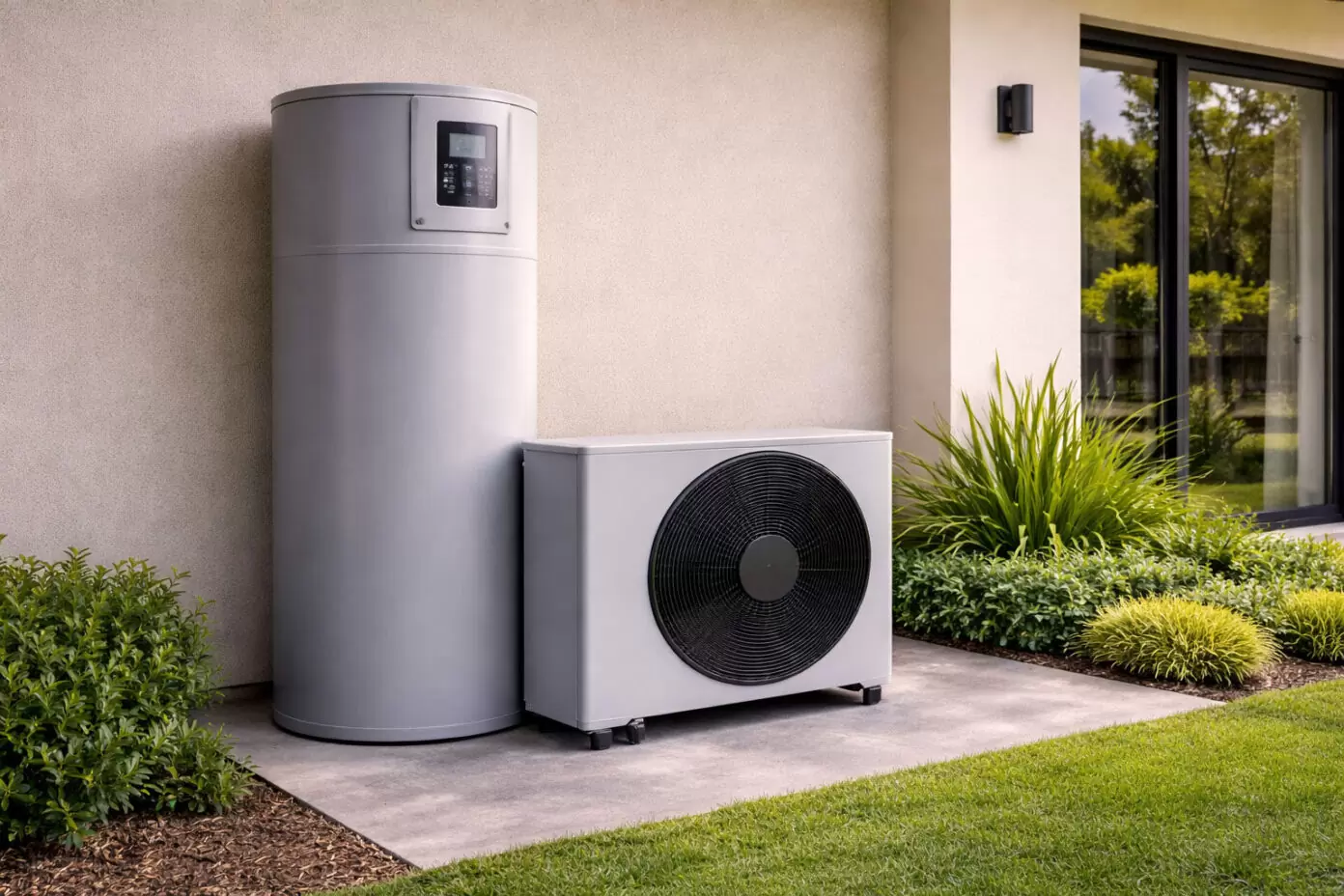
A heat pump hot water system works on the same principle as a reverse-cycle air conditioner — it extracts heat from the surrounding air and transfers it to the water in the tank rather than generating heat directly. This is what makes it so efficient. The COP of a modern heat pump ranges from 3 to 4, meaning for every 1kW of electricity consumed, the system produces 3–4kW of heat, resulting in 60–75% less electricity used than a conventional electric storage system.
For Gold Coast homeowners, the performance advantage is consistent year-round. Air temperatures here rarely create the efficiency drop that heat pumps experience in cooler climates during winter — the system operates at or near peak COP year-round. For homes with rooftop solar PV already installed, the combination is particularly effective. Running the heat pump during daylight hours on solar-generated power reduces grid electricity consumption to near zero, making it the most economical hot water setup available. For a family of four running a heat pump on grid electricity, annual running costs typically $300–$400 in cooler regions, and even less in warmer climates. With solar PV, that figure drops considerably.
The federal STC incentive applies to heat pump installations, reducing the upfront cost at the time of installation — more on this in the rebates section below.
Learn more about our heat pump hot water services.
Solar Hot Water Systems
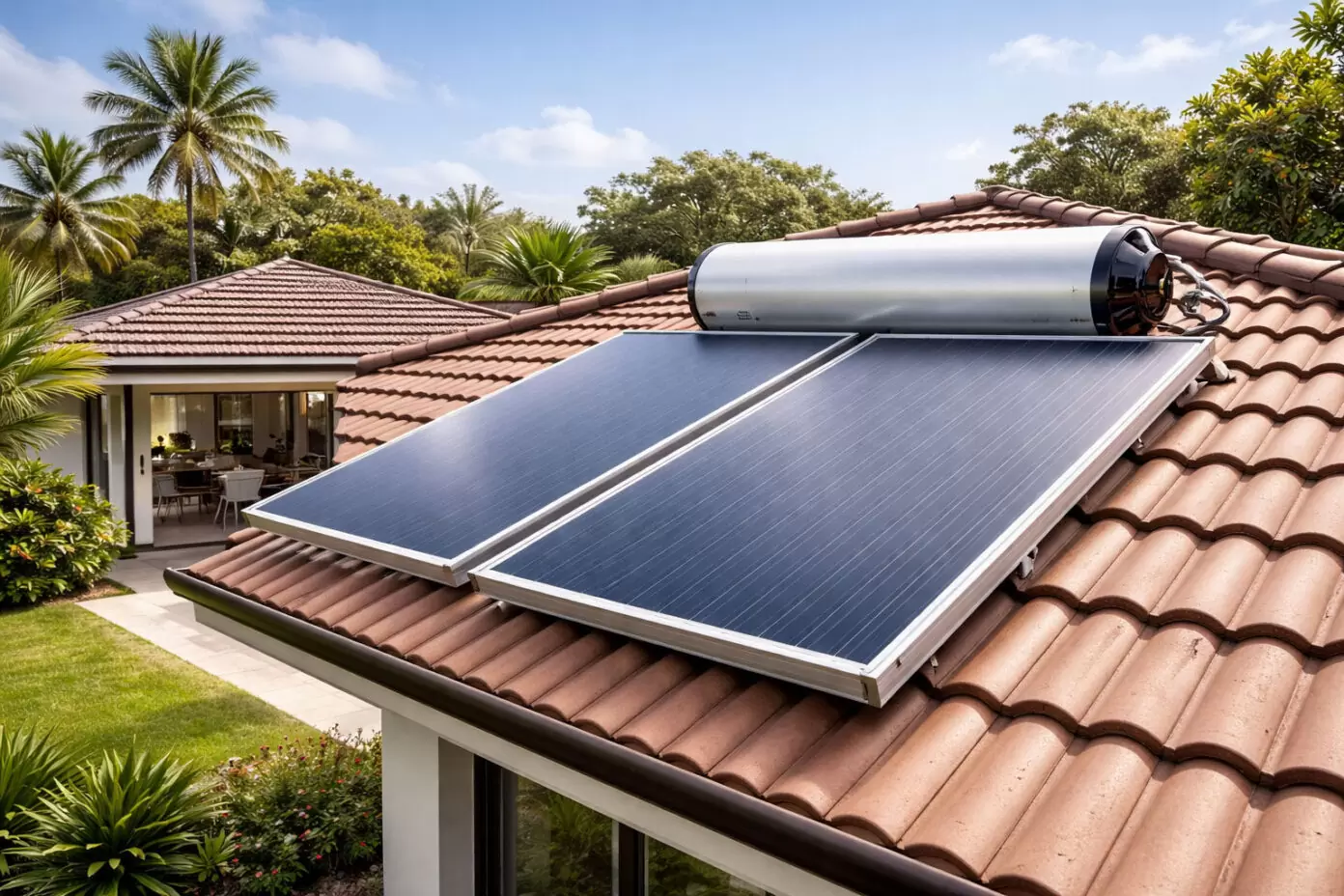
A solar hot water system uses roof-mounted thermal collectors to heat water directly, storing it in an insulated tank with a gas or electric booster for periods of low sun or high demand. It’s worth being clear on one point: a solar hot water system is a dedicated thermal heating system — it is not the same as solar PV panels that generate electricity. The two can coexist on the same roof, but they serve different functions.
In terms of running costs, solar hot water systems use at least 60% less energy annually than conventional gas or electric alternatives. On the Gold Coast, where sun exposure is consistent year-round, the booster activates far less frequently than it would in a southern state — and it’s the infrequency of booster activation that drives the running cost advantage. A well-positioned solar system on a Gold Coast home can cover most of the household’s hot water needs with solar energy alone for most of the year.
Roof space and orientation matter. A north-facing roof with minimal shading produces the best results, and most Gold Coast homes are well-positioned to take advantage. The federal STC incentive also applies to solar hot water installations.
Learn more about our solar hot water services.
Instantaneous Gas Hot Water Systems
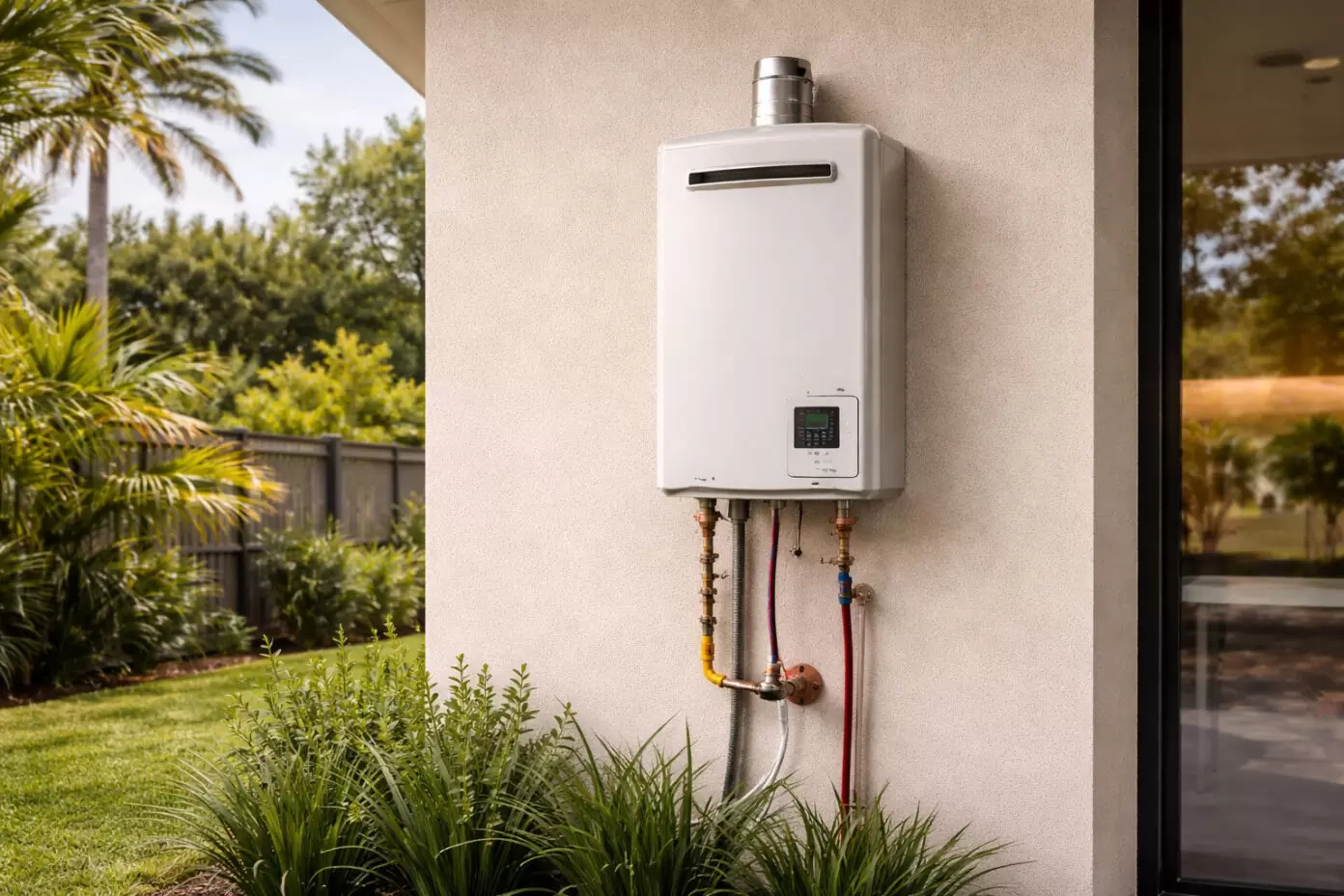
An instantaneous gas system heats water on demand as it flows through the unit, rather than storing pre-heated water in a tank. The key efficiency advantage over gas storage is the elimination of standing heat loss — no energy is spent on maintaining water temperature when the system isn’t in use.
Running costs are lower than those of electric storage and comparable to those of solar hot water, depending on gas tariffs and usage patterns. For Gold Coast homeowners, one important distinction affects the running cost comparison: natural gas is not available on all Gold Coast streets. Homes running on LPG pay more per unit of energy than those on a natural gas connection, which narrows the running cost advantage. If a natural gas connection is available, an instantaneous gas system is a strong performer. If the home relies on LPG, the economics are less compelling than those of a heat pump.
Gas systems carry an Energy Star rating — the higher the rating, the lower the running costs. No STC incentive is available for gas hot water systems.
Learn more about our instant gas hot water services.
Gas Storage Hot Water Systems
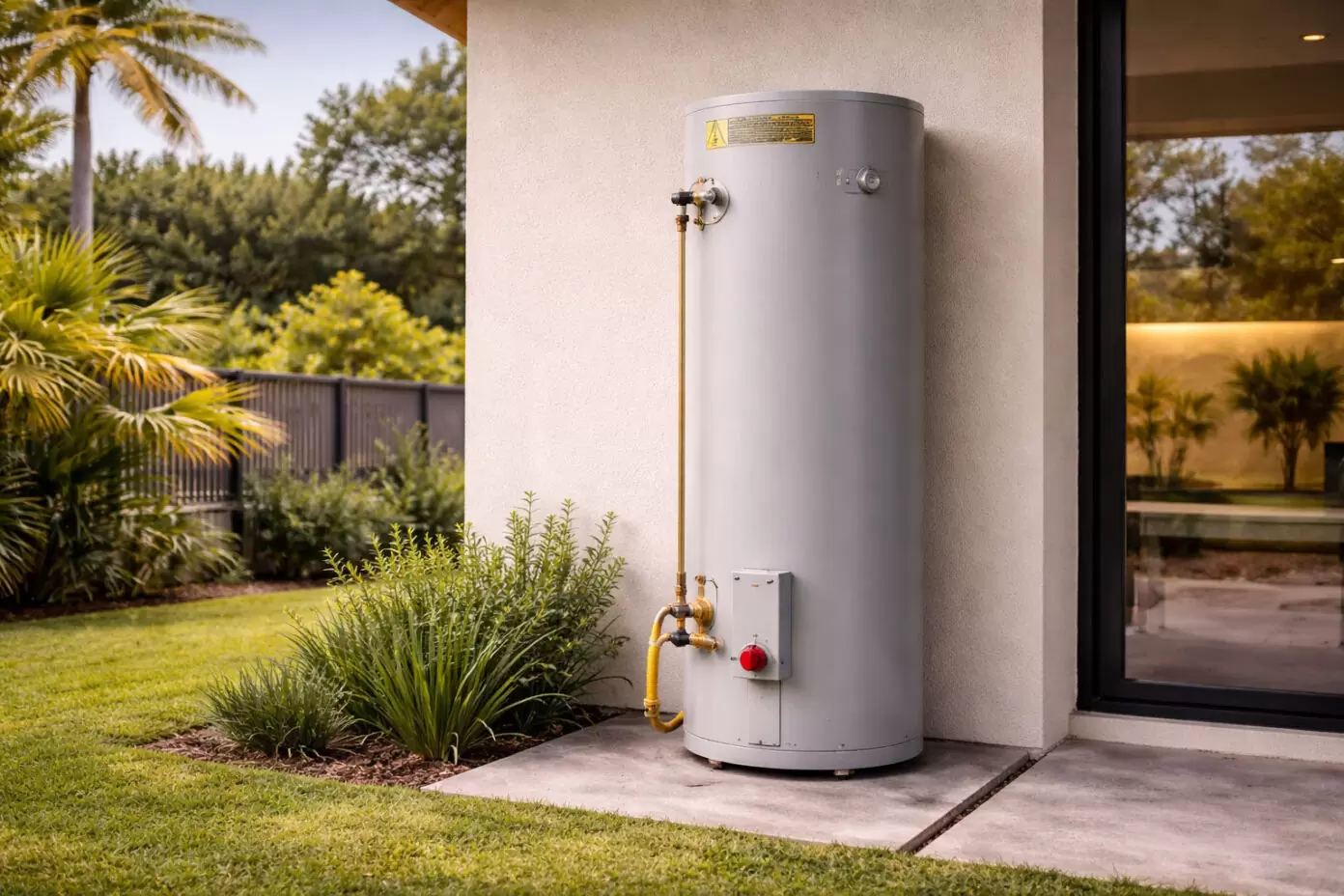
Gas storage systems are more efficient to run than electric storage, but they rank below heat pumps, solar, and instantaneous gas in efficiency. The reason is standing heat loss — energy is continuously spent maintaining the water temperature in the tank, whether hot water is being drawn or not. This is the same inefficiency that affects electric storage systems, just with a cheaper energy source.
The LPG caveat applies here, too. Homes on natural gas will see lower running costs than homes on LPG, where the per-unit energy cost reduces the advantage over electric alternatives. Gas storage remains a practical option for households that need a reliable, straightforward system without the upfront investment of a heat pump or solar — but it’s not the most cost-effective option.
Learn more about our gas hot water services.
Electric Storage Hot Water Systems
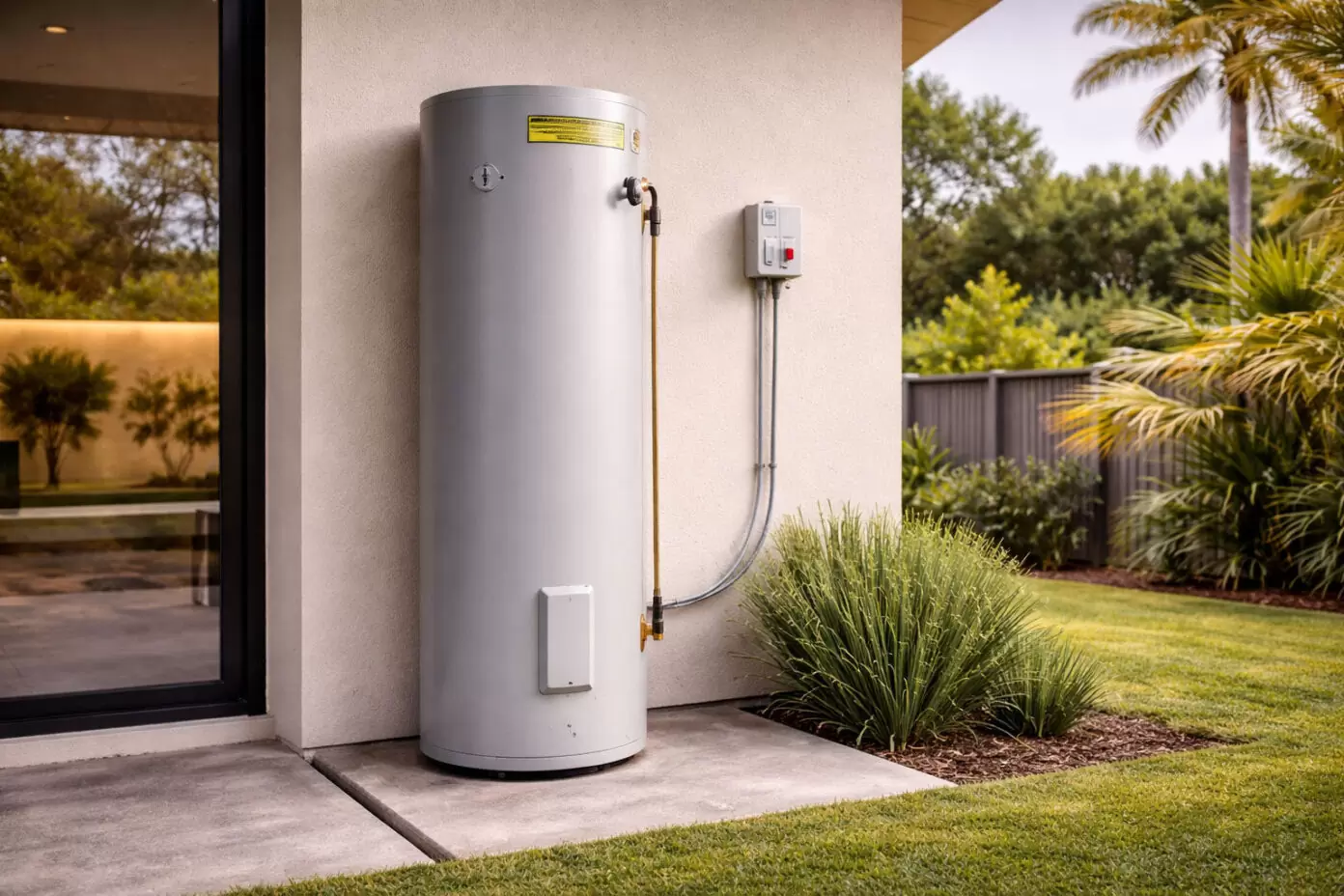
Electric storage is the most common hot water system currently installed in Gold Coast homes — and for most households running one on a standard general tariff, it’s also the most expensive to operate. Without intervention, it sits at the bottom of the efficiency ranking.
There are two ways to reduce running costs without replacing the system. The first is switching to a controlled load (off-peak) tariff through Energex, which heats the water during lower-demand overnight periods at a cheaper electricity rate. The second — and more effective — is pairing the system with rooftop solar PV and setting it to heat during solar generation hours, which significantly reduces grid electricity draw. Neither option transforms an electric storage system into an efficient one, but both reduce the cost of running it.
Without solar PV or an off-peak tariff, an electric storage system on a standard Queensland tariff is the least economical hot water option available. For most Gold Coast homeowners currently running one, it’s the strongest case for upgrading to a heat pump. Learn more about our electric hot water system services.
Government Rebates and Incentives for Efficient Hot Water Systems in Queensland
Upgrading to a more energy-efficient hot water system on the Gold Coast involves a higher upfront cost than a like-for-like replacement — but the federal government’s Small-scale Renewable Energy Scheme (SRES) helps close that gap for eligible system types. It’s worth noting that Queensland does not currently offer a state-level rebate on top of the federal scheme, unlike Victoria and New South Wales. For Gold Coast homeowners, the incentives available right now are the federal STC scheme and, for those keeping an electric storage system, the Energex controlled load tariff.
Small-scale Technology Certificates (STCs)
Heat pump and solar hot water systems are eligible for Small-scale Technology Certificates (STCs) under the federal government’s Small-scale Renewable Energy Scheme. STCs represent the estimated electricity displaced by the system over its lifetime — the more efficient the system and the longer its deemed lifetime, the more certificates it generates. Most installers, including our team, apply the STC value as an upfront discount on the installation price, so there’s no paperwork for the homeowner to manage.
The number of STCs varies by system size, model, and location. The Gold Coast sits in STC Zone 3, which generates a solid certificate count. As a rough guide, a heat pump hot water system installation in Queensland typically attracts an STC discount of $600–$900, depending on the model and the current STC price. These figures are indicative only — STC prices fluctuate with market conditions. Ask our team for a current quote that reflects the discount available at the time of your installation.
Energex controlled load tariff
For households keeping an electric storage system, connecting to Energex’s economy tariff provides access to a cheaper overnight electricity rate for hot water heating. If your system is already on controlled load, this is one of the simpler ways to reduce hot water running costs without replacing the unit — though it won’t deliver the same long-term savings as upgrading to a heat pump or solar system.
What’s not currently available in Queensland
It’s important to be accurate here, because some websites still list the Queensland Climate Smart Energy Savers rebate as an active incentive. The Queensland Government confirms the program is closed, with the final date for purchases and installations being 4 December 2023. Queensland homeowners are not currently eligible for additional state-level rebates on hot water system upgrades beyond the federal STC scheme. This is a meaningful difference compared to Victoria and NSW, where homeowners can stack state and federal incentives to significantly reduce the upfront cost of a heat pump installation. The federal STC discount remains worthwhile, but homeowners should go in with accurate expectations about what’s available in this state.
Which Efficient Hot Water System Suits Your Gold Coast Home?
The most efficient hot water system on paper isn’t always the right fit for every home — the best choice depends on existing infrastructure, roof suitability, household size, and budget. A few key questions help narrow it down quickly.
Already have rooftop solar PV? A heat pump timed to run during daylight hours on solar-generated power is the most economical combination available to Gold Coast homeowners. Running costs can drop to near-negligible levels, making this pairing the standout choice for households already generating their own electricity.
Good north-facing roof space, no solar PV? A solar hot water system is the natural fit. Gold Coast sun exposure means the booster activates infrequently throughout the year, keeping running costs consistently low without the need for rooftop solar panels.
Natural gas connected, high hot water demand? An instantaneous gas system is efficient, reliable, and eliminates standing heat loss, which makes gas storage systems comparatively costly to run. For households with a natural gas connection and high daily demand, it’s worth considering over gas storage on running costs alone.
Replacing an ageing electric storage system? A heat pump upgrade is the single most impactful change a Gold Coast homeowner can make to reduce water heating costs. The federal STC discount reduces the upfront gap, and the Gold Coast’s warm climate means the system operates at peak efficiency year-round — rarely needing a backup element.
Budget-constrained and keeping your electric system for now? Connecting to the Energex-controlled load tariff, if you’re not already on one, delivers a meaningful reduction in running costs with no installation cost. It won’t match the long-term savings of a heat pump upgrade, but it’s a practical interim step while you plan a more significant change.
Ready to Upgrade to a More Energy-Efficient Hot Water System?
If your current system is an ageing electric storage unit running on a standard tariff, it’s almost certainly the most expensive way to heat water in your home. Upgrading to a heat pump or solar hot water system is one of the most effective changes a Gold Coast homeowner can make to reduce ongoing energy costs — and with the federal STC discount applied directly at the time of installation, the upfront investment is lower than many expect.
Our team supplies and installs all efficient system types, including heat pumps from brands like Rheem, Stiebel Eltron, iStore, and Reclaim Energy, as well as solar and instantaneous gas systems. We manage the STC paperwork on your behalf, applying the discount to your installation price so there’s nothing for you to organise. With a $0 call out fee, we can assess your current system and provide a quote at no charge — and as licensed plumbers and gas fitters, fully qualified for heat pump and solar hot water installations, we handle everything from site assessment through to certificate of compliance.
For everything you need to know about what happens on the day, compliance requirements, and what to expect from start to finish, read our Ultimate Guide to Hot Water System Installation. Not sure if your current system actually needs replacing yet? Our hot water system replacement guide covers the key signs that an upgrade is overdue. When you’re ready to talk through the best option for your home, contact our team — there’s no call-out fee, and no obligation.