What To Expect During A Professional Plumbing Inspection

Buying a home, managing a rental or dealing with repeat plumbing issues can raise the same question: what to expect during a plumbing inspection? In most cases, our plumbers check accessible plumbing areas, look for visible warning signs and explain what may need attention.
For Gold Coast homes, this can be especially helpful before a property purchase, renovation or maintenance plan. Every property is different, so the inspection depends on the age, layout, plumbing history and reason for booking. The goal is simple: to give you a clearer picture of the plumbing before small issues become expensive or disruptive.
This guide explains what usually happens before, during and after the appointment, and what the findings may mean.
What Happens During A Plumbing Inspection?
A professional plumbing inspection usually starts with a quick conversation about the property and any issues you have noticed. From there, our plumber checks accessible plumbing areas, looks for warning signs, explains what was found and recommends any repairs or specialist checks if needed.
We’ll often ask about slow drains, water stains, leaking taps, low water pressure, hot water problems or plumbing concerns raised in a building report. These details help us focus the inspection on the areas most likely to matter.
From there, our plumber checks the accessible areas that match the reason for the inspection. This may include fixtures, visible pipework, drains, water pressure, the hot water system and signs of leaks or corrosion.
We are looking for obvious problems, early warning signs and anything that may need further investigation. For example, repeated drain smells may point to a drainage issue, while damp areas or unexplained water use may need closer leak checks.
Knowing what to expect during a plumbing inspection can make the appointment feel much clearer. A good inspection should end with plain-English feedback on what was found, what needs attention, what can be monitored and whether specialist testing is worth considering.
Before The Inspection Starts
Before the inspection starts, we’ll usually ask what prompted the booking. This helps us narrow the focus and make sure the main concern is not missed. A homeowner may be worried about a hidden leak, while a buyer may want the plumbing checked before making a property decision.
It helps to mention any symptoms you have noticed, even if they seem minor. Slow drains, noisy pipes, water stains, musty smells, low water pressure, running toilets and sudden changes in water use can all give useful clues.
For a home plumbing inspection, our plumber may also need access to key areas such as bathrooms, kitchens, laundries, the hot water unit, external taps, the water meter and visible drainage points. If you can safely clear access before the appointment, it can make the inspection smoother.
You do not need to diagnose the issue yourself. The most useful thing you can do is explain what you have seen, when it started and whether it has happened before.
What A Plumber May Check During The Inspection
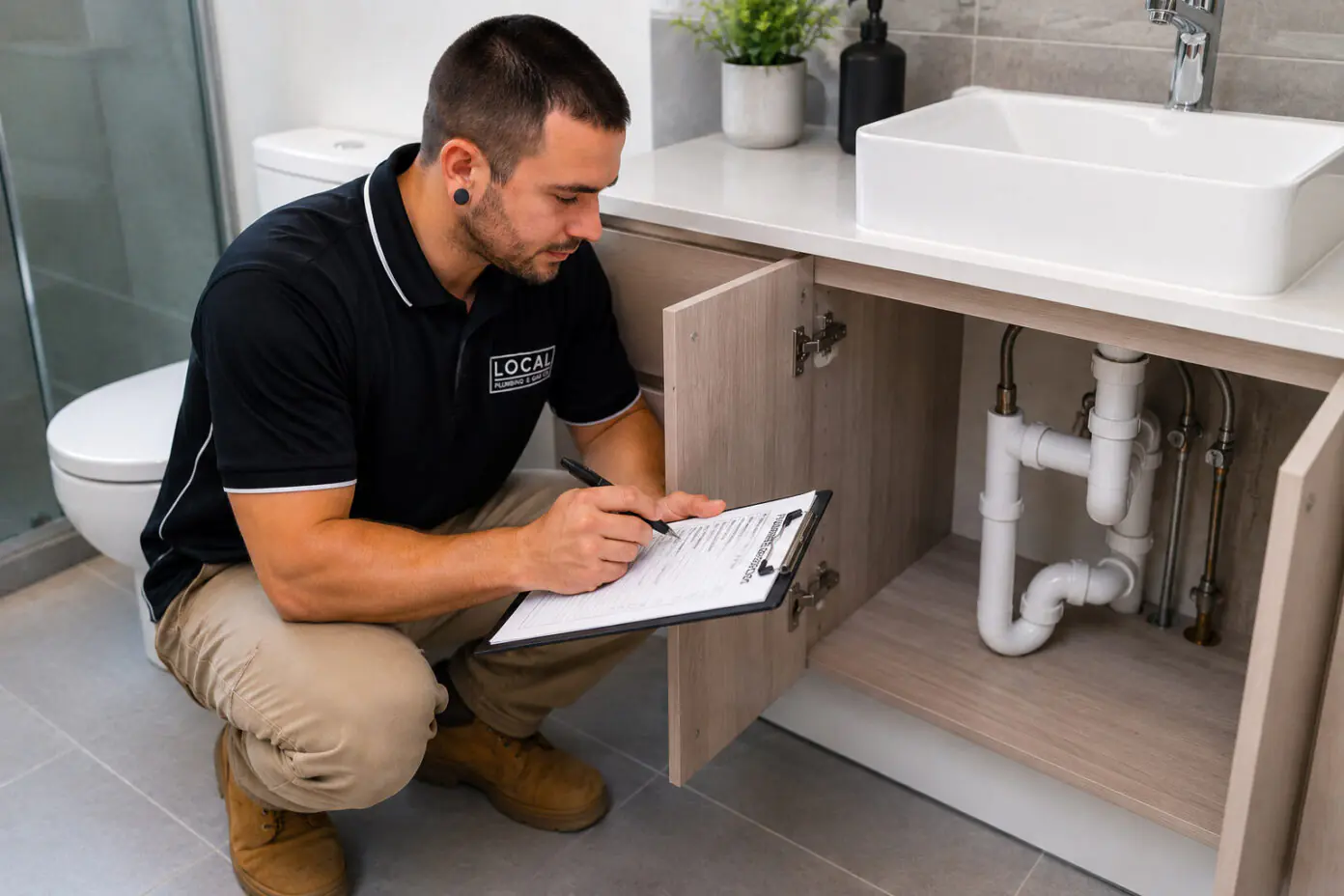
The exact checks depend on the property, the reason for the inspection and the level of detail booked. A standard inspection is usually focused on accessible plumbing areas, visible signs and functional checks, not destructive investigation.
Think of this as a practical plumbing inspection checklist, not a guarantee that every hidden issue will be found. These are common areas our plumbers may look at during a professional inspection.
| Area Checked | What Our Plumber May Look For | Why It Matters |
| Taps And Fixtures | Drips, loose fittings, poor flow, worn parts or visible damage | Small fixture problems can point to wear, water waste or maintenance issues. |
| Toilets | Running water, leaks around the pan, flushing issues or movement at the base | Toilet faults can waste water, damage flooring or lead to repeat repairs. |
| Showers, Baths And Basins | Slow drainage, leaks, damaged seals, water stains or signs of moisture | These issues can affect comfort, hygiene and nearby walls or cabinetry. |
| Visible Pipework | Corrosion, staining, loose pipes, water marks or signs of previous repairs | Visible pipe condition can help flag areas that may need repair or closer checking. |
| Water Pressure And Flow | Low pressure, uneven flow or pressure changes between fixtures | A water pressure check can help flag pipe restrictions, leaks, fixture faults or supply issues. |
| Drains And Waste Lines | Slow drainage, gurgling, smells or repeat blockage signs | Drain symptoms can suggest build-up, damaged pipework or deeper drainage concerns. |
| Hot Water System | Visible leaks, corrosion, age, safe access, water temperature concerns or obvious wear | A hot water system inspection can help identify issues that may affect daily use or need prompt attention. |
| Water Meter And Usage Signs | Meter movement, unusual water use clues or visible signs of hidden leaks | A meter check can help decide whether further leak detection may be useful. |
| External Plumbing And Stormwater Areas | External taps, visible drains, grates, downpipe connections or pooling water | Outdoor issues can affect stormwater drainage, water movement and water damage risk. |
A plumbing inspection does not always mean every system is tested in full. For example, our plumber may identify signs that further checks are needed, such as a CCTV drain inspection for recurring blockages or leak detection for damp areas, high water use or water stains.
Standard Inspection Vs Specialist Checks
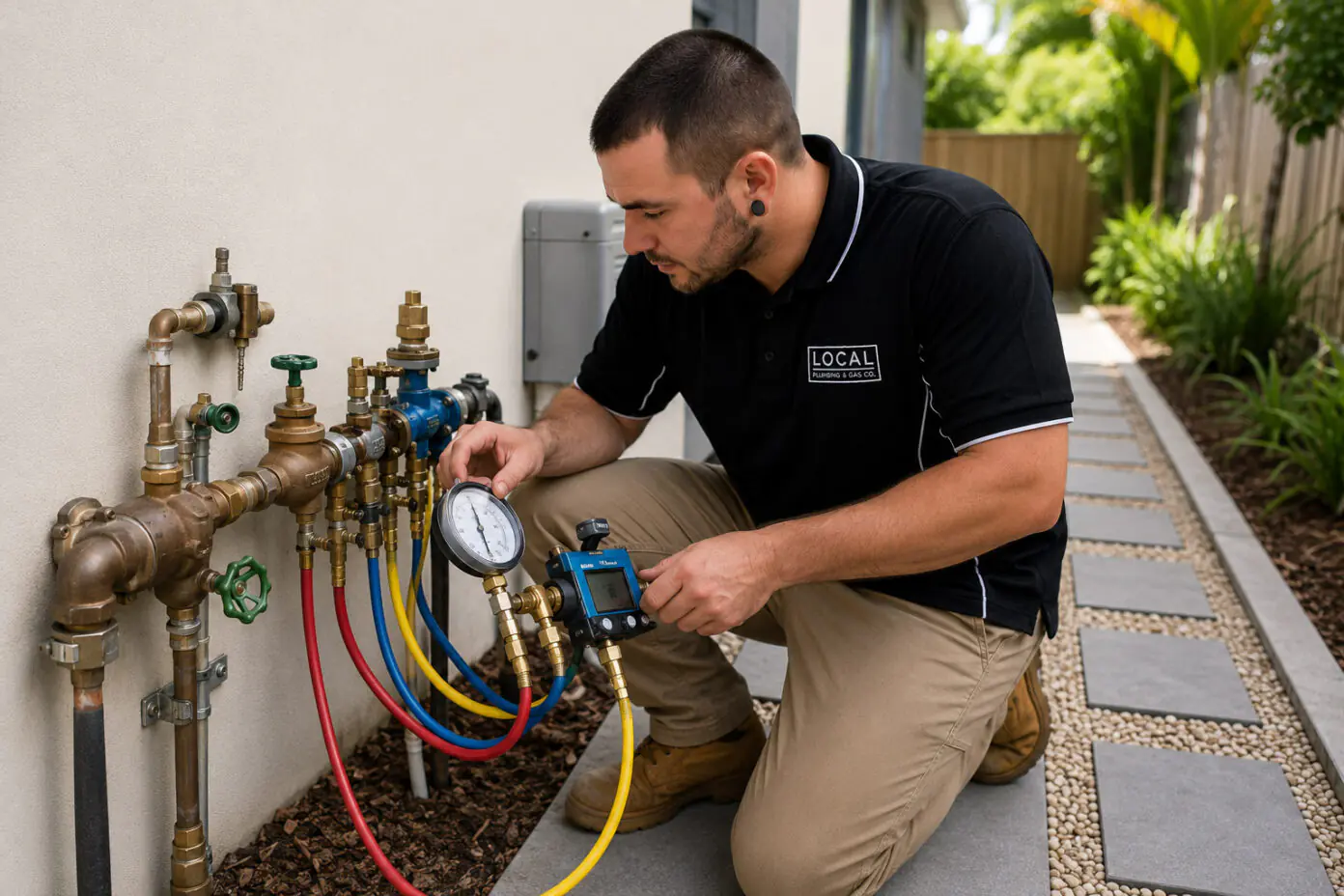
A standard plumbing inspection is usually a visual and functional check of accessible plumbing areas. It can help identify warning signs, but it should not be treated as a guarantee that every hidden issue has been found.
Some concerns need specialist equipment, extra time or a separate compliance-focused check. This is why we always recommend being clear about the reason for the inspection when booking.
| Check Type | When It May Be Relevant | What To Keep In Mind |
| Standard Plumbing Inspection | General maintenance, pre-purchase concerns, visible leaks, poor drainage or fixture issues | Usually focuses on accessible areas, visible signs and practical recommendations. |
| CCTV Drain Inspection | Recurring blocked drains, sewer concerns, gurgling drains or unexplained drainage problems | A drain camera can help inspect inside pipework where surface checks are not enough. |
| Water Leak Detection | Damp patches, high water use, water stains or suspected hidden leaks | Leak detection may be recommended if signs point to a leak that is not clearly visible. |
| Gas Safety Or Compliance Check | Gas appliance concerns, suspected gas issues or property-specific gas requirements | Gas work in Queensland must be handled by someone with the appropriate gas work licence or authorisation. Source: Queensland Government gas work licence guidance |
| Backflow Testing | Commercial sites, some strata properties or homes with testable backflow devices. For homeowner-specific context, see residential backflow testing on the Gold Coast. | City of Gold Coast says only a Queensland licensed plumber with a backflow endorsement can test a backflow device. Source: City of Gold Coast backflow device guidance |
| Water Efficiency Check | Rental properties or landlord/property manager requirements | This may be relevant where water charging or fixture efficiency needs to be checked. Source: RTA water charging guidance |
For example, if we see repeated drain symptoms during an inspection, we may recommend a CCTV drain inspection rather than guessing what is happening underground. If we see signs of moisture or water staining, we may recommend water leak detection to narrow down the source.
This keeps the inspection useful and realistic. The first appointment can often show what needs attention, while specialist checks can help confirm the cause before repair work is planned.
What The Inspection Findings May Mean
The findings from a plumbing inspection are not always urgent. Some are simple maintenance items, while others may need repair, closer testing or faster attention to prevent damage.
We always aim to explain findings in plain English because it helps you understand what to do next. It also helps avoid guessing, especially when the same symptom could have more than one cause.
| Finding Type | Examples | What It May Mean |
| Minor Maintenance Item | Dripping tap, loose fitting, slow cistern refill or worn washer signs | The issue may not be urgent, but it can still waste water or get worse over time. |
| Scheduled Repair Recommended | Leaking toilet, corroded pipe section, poor fixture flow or damaged external tap | We may recommend repair before the problem causes water damage or repeat callouts. |
| Further Investigation Needed | Recurring drain smells, gurgling drains, damp patches, water stains or unusual meter movement | We may recommend CCTV drain inspection, leak detection or another targeted check to confirm the cause. |
| Urgent Plumbing Issue | Active leak, burst pipe signs, sewage overflow, failed hot water system or serious water damage risk | The issue may need prompt attention from a licensed plumber to reduce damage, hygiene risks or disruption. |
| Property Management Or Compliance Follow-Up | Rental water efficiency concern, backflow device issue or gas-related concern | The property may need a specific check, certificate or licensed trade assessment depending on the situation. |
The important thing is that an inspection should give you a practical next step. That might be monitoring a minor issue, booking maintenance, arranging a repair or confirming whether specialist testing is needed.
For Gold Coast properties, this can be useful before buying, renovating or taking over a rental. It gives you a clearer picture of the plumbing condition before small warning signs turn into larger problems.
What Happens After The Inspection?
After the inspection, our plumber should explain the main findings in plain English. This may include what looked sound, what needs maintenance, what should be repaired and what may need further testing.
The next step depends on what was found. A minor issue may only need monitoring or routine maintenance. A leak, damaged pipe, drainage concern or hot water fault may need a repair quote. If the cause is not clear from the inspection alone, we may recommend a more targeted check before repair work is planned.
If you need a plumbing inspection report for a property decision, confirm what documentation is included when booking so expectations are clear.
For property buyers, landlords and property managers, this feedback can help with decision-making. It may give you a clearer idea of whether the plumbing looks generally serviceable, whether there are repair priorities, or whether further information is needed before committing to a purchase, lease or maintenance plan.
The most useful outcome is clarity. A plumbing inspection should help you understand what is happening, what matters most and which steps can wait versus what should be handled sooner.
When Should You Book A Plumbing Inspection?
A plumbing inspection is worth booking when you need a clearer picture of what is happening behind the scenes. We often see this before a home purchase, before a renovation, when a rental property changes hands, or when a small plumbing issue keeps coming back.
You do not need to wait for a major leak or blocked drain before calling a plumber. Slow drains, water pressure changes, damp smells, recurring leaks, noisy pipes, higher-than-usual water use or hot water concerns can all be signs you need a plumbing inspection.
On the Gold Coast, we also pay attention to property age, coastal conditions, stormwater problems and previous repairs. Older homes, investment properties, high-use rentals and properties affected by heavy rain can all have plumbing issues that are easy to miss during a quick visual check.
A pre-purchase plumbing inspection can be especially useful before buying an older home or a property with unknown plumbing history. A rental property plumbing inspection can also help landlords and property managers plan repairs before small issues become tenant complaints.
A professional inspection gives you practical next steps. That might mean monitoring a minor issue, planning maintenance, arranging a repair, or using specialist checks if something needs a closer look.
How Local Plumbing & Gas Co. Can Help
If you are unsure what is happening with your plumbing, we can carry out a practical inspection and explain what we find in plain English. Our plumbers check the areas relevant to your concern, look for visible warning signs and let you know whether the issue needs maintenance, repair or further testing.
For some properties, that may mean a general inspection of fixtures, pipework, drains, water pressure and the hot water system. For others, we may recommend a more targeted check if there are signs of a hidden leak, recurring blockage, drainage problem or compliance-related concern.
We keep the focus on useful advice, not scare tactics. If something looks minor, we will explain what to monitor. If something needs attention, we will talk you through the next step before repair work is planned.
For help with professional plumbing inspections on the Gold Coast, Local Plumbing & Gas Co. can inspect the issue and give you clear, practical advice on what should happen next.
Frequently Asked Questions
How Long Does A Plumbing Inspection Take?
A plumbing inspection time can vary depending on the property size, access, the reason for the booking and whether any specialist checks are needed. A straightforward inspection may be quicker than a detailed pre-purchase or rental property check. When we know what you are concerned about, we can explain what is likely to be involved before the appointment.
Is A Plumbing Inspection The Same As A Building Inspection?
No, a plumbing inspection is not the same as a building inspection. A building inspection looks at the broader property structure and visible building defects. A plumbing inspection focuses on plumbing areas such as fixtures, pipework, drains, water pressure, hot water and visible signs of leaks or drainage concerns. Both can be useful before buying a property.
Can A Plumbing Inspection Find Hidden Leaks?
A plumbing inspection can identify warning signs that may point to a hidden leak, such as damp areas, water stains, unusual water use or pressure changes. It may not confirm every hidden leak on its own. If we see signs that need closer checking, we may recommend targeted water leak detection to help narrow down the source.
Will A Plumber Use A CCTV Drain Camera During An Inspection?
A CCTV drain camera is not always part of a standard plumbing inspection. It may be recommended if there are recurring blocked drains, gurgling sounds, sewer smells or other drainage concerns. If our plumber thinks a drain camera would help, we will explain why before any further inspection work is carried out.
Do I Need A Plumbing Inspection Before Buying A House?
A plumbing inspection before buying a house can be useful, especially if the property is older, has visible plumbing concerns or has signs of drainage, hot water or leak issues. It can give you clearer information before making a decision. It should not be treated as a guarantee that every hidden issue will be found.
How Often Should Plumbing Be Inspected?
There is no single inspection schedule that suits every property. The right timing depends on the property age, plumbing condition, usage, previous issues and whether it is a home, rental or commercial site. We generally suggest booking an inspection when symptoms appear, before major property decisions, or as part of a planned maintenance approach.
Know What To Expect Before You Book
A plumbing inspection should give you clarity, not confusion. By the end of the appointment, you should have a better understanding of what was checked, what was found and what needs attention next.
Now you know what to expect during a plumbing inspection, the next step is deciding whether your property needs a general check, a repair quote or a more targeted inspection. For some Gold Coast properties, the result may be simple maintenance advice. For others, our plumber may recommend repairs, leak detection, a CCTV drain inspection or another specialist check to confirm what is happening.
If you are buying, renovating, managing a rental or dealing with repeat plumbing issues, Local Plumbing & Gas Co. can help you understand the condition of your plumbing before small warning signs become bigger problems. Book a professional plumbing inspection and we’ll give you clear, practical advice on what should happen next.