Gutter Repair Vs Replacement: How To Tell What Your Home Needs
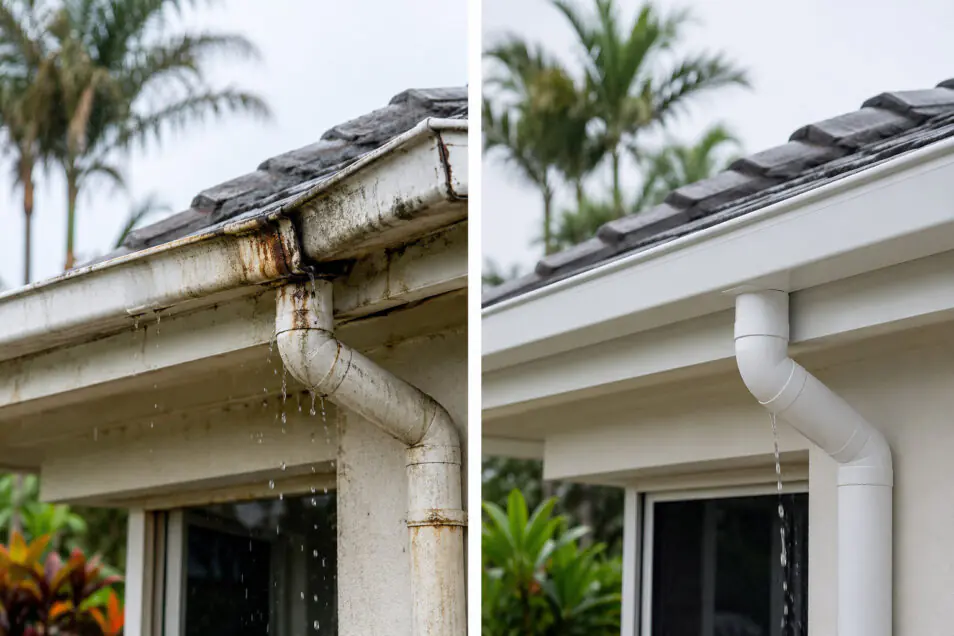
Gutter repair vs replacement is not always obvious from the ground. A leaking join, sagging section, rust spot or overflowing corner may look simple in dry weather, then become a bigger concern during heavy Gold Coast rain.
The right answer depends on whether the problem is localised or whether the guttering is starting to fail across the system. As local roof plumbers, we look at the visible damage, how water moves, and whether the downpipes and roof drainage are doing their job. This guide explains the signs on both sides, what you can safely check, and when to call a roof plumber for advice.
Is It Better To Repair Or Replace Gutters?
It is better to repair gutters when the issue is localised, such as one leaking join, a loose bracket, a damaged outlet or a small affected section. Replacement is usually better when rust, sagging, poor fall, repeated leaks or storm damage affect several areas. A roof plumber should inspect the full gutter and downpipe system before recommending either option.
The gutter repair or replacement decision often comes down to how far the problem has spread. One visible drip may be a simple repair, but it can also point to poor fall, a blocked outlet or water backing up from the downpipe.
For Gold Coast homes, heavy rain can make this clearer. A gutter that looks fine in dry weather may overflow, pull away or leak in several places once stormwater starts moving through the system. That is why our plumbers look at the condition of the guttering, the outlets, the downpipes and where the water is going before advising whether to repair or replace gutters.
Gutter Repair Vs Replacement: Quick Decision Guide
A quick way to think about the decision is to ask whether the issue is isolated, repeated or spread across the system. A single damaged area may be repairable. Several weak points usually need a closer look before another repair is worthwhile.
| What You Notice | More Likely Repair | More Likely Replacement |
| One leaking join or corner | The surrounding guttering is still sound and the leak is localised. | Nearby sections are rusted, distorted or leaking as well. |
| One sagging section | Brackets or fixings may have loosened in one area. | The gutter has poor fall across a longer run or pulls away in several places. |
| Local rust spot | The rust is small and the rest of the gutter is still serviceable. | Rust is widespread, flaking or creating holes across multiple sections. |
| Overflow during rain | The outlet, downpipe or one section may be blocked or damaged. | The guttering may be poorly graded, undersized or failing across the roofline. |
| Water running behind the gutter | The gutter may be misaligned or loose in one area. | Water is entering several roof edges, eaves or wall areas. |
| Repeated leaks after repairs | A previous repair may not have fixed the actual cause. | The system may be too old or damaged for ongoing patch repairs to make sense. |
| Gutter and downpipe issues together | One outlet or connection may need attention. | The gutter and downpipe setup may need broader roof plumbing work. |
This table is a guide, not a final diagnosis. The same symptom can have different causes depending on the age of the guttering, the fall, the downpipes, the roof shape and how water moves during heavy rain.
When Gutter Repair May Be Enough
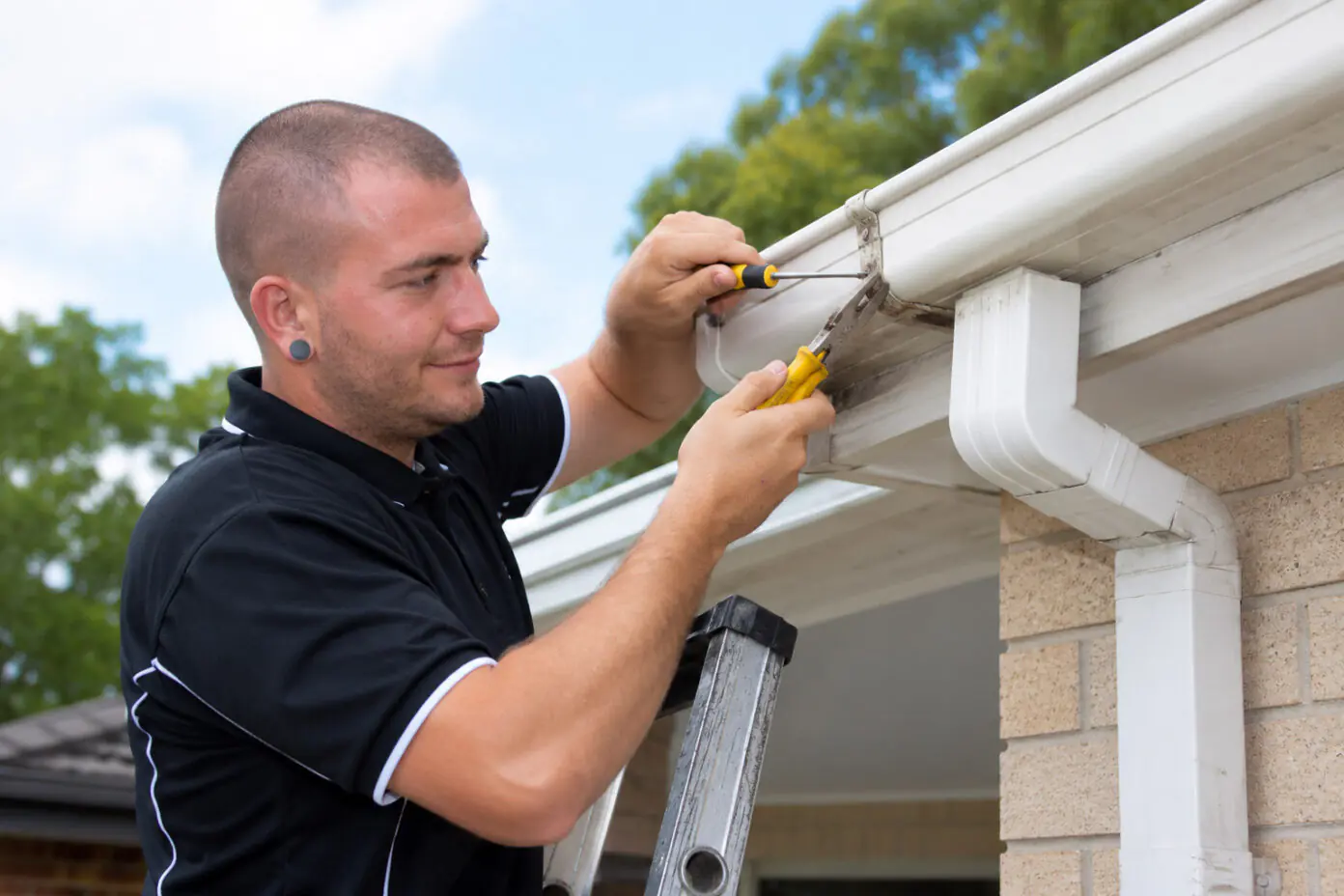
Gutter repair may be enough when the problem is limited to one section, join, bracket, outlet or short run of guttering. In these cases, the rest of the system may still be doing its job, and the goal is to fix the weak point before it causes more water damage.
A repair-led pathway is more likely when the guttering is still in reasonable condition, water is mostly flowing where it should, and the issue has not spread across several areas. For example, a single leaking join, one loose bracket or a small section that has shifted during heavy rain may not mean the whole gutter system needs replacing.
Our plumbers usually check whether the surrounding guttering is sound before recommending a repair. That includes looking at the fall, joins, outlets, downpipes and whether water is escaping behind the gutter. If the damage is localised, our gutter repairs service is the main pathway for getting the issue checked and repaired safely.
Repair may be suitable for:
- one leaking join, corner or end cap
- a loose bracket or small sagging section
- minor localised rust
- a damaged outlet or connection point
- one short section affected by storm movement
- overflow caused by a local blockage or alignment issue
The important point is to avoid guessing from one visible symptom. A small drip can be simple, but it can also be the first sign that water is backing up, the gutter fall is wrong or a downpipe is not carrying water away properly.
When Gutter Replacement Makes More Sense
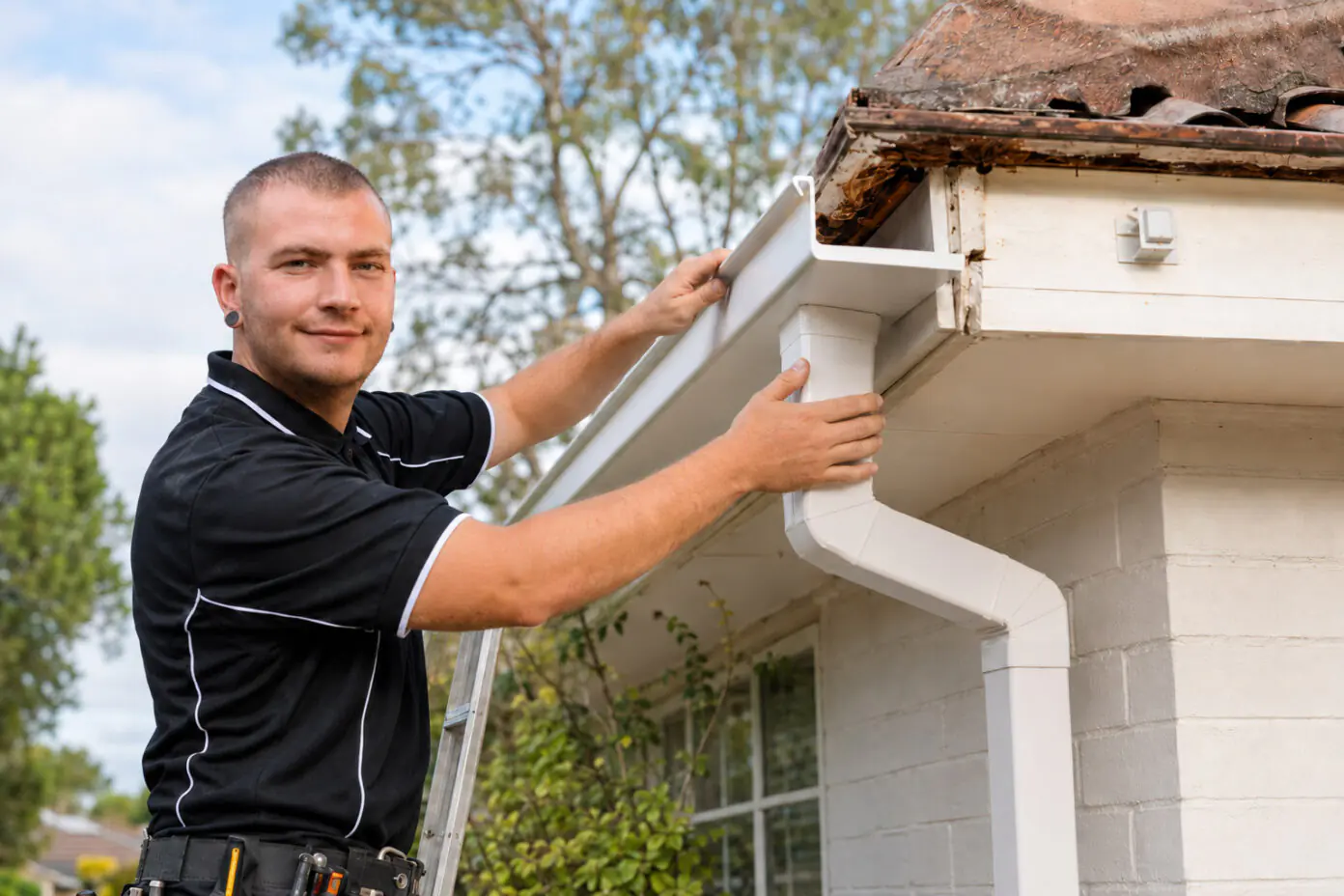
Gutter replacement usually makes more sense when the problem is no longer limited to one small area. If the guttering is rusted in several places, sagging across long sections or leaking again after previous repairs, another repair may only delay the same issue coming back.
Replacement can be the better long-term option when the gutter system is no longer moving roof water away reliably. This is especially important on Gold Coast homes where heavy rain can quickly expose weak fall, undersized drainage, ageing materials or storm damage around the roofline.
Our plumbers may recommend looking at replacement when the guttering has widespread corrosion, several leaking joins, repeated overflow, badly distorted sections or poor fall that cannot be corrected with a local repair. In that situation, our gutter replacement service is the more relevant pathway for assessing whether a new system would be safer and more practical.
Replacement may be worth considering when you notice:
- rust, holes or corrosion across several sections
- multiple leaks along the same gutter run
- gutters pulling away from the fascia in more than one area
- repeated repairs that do not hold through heavy rain
- poor fall causing water to sit in the gutter
- major storm damage or bent sections
- old guttering that no longer works well with the downpipes
The aim is not to replace gutters unnecessarily. A good roof plumbing assessment should explain whether replacement is genuinely the better option, or whether a targeted repair still makes sense.
What A Roof Plumber Checks Before Recommending Either Option
A roof plumber should look beyond the most obvious drip, rust spot or sagging section before recommending gutter repair or replacement. The right option depends on how the full roof drainage system is working, not just what one part of the gutter looks like.
Our plumbers usually check the visible condition of the guttering first. That includes rust, cracks, loose joins, sagging sections, pulled brackets, damaged outlets and areas where water may be running behind the gutter instead of into it.
They also look at how water moves through the system. A gutter can leak because the join has failed, but it can also leak because water is pooling due to poor fall, backing up from a blocked outlet, or not moving into the downpipe quickly enough during heavy rain.
A proper assessment may include checking:
- whether the gutter damage is localised or widespread
- whether the gutter has enough fall toward the outlets
- whether joins, corners and end caps are still sound
- whether brackets and fixings are holding the gutter correctly
- whether downpipes are taking water away properly
- whether water is running behind the gutter, into eaves or down walls
- whether the issue is connected to broader roof plumbing concerns
This is where a repair-vs-replacement decision becomes clearer. If the gutter is mostly sound and one area has failed, repair may be practical. If several parts of the system are failing, replacement may be the better long-term recommendation. Our roof plumbers can check how the gutters, downpipes and roof drainage are working together before explaining the next step.
How Downpipes And Stormwater Drainage Affect The Decision
Gutters do not work on their own. They collect roof water, but the downpipes and stormwater drainage need to move that water away from the home. If that pathway is restricted, poorly placed or undersized, a gutter problem can look worse than it really is.
For example, a gutter may overflow because the downpipe is blocked, not because the guttering needs replacement. A corner may leak because water is backing up at the outlet. In other cases, the gutters may be old or poorly graded, but the downpipes also need checking before any replacement plan makes sense.
Our plumbers look at how the whole system handles water during rain. That includes the gutter fall, outlet size, downpipe position and whether roof water is being directed to a suitable drainage point. If the problem is connected to damaged, missing or poorly placed downpipes, our downpipe installation service may be part of the solution.
This matters because new gutters will not perform properly if water cannot leave the roofline. Before deciding which option makes sense, the full roof drainage pathway should be checked so the recommendation solves the real problem, not just the visible symptom.
What Affects The Cost And Value Of Each Option?
The cost of gutter work depends on what has failed, how much of the system is affected and what needs to be done safely. A small localised repair is very different from replacing long gutter runs, correcting poor fall or addressing related downpipe and roof drainage problems.
The better question is not only “what is cheaper today?” It is whether the work will solve the problem properly. Repair may offer better value when one section is damaged and the surrounding guttering is still sound. Replacement may offer better value when repeated repairs keep adding up on old or failing guttering.
Several factors can affect the recommendation:
| Factor | Why It Matters |
| Extent of damage | One leaking join is different from rust, sagging or leaks across several sections. |
| Age and condition | Older guttering may not hold repairs well if the material is already breaking down. |
| Gutter fall | Poor fall can leave water sitting in the gutter, which may cause repeat leaks. |
| Downpipe performance | Gutters rely on downpipes to move roof water away properly. |
| Access and height | Difficult or unsafe access can affect the equipment and time needed. |
| Previous repairs | Repeated repairs can be a sign the system is reaching a replacement point. |
| Stormwater flow | Water needs a clear path away from the roofline and property. |
We avoid guessing from photos alone because the visible problem may not be the full issue. A roof plumber should explain whether repair is sensible, whether replacement is more practical, or whether another part of the roof drainage system is causing the problem.
What You Can Safely Check From Ground Level
Before you call a plumber, you can gather useful information without climbing onto the roof or using a ladder. Keep your checks simple, visible and ground-level only, especially during wet weather or after heavy rain.
Look at where the water is going while it rains, if you can do so safely. Is it overflowing in one spot, dripping from a join, running behind the gutter, pooling near the wall, or spilling near a downpipe? These details can help a roof plumber understand whether the issue may be localised, drainage-related or more widespread.
You can safely note:
- where the water is dripping or overflowing
- whether the problem happens in light rain or only heavy rain
- whether one section is affected or several areas are leaking
- whether the gutter looks sagged, loose, rusted or pulled away
- whether water is pooling near walls, paths, garden beds or retaining walls
- whether there are damp ceiling marks, mould smells or stains after rain
- whether downpipes appear to be carrying water away properly
Do not climb onto the roof, lean over gutters, inspect from a ladder in wet weather, or try to patch, seal, remove or replace guttering yourself. WorkSafe Queensland notes that working at height can involve fall risks near edges, openings and slippery, sloping or unstable surfaces. It also identifies serious electrical safety risks in domestic roof spaces.
If water is entering the property, keep clear of wet electrical fittings, move belongings only if it is safe, and call for help before the next heavy rain makes the issue worse. If the water is coming through the roof edge, ceiling or internal areas, our leaking roof repairs service may be the safer pathway for urgent roof plumbing help.
How Local Plumbing & Gas Co. Can Help
Local Plumbing & Gas Co. can help you work out whether your gutters need repair, replacement or broader roof plumbing attention. We look at the visible issue, but we also check how the guttering, outlets, downpipes and roof drainage are working together.
If the issue is localised, we can explain whether a targeted repair is likely to be enough. That may apply to one leaking join, a loose bracket, a damaged outlet or a short section that has moved. If the guttering is badly rusted, repeatedly leaking, sagging across longer runs or no longer draining properly, we can explain whether replacement is the more practical pathway.
Our plumbers also check whether the problem is actually being caused by another part of the system. Sometimes overflow points to a blocked downpipe, poor fall or stormwater flow issue rather than failed guttering alone.
The aim is to give clear advice before work goes ahead. If repair makes sense, we will tell you. If replacement is more practical, we will explain why. If the issue needs a wider roof plumbing check, we can talk you through the next step.
Frequently Asked Questions
Is It Better To Repair Or Replace Gutters?
It is better to repair gutters when the issue is localised, such as one leaking join, a loose bracket or a damaged outlet. Replacement is usually better when rust, sagging, poor fall or repeated leaks affect several areas. A roof plumber can check whether the system is still serviceable before you commit either way.
Can Leaking Gutters Be Repaired?
Leaking gutters can often be repaired if the leak is limited to one join, corner, outlet or short section. If the surrounding guttering is still sound, a targeted repair may be enough. If leaks keep appearing in different places, the guttering may be too worn for another repair to make sense.
What Are The Signs Gutters Need Replacing?
Gutters may need replacing when they are badly rusted, sagging across long runs, pulling away from the fascia, holding water because of poor fall, or leaking again after previous repairs. Replacement may also be considered after major storm damage or when the guttering no longer works properly with the downpipes.
Can Rusted Gutters Be Repaired?
Rusted gutters may be repairable if the rust is small, localised and the surrounding guttering is still strong. Widespread rust is different. If corrosion has created holes, weak sections or repeated leaks, replacement may be the more reliable option. The condition needs to be checked before deciding.
Should Gutters And Downpipes Be Checked Together?
Yes. Gutters and downpipes should be checked together because they work as one roof drainage system. A gutter may overflow because the downpipe is blocked, undersized or poorly placed. New gutters may also perform poorly if the downpipes cannot move roof water away properly.
Who Should I Call For Gutter Repair Or Replacement Advice?
Call a licensed plumber or roof plumber for gutter repair or replacement advice. Gutter work can involve roof edges, height risks, wet surfaces and hidden water damage, so it is safer to have the system checked by someone who understands roof plumbing and stormwater flow.
Need Help Working Out What Your Gutters Need?
Gutter problems are not always clear from the ground. One leak may point to a simple repair, while repeated leaks, widespread rust or poor drainage can mean replacement is the more practical option.
If you are unsure, Local Plumbing & Gas Co. can inspect your gutters, downpipes and roof drainage and explain the next step clearly. We will help you understand whether the issue is localised, whether the system is starting to fail, or whether another roof plumbing problem is contributing to the symptoms.
For gutter repair vs replacement advice on the Gold Coast, call Local Plumbing & Gas Co. on 1800 562 251 or contact our team online to book help from a local roof plumber.