What to Do When a Pipe Bursts — A Step-by-Step Guide for Gold Coast Homeowners
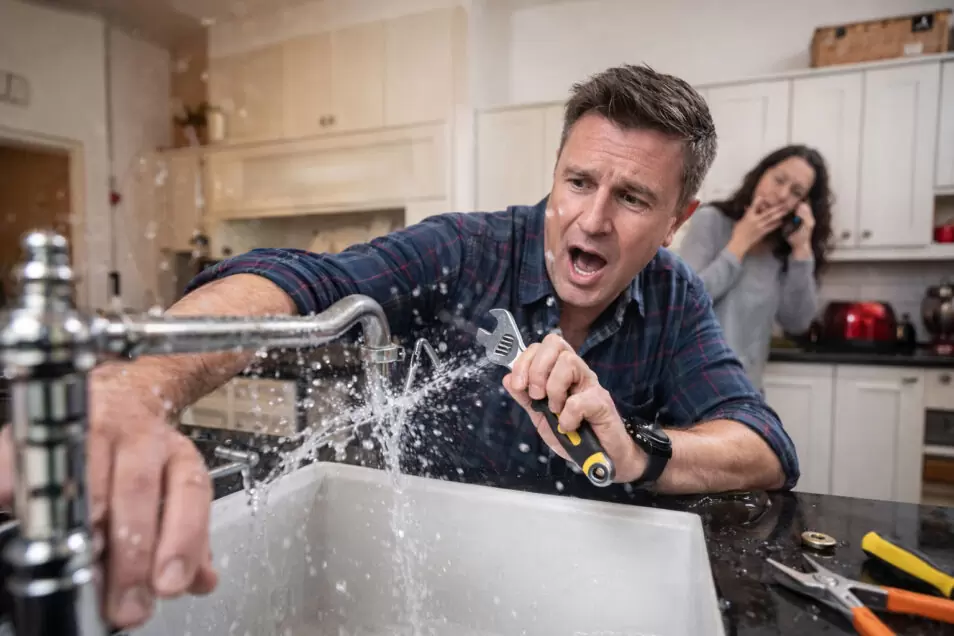
Water doesn’t wait. A pipe bursts and within minutes you’re dealing with active flooding across the floor, water tracking into wall cavities, and the clock already ticking on mould growth that can take hold in as little as 24 hours. Whether it’s a burst flexi hose that’s let go under the sink, a supply line that’s finally given way, or a pipe failure somewhere inside the wall, the damage compounds fast, and what you do in the first few minutes determines how bad it gets.
This guide covers exactly what to do when a pipe bursts, in the order you should do it. Follow the steps and you’ll stop the flooding, protect your home from further structural damage and contents damage, and get the right help on site as fast as possible.
If you’re not dealing with an active burst but suspect water is escaping somewhere, a rising bill, a damp patch, something that doesn’t quite add up, our guide on water leak signs Gold Coast homeowners often miss is the better starting point.
Step 1 — Shut Off the Water Immediately
The single most important thing to do when a pipe bursts in your house is to turn off the water supply. Nothing else matters until the water is off.
On most Gold Coast homes, the main water shutoff valve sits within the water meter near the nature strip, often in a small plastic box set into the ground. Turn the valve clockwise until it stops. You’ll actually hear the water stop from the box once it’s off. For townhouses, the valve is usually in a central service area near the driveway or bin enclosure. For apartments, check the service cabinet near your front door.
Once the mains are off, you’ll want to drain the residual pressure still sitting in the supply line. Do this by opening the cold taps at the lowest point in the house first, a laundry tub or outdoor tap, then work upward. Flush every toilet once to empty the cisterns. This redirects the remaining water in your pipes to the drains rather than out through the burst, and it significantly reduces the volume still seeping from the damaged section while you work.
If the burst is isolated to a single fitting, a flexi hose under the kitchen sink, bathroom vanity, or toilet cistern, check for an isolation valve directly on the supply line feeding that fitting before you go to the mains. Most modern installations have one. Closing it stops the flow without cutting water to the rest of the house.
Knowing how to turn off water when a pipe bursts is straightforward when the valve is accessible and working. Don’t force a valve that won’t budge, and don’t reach through flowing water to get to one. If you locate the shutoff but it won’t move, or you can’t find it at all, call Local Plumbing & Gas Co. immediately rather than spending time troubleshooting while water keeps flowing. For burst flexi hose situations on the Gold Coast especially, where a single hose can discharge up to 1,500 litres per hour, every minute without isolation matters.
Step 2 — Cut the Power If Water Is Near Electrics
Before you enter any wet areas, take thirty seconds to assess the electrical situation. Water near power points, appliances, or your switchboard is a serious electrocution risk, and it’s one that’s easy to overlook when you’re focused on the flooding.
If there’s any chance water has reached the main panel or is tracking toward it, turn off the power at the switchboard before you do anything else. Don’t touch switches or appliances that are already wet, and don’t walk through pooled water to reach them. If the switchboard itself is compromised, stay back and wait for our team.
If there’s sparking, smoke, or a burning smell, treat it as an immediate emergency and call 000.
Once you’re satisfied the electrical hazard is managed, you can move through the affected areas safely.
Step 3 — Call Local Plumbing & Gas Co. Now
Make the call as soon as the water and power are under control. Don’t wait to see how things settle. The pipe has failed and it won’t fix itself. Every hour it goes unrepaired, water works deeper into wall cavities, flooring, and subfloor spaces.
If you’re looking for a 24 hour plumber on the Gold Coast who’s available around the clock, we’re it. We provide an emergency plumbing service across the Gold Coast with a $0 call out fee, upfront pricing before any work begins, and fully stocked vans so our Gold Coast plumbers can diagnose and repair on the spot without a second trip.
Knowing who to call when a pipe bursts before it happens makes a stressful situation a lot more manageable. Save our number now: 1800 562 251.
Step 4 — Document the Damage Before You Clean Up
Before you mop, move anything, or start drying out, stop and photograph everything. Water damage to walls, floors, ceilings, and belongings. The burst itself. The affected area from multiple angles. Do this before cleanup begins, because once you’ve mopped and moved things around, the evidence is gone.
This matters for your burst pipe insurance claim. In Australia, home and contents insurance typically covers sudden and accidental burst pipe damage, including water damage to floors, walls, furniture, and other contents. What’s generally not covered is the cost to repair the pipe itself, damage from gradual leaks, or anything that could be considered maintenance neglect. A plumber’s report documenting the cause and extent of the failure supports your claim, so hold onto all repair paperwork.
Don’t discard damaged items before an assessor has seen them. Retain carpets, furniture, and any other contents damage as evidence, because your insurer may want them inspected.
Check your policy and notify your insurer as soon as things are under control. Every policy handles these claims differently, so the sooner you make contact the better.
Step 5 — Contain the Damage While You Wait
Understanding what to do when a water pipe bursts goes beyond just turning off the water. The damage control you do while waiting for our team can make a significant difference to the outcome.
Start by moving furniture, rugs, and valuables out of the wet zone. Get things off the floor as quickly as you can, because water works into flooring and subfloor spaces faster than most people expect, and contents damage adds up quickly. Use towels and buckets to slow the spread, or a wet-dry vacuum if you have one. Open windows to start moving air through the affected area. The sooner you reduce moisture, the lower the risk of mould growth taking hold. In Queensland’s climate, mould can establish within 24 hours of sustained moisture exposure.
Check the ceiling. If it’s bulging with trapped water, don’t stand under it, because a saturated ceiling can come down without warning. Carefully puncture it at the lowest point with a screwdriver to release the water in a controlled way rather than letting it collapse.
Don’t pull apart cabinets, walls or flooring to chase the leak. Water travels through hidden spaces before it appears, so the wet patch you can see is often nowhere near the actual source.
A Note on Tape, Clamps and Pipe Repair Products
Pipe tape, hose clamps and epoxy putty get promoted online as burst pipe fixes. On a very small, accessible, fully dry leak they might slow the flow for a short time, but we don’t recommend relying on them and they are never a repair.
They’re unsuitable for burst flexi hoses, full ruptures, in-wall leaks, ceiling leaks, underground leaks, in-slab leaks, or anywhere water is near electricity. A patched pipe is also still a failing pipe. The section that burst is usually telling you something about the condition of the pipework around it, and a product that hides the symptom can leave you feeling like the problem is handled while water keeps working into the structure.
Knowing how to minimise water damage after a burst pipe is mostly about speed. Every litre that soaks into a wall cavity or under the flooring is harder to address than water still sitting on the surface. Your time is better spent isolating the water and moving belongings than on a trip to the hardware store.
What Type of Burst Pipe Are You Dealing With?
Sometimes the source is obvious, like water spraying from under a sink. Other times the first sign is a damp wall, a ceiling stain, a wet patch in the yard, or a water meter that keeps ticking over with every tap off. Knowing roughly what you’re looking at helps you describe it accurately when you call us.
| What You Notice | What It Could Mean | Safer Next Step |
|---|---|---|
| Water under a sink, basin or vanity | A flexi hose, fitting or supply line has failed | Close the nearby isolation valve if safe, or shut off the mains |
| Water coming through a ceiling | A pipe, fitting or fixture above is leaking | Keep clear of light fittings and sagging plaster, and call us |
| Wet wall, skirting or flooring | Water may be travelling from a hidden pipe or wall cavity | Don’t open the wall or floor yourself |
| Damp ground or pooling water outside | An underground water line may have failed | Avoid digging and arrange a professional inspection |
| Water meter moving with all taps off | There may be an active hidden leak or burst pipe | Turn off fixtures and call us if the meter keeps moving |
| Burst flexi hose | A pressurised braided hose has split or disconnected | Isolate the water if safe and call a licensed plumber |
These signs point you in the right direction, but they don’t confirm the cause. Where the burst is concealed, underground or under a slab, our water leak detection service pinpoints the source before any repair work starts, which keeps unnecessary damage to walls, flooring and landscaping to a minimum.
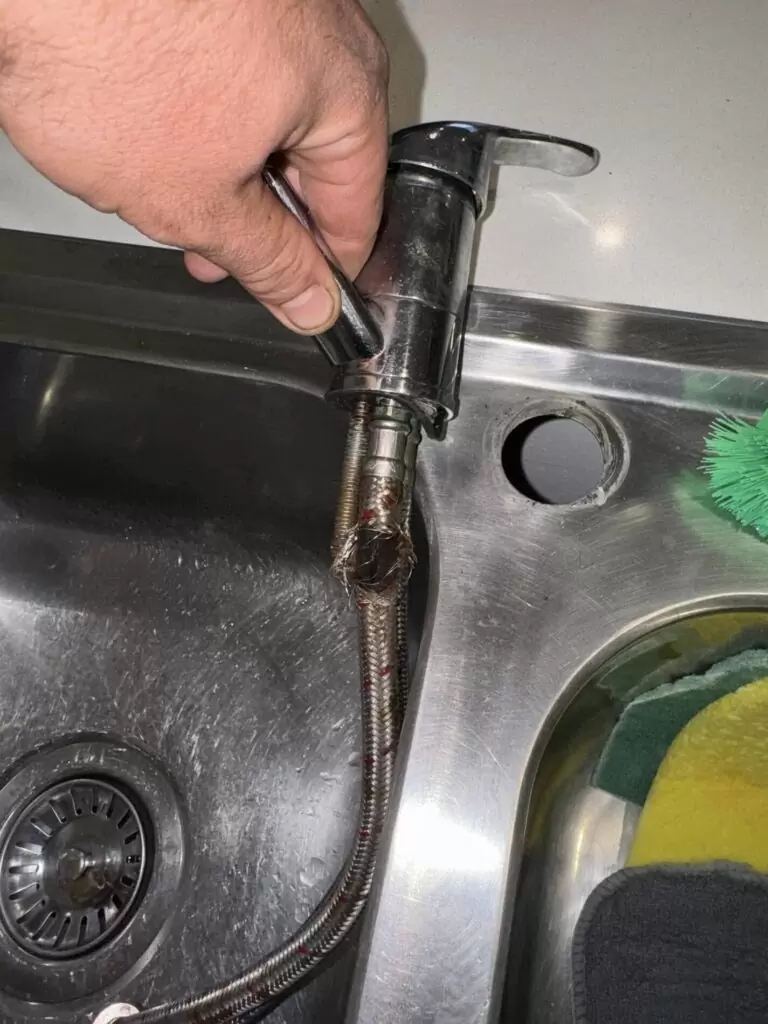
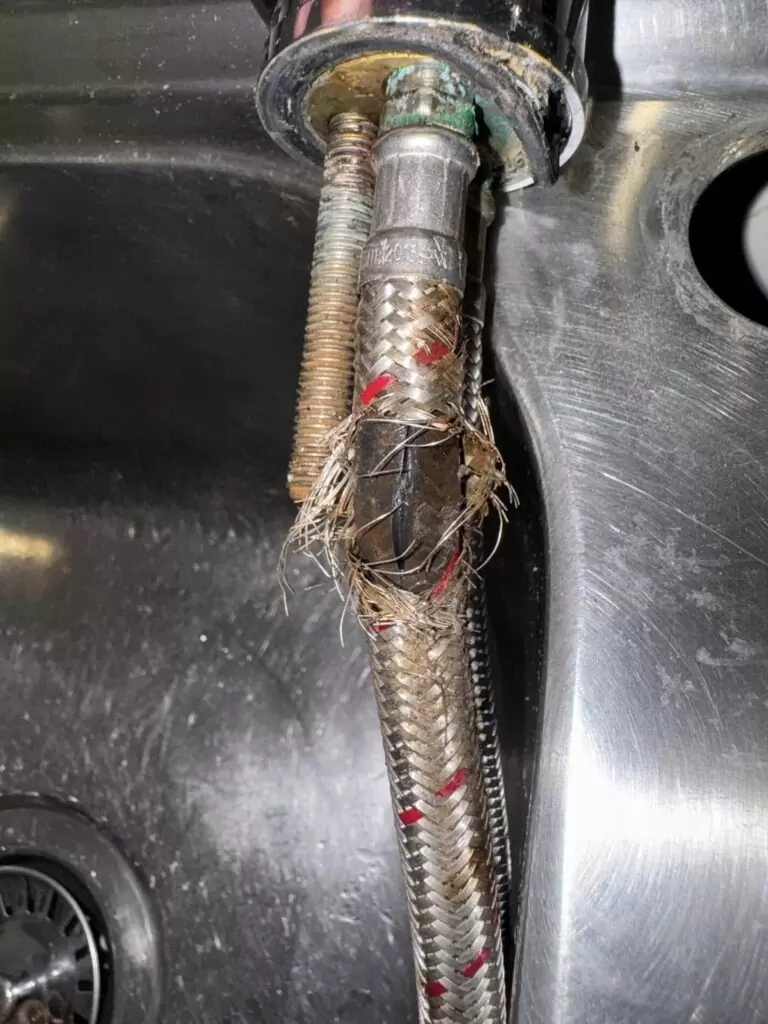
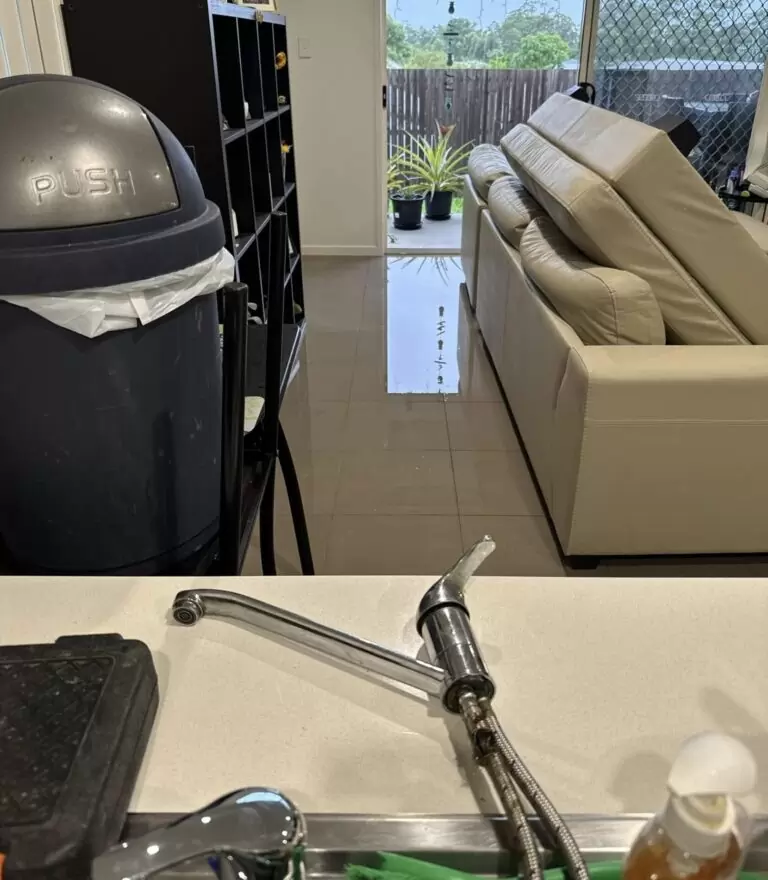
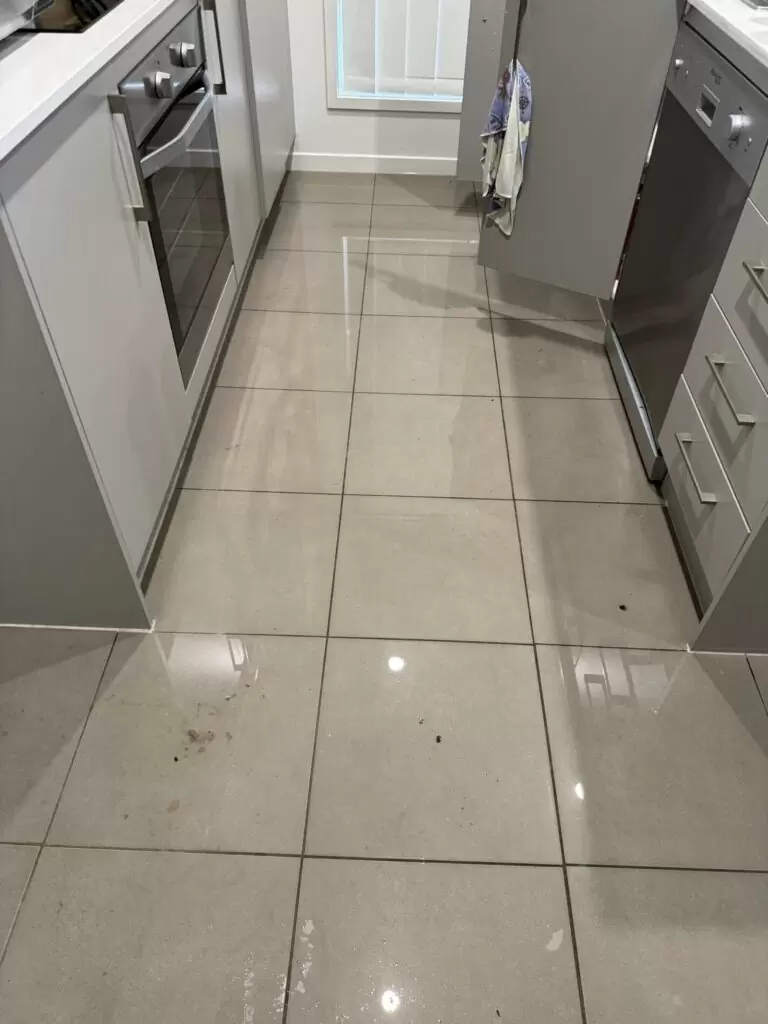
Real burst flexi hose failure under a kitchen sink in a Pimpama home on the Gold Coast. The braided water supply line split without warning, allowing water to flood the kitchen and living area. If this happens, turn off the isolation valve or mains water if safe and call a licensed plumber.
If You’re Renting or Managing the Property
The immediate safety steps are the same whoever owns the property. Shut off the water if you can do it safely, stay clear of electrical risks, and move belongings out of the way.
What changes is who arranges the repair. Report the burst to your landlord, property manager or body corporate as soon as the water is under control, and keep a record of when you reported it and what you were told. Take your own photos regardless, because you may need them independently of the owner’s insurance claim.
Under Queensland tenancy rules a burst pipe generally counts as an emergency repair, which means it can be arranged without the usual delays. If you can’t reach the owner or agent and water is still causing damage, call us and we’ll talk you through the options.
Is the Burst Pipe on Public Land? Report It to Council
Not every burst water pipe outside the house is the homeowner’s problem to fix. If the failure appears to be on the street main, footpath, nature strip, or any other council-managed infrastructure, it falls outside your boundary and outside your responsibility.
A burst water main or water pooling on public land needs to be reported to Gold Coast City Council as quickly as possible so they can respond before the damage to surrounding infrastructure worsens. You can report it directly via the City of Gold Coast’s water and sewage fault reporting page.
As a general rule, anything from the water meter out to the street main is council’s responsibility. Anything from the meter into your property is yours. If you’re unsure which side of that line the burst falls on, particularly near the front boundary where it isn’t always obvious, call Local Plumbing & Gas Co. and we can help you work it out before you report to the wrong place or attempt a repair that isn’t yours to make.
What to Expect When Our Team Arrives
When our team arrives for a burst pipe emergency on the Gold Coast, the first thing we do is assess the damage on site: the location of the failure, the extent of the damage, and what the repair involves. You’ll receive upfront pricing before any work begins, so there are no surprises once the job is underway.
Our licensed plumbers carry the parts and equipment to handle the full range of burst pipe scenarios on the first visit, from a failed flexi hose under a vanity to a pipe section replacement inside a wall or underground. We explain your repair options clearly and get to work as soon as you’re happy to proceed.
We specialise in burst pipe repairs across the Gold Coast, with 24/7 availability and a $0 call out fee at any hour. For the full picture on what the repair involves, from diagnosis through to reinstatement, our guide to burst pipe repair on the Gold Coast covers it in detail. If you have a burst pipe right now, contact our team and we’ll have someone with you as fast as possible.
Should I Turn Off the Water at the Mains?
Yes, if you can reach it safely. Shutting off the mains stops more water feeding the burst pipe and is the single most useful thing you can do in the first minute. If the valve is stuck, you can’t locate it, or water keeps running heavily after you’ve closed it, call us straight away rather than persisting on your own.
Can I Temporarily Fix a Burst Flexi Hose Myself?
A burst flexi hose isn’t a DIY job. These braided hoses connect directly to the pressurised water supply and can release water extremely quickly, and replacing one is licensed work under the Queensland Plumbing and Drainage Act 2018. Close the isolation valve or the mains if it’s safe, keep the area clear, and call a licensed plumber.
What If Water Is Near Power Points or Appliances?
Water near electrics is the one situation where you should stop and stay back rather than push on. Don’t touch wet switches, plugs or appliances, and don’t stand in water to reach the switchboard. Turn off the power only if the board is dry and safely accessible. Sparking, smoke or a burning smell means calling 000 immediately.
What Should I Do About Water Coming Through the Ceiling?
Ceiling leaks need extra caution because of the weight of trapped water and the proximity to light fittings. Keep people out from underneath, especially if the plaster is sagging. If it’s bulging, puncturing it at the lowest point releases the water in a controlled way rather than letting the ceiling come down on its own.
Do I Really Need Photos Before Cleaning Up?
Taking photos first is worth the two minutes it costs. Capture the leak source, the wet areas, damaged belongings and anything you did to limit the spread. Once you’ve mopped and shifted furniture, that evidence is gone, and it’s what supports your conversation with your insurer, landlord or property manager.
When Should I Call an Emergency Plumber Rather Than Wait?
Call straight away if water is spreading, you can’t isolate the supply, the leak is near electricity, a flexi hose has gone, water is coming through a ceiling, or the source is hidden or underground. A burst pipe doesn’t improve with time, and if you’re weighing it up at all, that’s usually your answer. We’re available 24/7 across the Gold Coast with a $0 call out fee.