Signs of a Sewer Line Backup — And What to Do About It

A sewer line backup on the Gold Coast is one of the more serious plumbing emergencies a homeowner can face — and one of the easier ones to misread. When a single toilet blocks or one drain runs slowly, the problem is usually localised to that fixture. When multiple drains back up at the same time, water rises in the wrong places, or a foul smell spreads through the house, the blockage is in the main sewer line — the pipe that carries all wastewater from your home out to the Council network. That’s a different problem entirely, and it needs to be treated as one.
Left unaddressed, a main sewer line backup creates serious health risks. Sewage contains bacteria and pathogens that pose a genuine hazard to anyone in the home. The property damage that follows — contaminated flooring, saturated wall cavities, affected subfloor — compounds quickly once wastewater has nowhere to go.
This guide covers how to recognise the signs of a sewer line backup, what causes them on the Gold Coast, what to do while you wait for our team, and how we diagnose and fix the problem.
How a Sewer Line Backup Differs from a Blocked Drain
Every drain in your home — every sink, shower, bath, toilet, floor waste, and laundry tub — connects to an individual drain line. Those individual lines all feed into a single main sewer line that runs underground from your home to the Council sewer network. Wastewater from every fixture in the house travels through that main line on its way out.
A blocked drain is a localised problem. The blockage sits in the individual line serving one fixture, and only that fixture is affected. The rest of the house drains normally. A blocked sewer line on the Gold Coast is a whole-system problem. When the main line is obstructed or damaged, wastewater from every fixture has nowhere to go — and the effects show up across the house simultaneously.
That distinction matters because the diagnosis, the repair method, and the urgency are all different. A single slow-draining sink or a toilet that won’t flush is worth investigating, but it’s not necessarily an emergency. Multiple fixtures backing up at the same time is. If only one fixture is giving you trouble, it may be a standard blocked drain rather than a main sewer line issue.
Signs You Have a Sewer Line Backup
The signs of a sewer line backup are distinct from a single blocked drain in one important way — they appear across multiple fixtures at once. That pattern is the clearest diagnostic signal that the problem is in the main line rather than an individual drain.
Multiple Drains Running Slowly or Not at All
When the shower, the bathroom sink, and the toilet are all draining poorly at the same time, the blockage is not in any one of those fixtures — it’s downstream of all of them, in the shared main sewer line. Clearing one fixture offers temporary relief at best. The underlying restriction remains, and the slow drainage returns.
Gurgling Sounds from Drains When Other Fixtures Are In Use
If flushing the toilet causes gurgling at the shower drain or floor waste, or running the washing machine produces bubbling sounds from a nearby drain, air is being displaced through the system by water that can’t move freely through the main line. The gurgling isn’t coming from the fixture you’re using — it’s coming from the nearest available exit point for trapped air.
Wastewater Rising in the Wrong Fixture
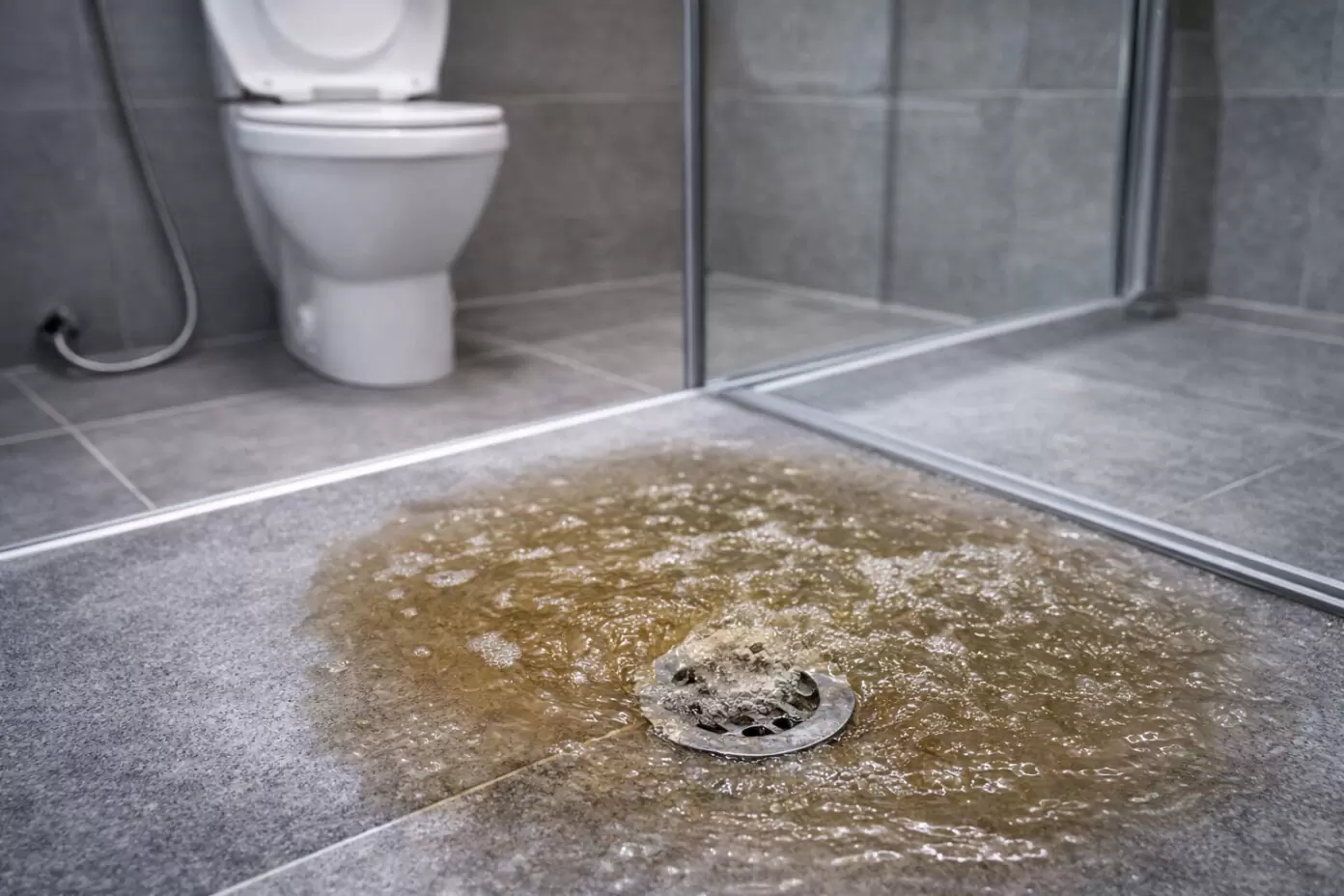
Flushing the toilet and watching water rise in the shower base or bath is one of the most telling signs of a main sewer line backup. Wastewater has nowhere to go forward, so it finds the next lowest exit point. This is no longer a slow drain situation — it’s active sewage backing up into your home, and it warrants an immediate call to our team.
Foul Sewage Smell from Multiple Drains
A persistent sewage odour from a single drain can have a simple cause. When the smell is coming from multiple drains throughout the house — bathroom, laundry, kitchen — sewer gases are escaping back through the system from a blockage or damaged section in the main line. The smell tends to be worse after heavy water use, when the restricted line is under the most pressure.
The Overflow Relief Gully Activating
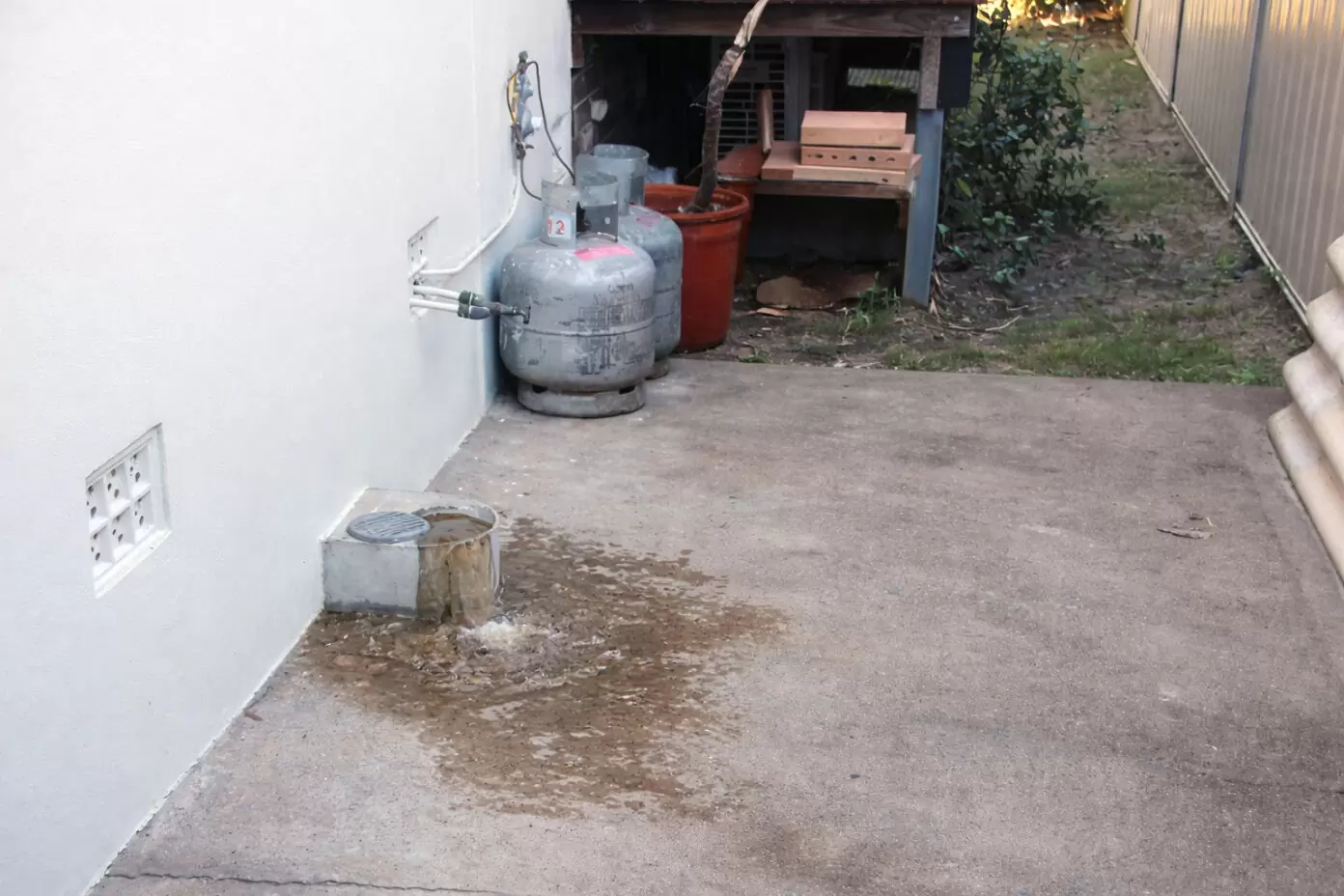
Every Queensland home is required to have an overflow relief gully — a small drain fitting located outside the home, usually near the bathroom or laundry wall. The ORG is designed to act as a pressure release — when the sewer line backs up, the gully’s grate pops off and sewage exits into the yard rather than back into the house through your toilets and floor wastes. If you can see water or sewage escaping from the ORG, the main sewer line is under active pressure. This is urgent.
A Wet Patch or Unusually Lush Section of Lawn

If part of your yard is consistently wetter than the rest, stays green during dry periods, or the ground feels soft and saturated without recent rain, sewage may be leaking from a cracked or damaged section of the underground sewer line. Gold Coast properties in established suburbs — particularly those with older clay pipe infrastructure in areas like Benowa, Ashmore, and Bundall — are more susceptible to this type of underground failure, where root intrusion or ground movement has compromised the pipe before any surface symptoms appear.
Sewage Smell or Wet Ground Following Heavy Rain
This is a pattern specific to South East Queensland. During significant rainfall events, stormwater can infiltrate the sewer network — through non-compliant overflow relief gullies, cracked pipe joints, or overloaded Council infrastructure — and overwhelm the system’s capacity. When that happens, wastewater can be pushed back through private sewer connections and into homes. If you notice sewage symptoms that appear or worsen after heavy rain rather than after normal household water use, the cause may be network-level rather than confined to your property alone.
What Causes a Sewer Line Backup on the Gold Coast
Several things can cause a sewage backup on the Gold Coast — some within the property, some beyond it:
- Tree root intrusion. Queensland’s year-round growth means roots never go dormant. Ficus, poinciana, and other established species actively seek moisture through every season, finding their way into sewer pipes through hairline fractures and deteriorating joints. Once inside, they branch rapidly and form a root mat that catches debris until the line is fully blocked. The most common cause of sewer backups we attend on the Gold Coast.
- Flushing the wrong things. Wet wipes — including products labelled flushable — don’t break down in water the way toilet paper does. Sanitary products, cotton items, and paper towels behave the same way, accumulating at joints, bends, and root mats until the line is restricted.
- Grease and fat buildup. Grease poured down kitchen drains coats the interior of pipes over time, progressively narrowing the line and creating a surface that catches everything passing through it.
- Structural pipe damage. Cracked sections, collapsed pipe, or pipe that has sagged and created a low point where waste pools restricts flow regardless of what’s being flushed. Older clay and terracotta lines are most susceptible.
- Council sewer main overflow. During significant SEQ rainfall events, the municipal network can be overwhelmed by stormwater infiltration, forcing wastewater back through private connections. When this is the cause, neighbouring properties are typically affected simultaneously.
For a full breakdown of what causes blocked and damaged sewer pipes on the Gold Coast, our guide to causes of blocked sewer pipes covers each in detail.
What to Do When Your Sewer Line Backs Up
When a main sewer line backup strikes, work through these steps in order.
- Stop using all water immediately. Every litre sent down any drain — flushing a toilet, running a tap, starting the dishwasher — has to go somewhere. If the main line is blocked or restricted, that water comes back up through the lowest available exit point. Continuing to use water while the line is backed up makes the situation worse quickly.
- Keep people and pets away from affected areas. Sewage is a genuine health hazard — it contains bacteria, pathogens, and contaminants that pose a risk to anyone who comes into contact with it. Don’t attempt to clean up sewage overflow without appropriate protection, and don’t let children near affected areas.
- Don’t attempt to clear the blockage yourself. A main sewer line backup is not a plunger job. DIY clearing attempts can force the blockage further into the system or cause sewage to surface in additional locations.
- Check your overflow relief gully. If the ORG is actively overflowing, the system is under pressure — leave it. The gully is doing its job by directing sewage outside rather than back into the house. Don’t cover or obstruct it while the backup is active.
- Check whether the issue is in the Council main. If your neighbours are experiencing the same symptoms simultaneously, or if the backup followed a heavy rainfall event, the cause may be in the Council sewer main rather than your private line. Report it via the Gold Coast City Council’s water and sewage fault reporting page so the network issue can be investigated.
- Call the Local team on 1800 562 251. Call us for everything on the private side of the connection, including assessment, clearing, and repair — we’re available 24/7 with a $0 call out fee.
How Local Plumbing & Gas Co. Fixes a Sewer Line Backup
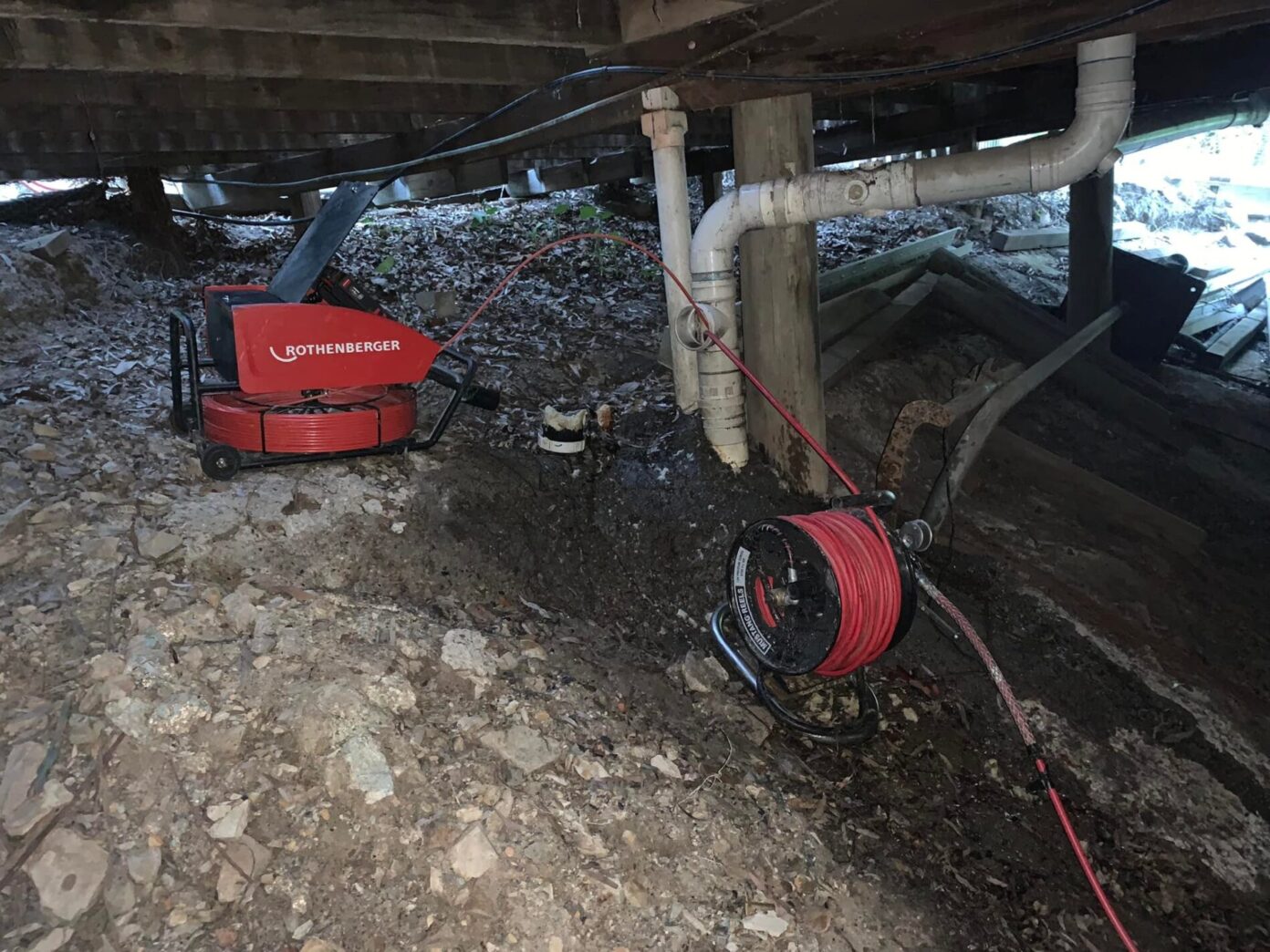
No two sewer line backups are identical, and the right fix depends entirely on what’s causing the restriction and the condition of the pipe. Our process starts with diagnosis before any clearing work begins.
The first step is a CCTV drain inspection — a waterproof camera fed through the line to identify the exact location and nature of the blockage. Whether it’s a root mat, a grease and debris accumulation, a structural crack, or a section of collapsed pipe, the camera confirms what we’re dealing with before we commit to a method. This matters because the sewer backup signs visible at the surface — multiple fixtures backing up, an activating ORG, sewage smell throughout the house — tell us the main line is compromised, but not why or where.
Once we know what we’re dealing with, high-pressure water jetting is the primary clearing method for most blockages. Hydro jetting delivers pressurised water through the line at sufficient force to cut through root mats, break up compacted grease, and flush debris out of the pipe entirely — restoring the line to near-original capacity rather than simply punching a path through the obstruction. For established root intrusion where jetting alone isn’t sufficient, root cutting equipment is used first to break up the root mass before the line is flushed clean.
If the CCTV inspection reveals structural damage — a cracked pipe, a collapsed section, or a bellied line — clearing the blockage addresses the immediate backup but not the underlying cause. Structural issues require repair. Our guide to sewer line repairs on the Gold Coast covers the repair methods available depending on the extent and nature of the damage.
If you have a blocked sewer drain on the Gold Coast, get in touch with Local Plumbing & Gas Co. From the initial camera inspection through to clearing and any repair work required, we handle the full scope.
When to Call the Local Team for Backed-Up Sewer Lines
A sewer line backup is not a situation to monitor and see if it resolves. Sewage exposure is a health hazard, and the longer wastewater has nowhere to go, the greater the risk of contamination and property damage. If you’re seeing multiple drains backing up, an activating ORG, or sewage surfacing anywhere in or around the home, the time to call is now — not after another flush to see what happens.
Our QBCC licensed plumbers are available 24 hours a day, seven days a week across the Gold Coast with a $0 call out fee. Contact us to book an assessment or report an emergency.