Sewer Line Repair on the Gold Coast — A Complete Guide
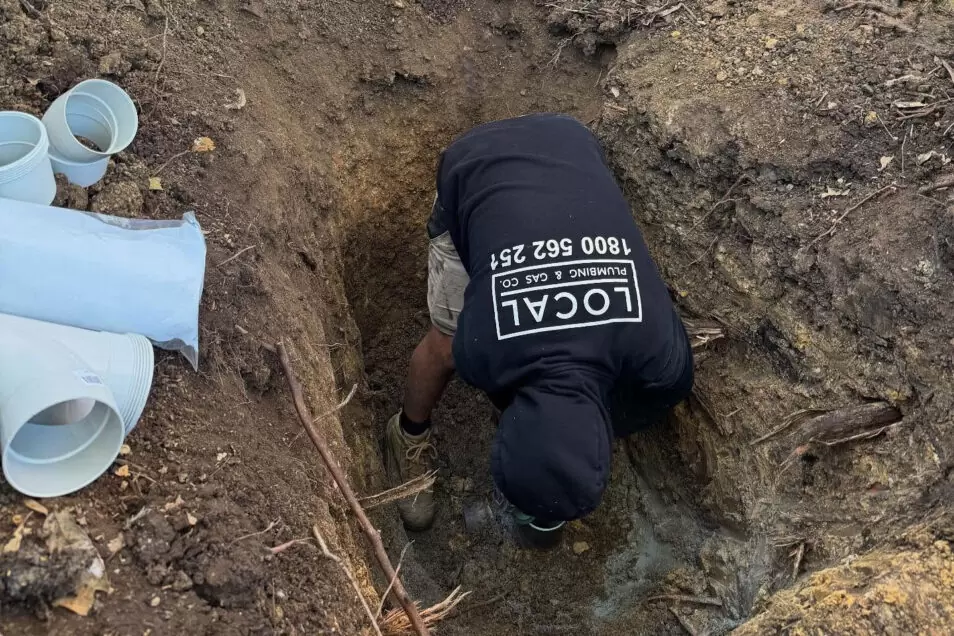
A damaged sewer line can turn a straightforward repair into a full excavation job overnight. Catching sewer repairs early — before a cracked pipe becomes a collapsed one — is the difference between a few hours of work and tearing up your yard for days.
For Gold Coast homeowners, the risk is real. Ageing clay and cast iron pipes, aggressive tree root systems, and Queensland’s reactive soils all put pressure on sewer laterals year-round. By the time the signs are obvious, the damage is rarely minor.
This sewer repair guide covers everything: what causes sewer line damage, how to spot it early, repair versus replacement, trenchless options, costs, and who’s responsible for what under Queensland law. Our team handles sewer line repairs across the Gold Coast daily — so if anything here sounds familiar, we’re easy to reach.
What Is a Sewer Line and Who Is Responsible for It?
Your residential sewer line runs from your home to a connection point on the council’s main sewer line — and everything between your house and that connection point is your responsibility. Under Queensland law, that section is split into two parts: the upper lateral, which runs from your home to the property boundary, and the lower lateral, which continues from the boundary to the connection point. Both fall on the homeowner for maintenance and repair.
The Gold Coast City Council owns and maintains the main sewer line — but that’s where their responsibility ends. Any residential sewer line repair, from a cracked pipe under your yard to a root-damaged lateral near the boundary, sits with you.
Where it gets complicated is the boundary itself. In most cases it aligns with your property line, but in South East Queensland it can shift up to 1.5 metres either way. If a sewer main line repair is needed and there’s any question about where the council’s responsibility ends and yours begins, a CCTV inspection is the only reliable way to confirm it. We carry that out before any repair work starts — so you’re never paying for something that isn’t yours to fix.
Main sewer line repair, where the fault sits beyond the connection point, is a council matter. If that’s the case, we’ll tell you, point you to the right reporting channel, and make sure you’re not left in the dark about next steps.
Common Causes of Sewer Line Damage on the Gold Coast
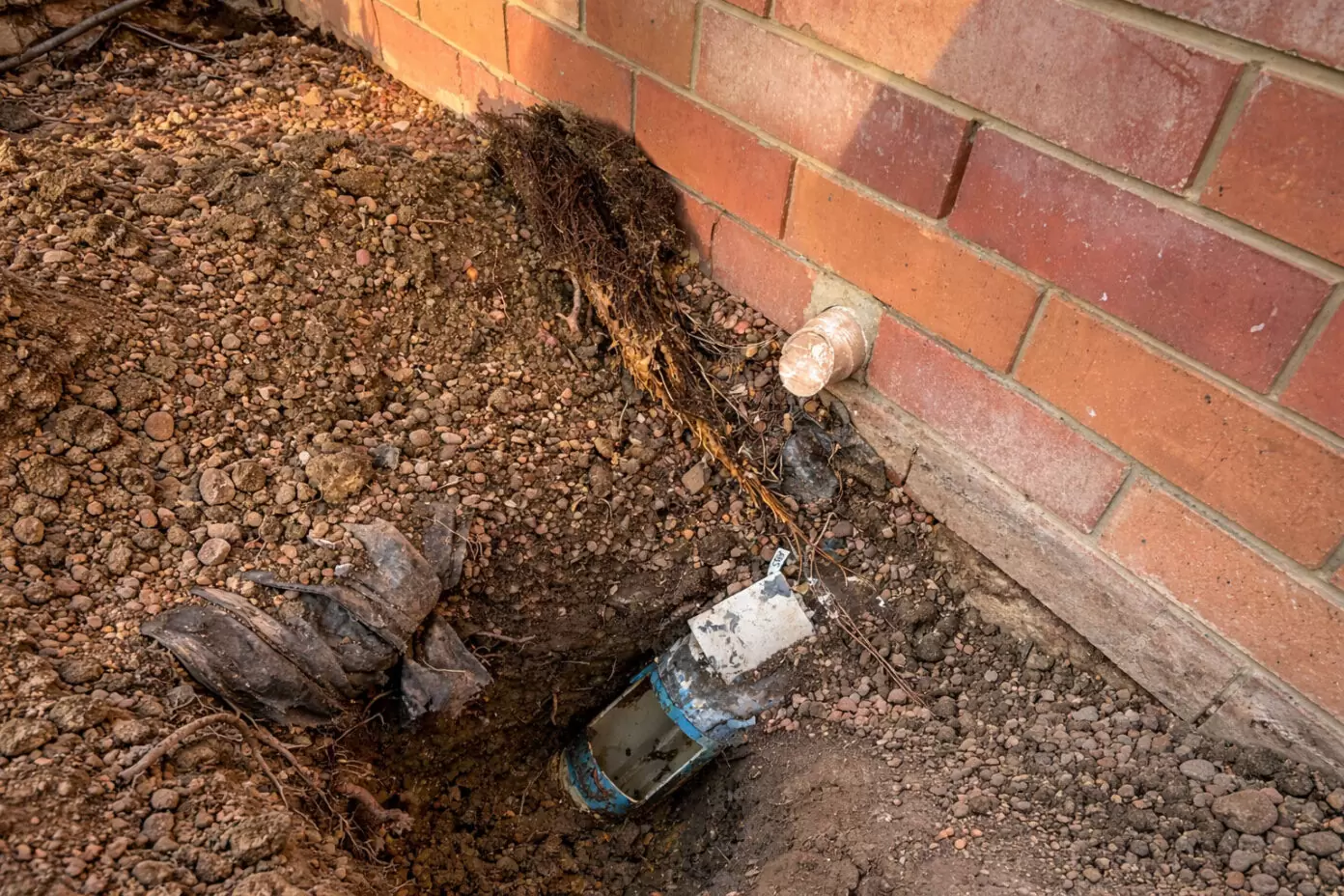
Sewer line damage on the Gold Coast comes down to a handful of causes that come up again and again.
- Tree root intrusion is the most common. Roots follow moisture, and a sewer pipe is a reliable source. Once a root finds a joint or a hairline crack, it works its way in and grows until the pipe is partially or fully blocked. Older properties with established gardens are particularly exposed.
- Pipe age and material plays a significant role. Much of the Gold Coast’s older housing stock still has clay, earthenware, or cast iron pipes underground. These materials were standard for decades but they degrade — clay and earthenware crack, cast iron corrodes, and joints fail over time. They were never designed to last indefinitely.
- Ground movement is a factor that catches many homeowners off guard. Queensland’s reactive soils shift with moisture changes, and the Gold Coast’s climate — wet seasons followed by dry periods — accelerates that cycle. Soil shrinkage and expansion puts stress on buried pipes, particularly at joints, and can cause cracking or misalignment without any visible surface warning.
- Fat, oil, and grease build up inside pipes over time, narrowing the flow path and accelerating blockages. Combined with ageing pipe material, it’s a reliable recipe for problems.
- Construction and excavation work near your property can also cause damage — ground vibration, accidental strikes, and changes to soil pressure around existing pipes all carry risk.
For a full breakdown of what causes sewer line damage on the Gold Coast and how each issue progresses, our guide to blocked sewer pipe causes covers it in detail.
Signs Your Sewer Line Needs Repair
Most sewer pipe repair jobs on the Gold Coast start with a sign the homeowner noticed weeks earlier but didn’t act on — often overlapping with the wider pipe warning signs that show up elsewhere in the home. The earlier you catch it, the simpler the fix.
- Slow draining across multiple fixtures is one of the clearest indicators. A single slow drain is usually a localised blockage. When multiple drains — sinks, showers, toilets — are all sluggish at once, the problem is likely further down the line.
- Gurgling noises coming from drains or toilets after water runs elsewhere in the house point to air being displaced by a partial blockage or damaged pipe underground.
- Foul odour from drains or your yard is harder to ignore. Sewage smell at ground level — especially in patches — often means a cracked or leaking pipe is releasing waste into the surrounding soil.
- Lush grass patches or a wet yard with no obvious cause. A leaking sewer line feeds the soil above it. If one section of your lawn is noticeably greener or softer than the rest, it’s worth investigating.
- Recurring blockages that keep coming back despite being cleared are rarely a coincidence. They usually point to an underlying structural problem — root intrusion, a damaged joint, or a pipe that’s partially collapsed.
- An activated overflow relief gully — the capped fitting at ground level near your home — is a deliberate safety release designed to overflow before sewage backs up inside. If it’s wet or discharging, something is wrong downstream.
Any one of these warrants a closer look. Our full guide to signs your sewer line needs repair covers each symptom in detail, including what a CCTV inspection typically reveals.
Sewer Line Repair Methods — Including Trenchless Options
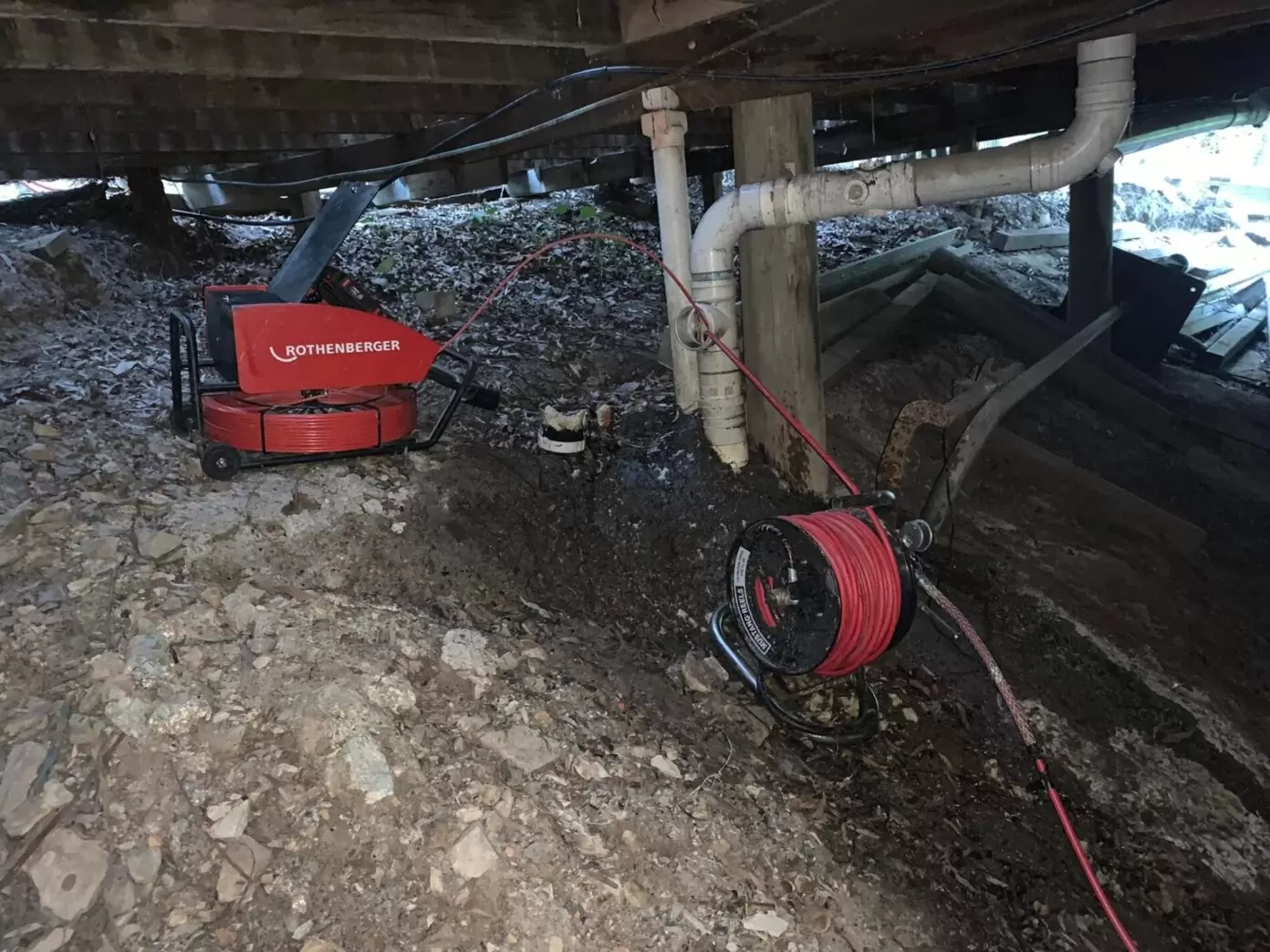
Not every sewer line repair means digging up your yard. Trenchless sewer line repairs have changed the way most residential sewer work gets done — and for the majority of jobs we handle on the Gold Coast, a sewer line repair without digging is exactly what’s possible.
How trenchless repair works
The most common trenchless method is pipe relining, also known as cured-in-place pipe (CIPP). A flexible liner saturated with epoxy resin is fed into the damaged pipe through an existing access point — no excavation required. Once it’s in position, the liner is inflated and cured, forming a new pipe within the old one. The result is a smooth, seamless pipe that seals cracks, closes off root entry points, and restores full flow capacity. A well-installed pipe reline carries a 50-year warranty and is often stronger than the original pipe it’s lining.
The process starts with a CCTV drain inspection. We run a camera through the line to assess the extent of the damage, confirm the pipe diameter, and identify access points. That inspection determines whether relining is viable before any work begins.
When excavation is unavoidable
Pipe relining works when the pipe is damaged but still structurally intact enough to hold a liner. If the pipe has collapsed, shifted significantly, or the damage is too extensive, excavation is the only option. In those cases we dig to expose the affected section, replace it, and reinstate the surface. It’s more disruptive and more expensive — which is exactly why early detection matters.
What determines the method
The CCTV inspection tells us everything we need to make the call — the location of the damage, how severe it is, pipe diameter, and access. We won’t recommend excavation if relining is a viable option, and we won’t attempt a reline on a pipe that won’t hold one.
Sewer Line Repair vs. Replacement — Which Do You Need?
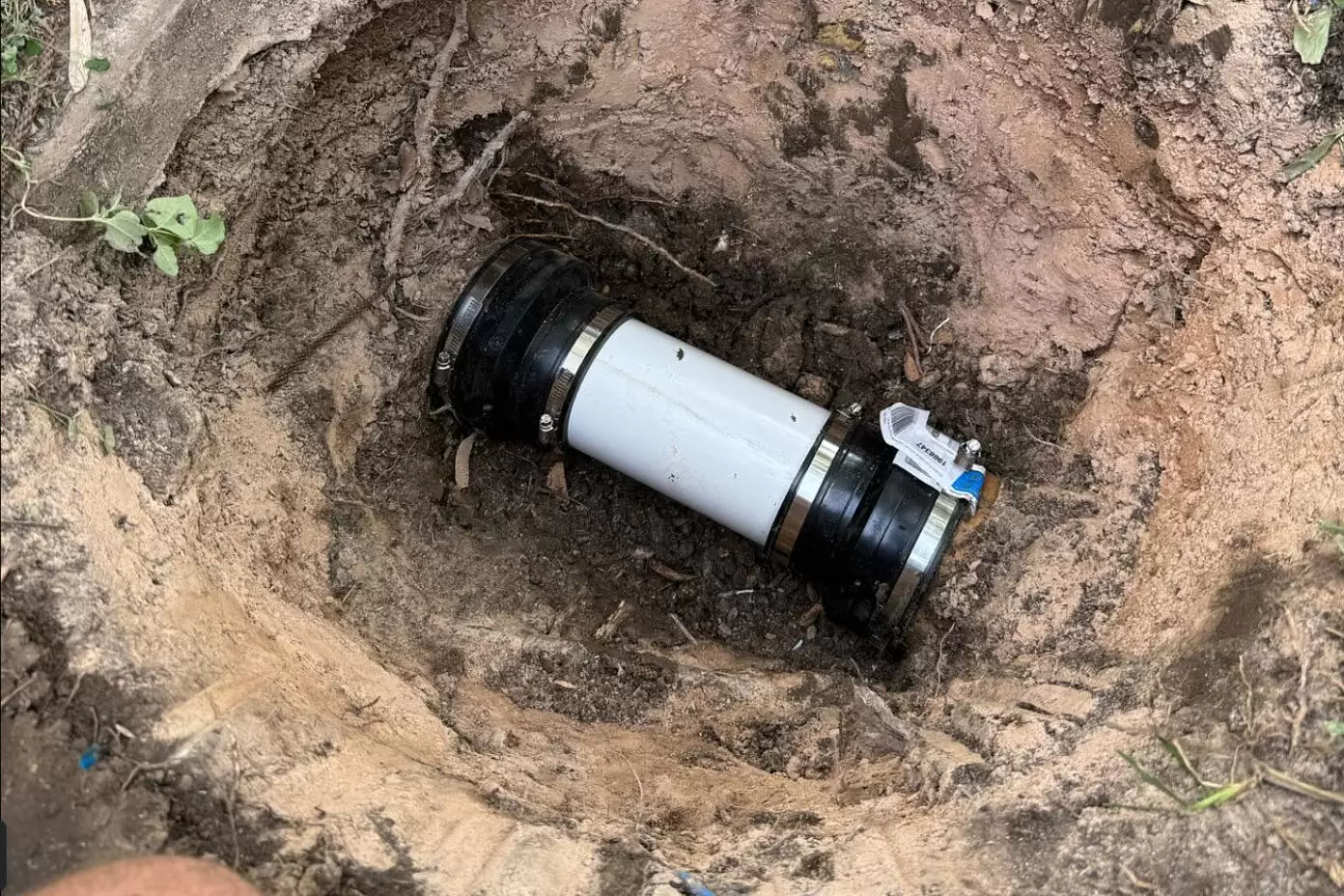
For most sewer repairs on the Gold Coast, the answer comes down to one question: is the pipe damaged, or is it gone?
A damaged pipe — cracked, root-affected, or corroded but still structurally present — is almost always a candidate for relining. Pipe relining is a long-term solution, not a temporary patch. A properly installed reline carries a 50-year warranty and removes the need to revisit the same section of pipe again.
Pipe replacement becomes the right call when the pipe has collapsed, shifted out of alignment, or deteriorated to the point where there’s nothing solid left to reline. Pipe age is a factor too — an earthenware or cast iron pipe that’s already failing in one place is often failing in others. In those cases, replacing the line rather than relining sections is the better cost-benefit decision long term.
The honest answer is that we can’t tell you whether to repair or replace the pipe without a CCTV assessment. What looks like a straightforward repair from the surface can be something more significant once we run the camera through. Equally, what sounds like a replacement job sometimes turns out to be a localised section that’s well suited to relining.
Our Gold Coast plumbers carry out the inspection, explain what we find, and give you a clear recommendation before any work begins.
Sewer Line Backup — Causes and What to Do
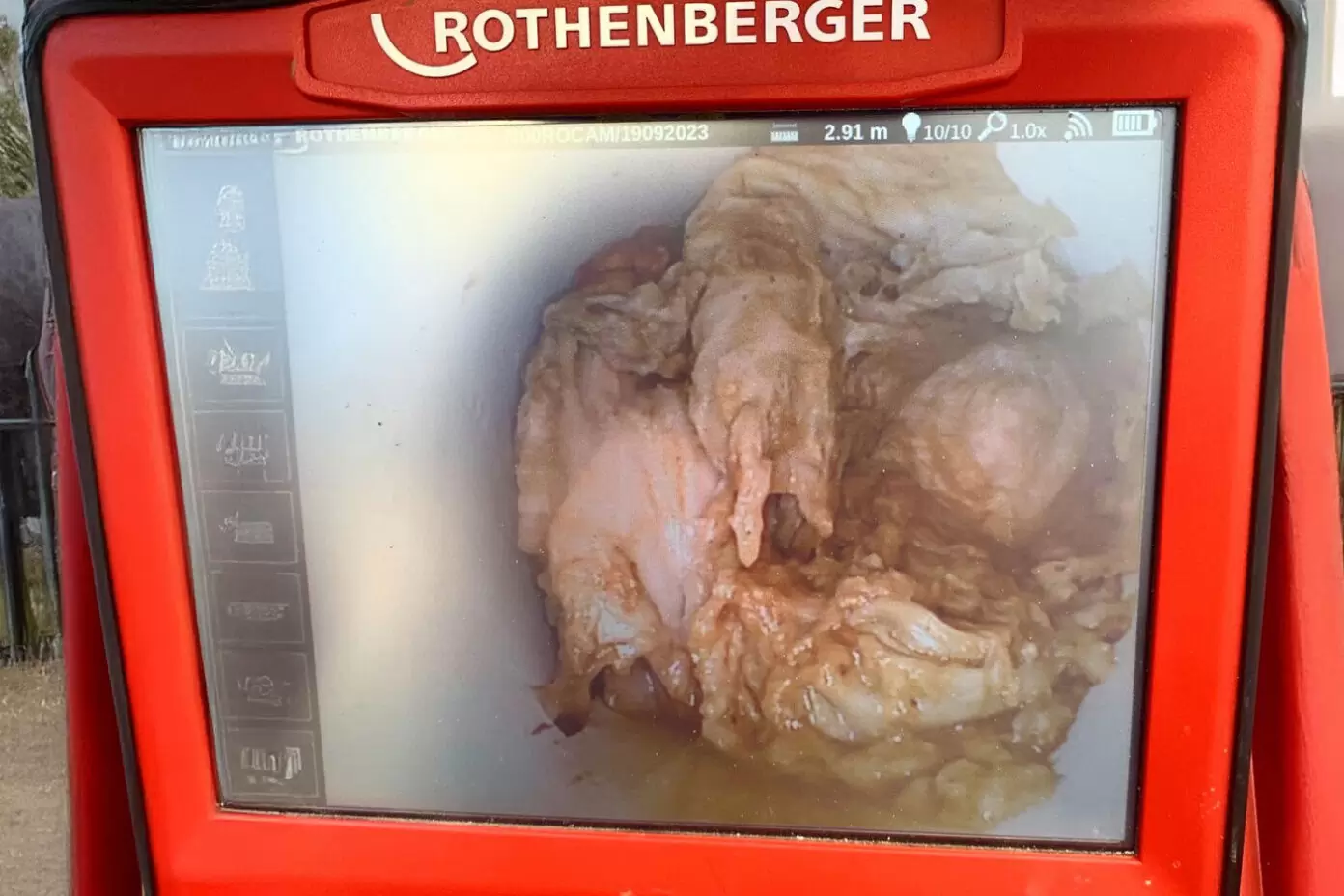
A sewer line backup happens when wastewater can’t move through the line and reverses direction. It’s one of the more unpleasant plumbing emergencies a household can face — and a genuine health hazard if sewage reaches living areas.
What Causes a Backup
The most common triggers are blockages from tree root intrusion, accumulated fat and grease, or a collapsed section of pipe restricting or fully cutting off flow. A backup can also happen when the council’s main sewer line is overwhelmed during heavy rain — in that case the problem isn’t on your property at all.
When multiple fixtures back up at the same time — toilets, floor drains, sinks — the blockage is in the main sewer line running from your home, not in an individual drain.
The Overflow Relief Gully
Every Queensland home should have an overflow relief gully — a capped fitting at ground level, usually near an external wall. It’s designed to activate before sewage backs up inside your home, releasing overflow outside where it’s easier to manage and less likely to cause damage or contamination indoors.
If your overflow relief gully is wet, discharging, or the cap is missing, that’s an immediate sign of a sewer backup in progress. Don’t ignore it.
What to Do
Stop using water in the house immediately — every litre you run adds to the backup. Keep people away from any affected area. Sewage overflow is a health hazard and should be treated as one.
Our team is available 24/7 for sewer emergencies across the Gold Coast. We specialise in blocked sewer drains — using hydro jetting where needed to clear the blockage fast — then run a CCTV inspection to find the cause and give you a clear answer on whether further repair is required.
How Much Does Sewer Line Repair Cost on the Gold Coast?
Sewer repairs cost on the Gold Coast varies significantly depending on what the job actually involves — and that’s not a cop-out. A blocked drain clear is a very different job to a full pipe replacement, and costs reflect that.
As a general guide:
- Blocked drain clearing (jetting and CCTV): $280–$700
- Tree root removal: $350–$900
- Traditional pipe replacement: Can exceed $25,000 for large, deep, or hard-to-access pipes requiring excavation
What drives the variation is pipe depth, access difficulty, and the extent of the damage. A short section of accessible pipe costs far less than a long run under a driveway or concrete slab.
A CCTV inspection — generally $250–$450 — is the only reliable way to confirm what you’re dealing with before committing to a repair method. We carry this out before quoting, so you’re not guessing at scope or cost.
How We Handle Sewer Line Repairs on the Gold Coast
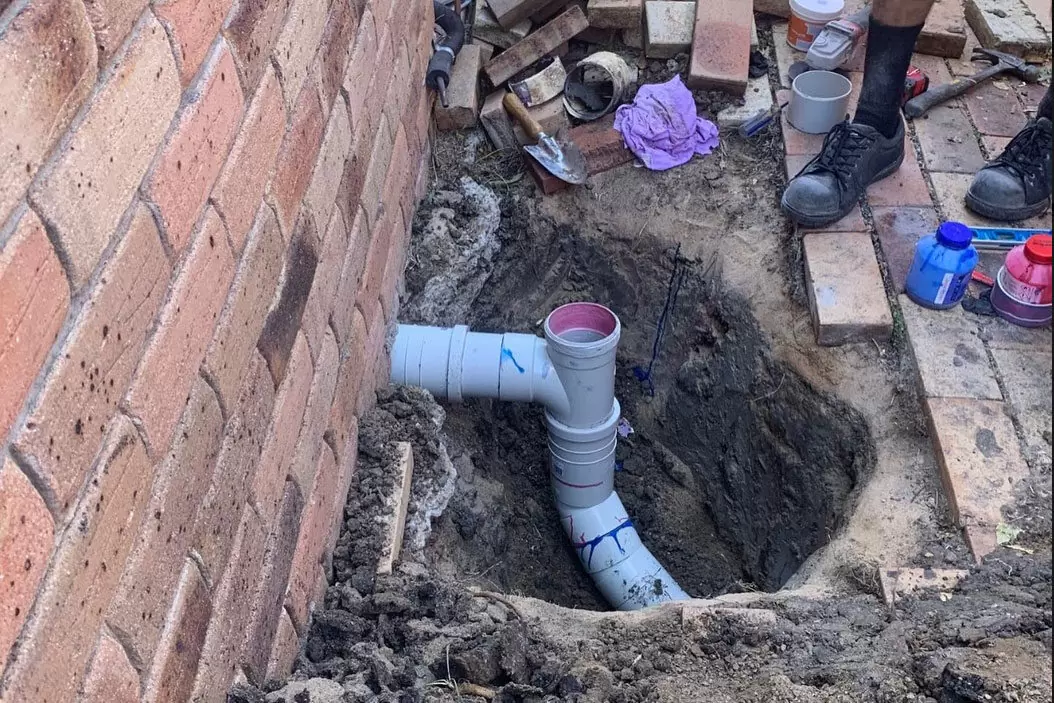
Every sewer repair job we attend starts the same way — with a CCTV drain inspection. Before we quote, before we recommend a repair method, and before any work begins, we run a camera through the line to see exactly what’s going on. That inspection confirms the location and extent of the damage, identifies whether the fault sits on your property or the council’s, and tells us what the repair actually involves.
From there, we give you an upfront quote. No surprises, no scope creep. You know what the job costs before we start.
Our team holds full QBCC licensing and works under the Queensland Plumbing and Drainage Act 2018 — sewer work is licensed plumbing, and it needs to be done properly to pass inspection and stand up long term. We carry a $0 call out fee and are available 24/7 for sewer emergencies across the Gold Coast.
If you’ve noticed any of the signs covered in this guide — slow drains, sewage smell, a wet yard, a backing-up overflow relief gully — don’t wait for it to get worse. Our sewer plumbing services cover the full scope of residential sewer line repair on the Gold Coast.
Call us today on 1800 562 251 to book your sewer repair.