Warning Signs Your Pipes Need Repair
Pipe problems rarely announce themselves. A small leak inside a wall cavity, a hairline fracture in an underground line, a section of pipe quietly corroding behind a cupboard — by the time you notice something is wrong at the surface, the damage underneath is usually well advanced.
Knowing the warning signs your pipes need repair on the Gold Coast can be the difference between a straightforward fix and an expensive, disruptive repair job. At Local Plumbing & Gas Co., we attend pipe-related callouts across the Gold Coast every week — and the pattern we see most often is homeowners who noticed something early but waited too long to act.
This guide covers the most common symptoms of pipe damage, what they’re telling you, and when it’s time to give us a call.
Drops in Water Pressure
A drop in water pressure is one of the most common signs of pipe damage at home — and one of the most misdiagnosed.
If the pressure has dropped at a single tap or showerhead, the cause is usually local — a worn washer, a blocked aerator, or a partially closed isolator valve. That’s a straightforward fix. But if low water pressure is affecting multiple fixtures or the whole house, the problem is almost certainly further along the line.
Whole-house pressure drops — particularly when your water usage hasn’t changed — point to something happening inside the pipe network itself. A pinhole leak, a section of corroded pipe narrowing the internal diameter, a partial pipe collapse, or a blockage that’s restricting flow can all produce this symptom. In older Gold Coast properties, internal pipe corrosion is a common culprit. The coastal humidity here accelerates deterioration in galvanised steel pipes, and by the time pressure is noticeably affected, the corrosion is usually well established.
The mistake most homeowners make is assuming the pressure issue will resolve itself, or attributing it to a supplier problem. If your water pressure has dropped across the house and your neighbours aren’t reporting the same issue, the cause is inside your property — and it warrants a pipe inspection.
Our team at Local Plumbing & Gas Co. uses CCTV drain inspection to locate the source of pressure loss without unnecessary excavation. For a broader look at how pipe problems develop and what repair options are available, see our complete guide to pipe installation and repair.
Unexplained Increase in Your Water Bill
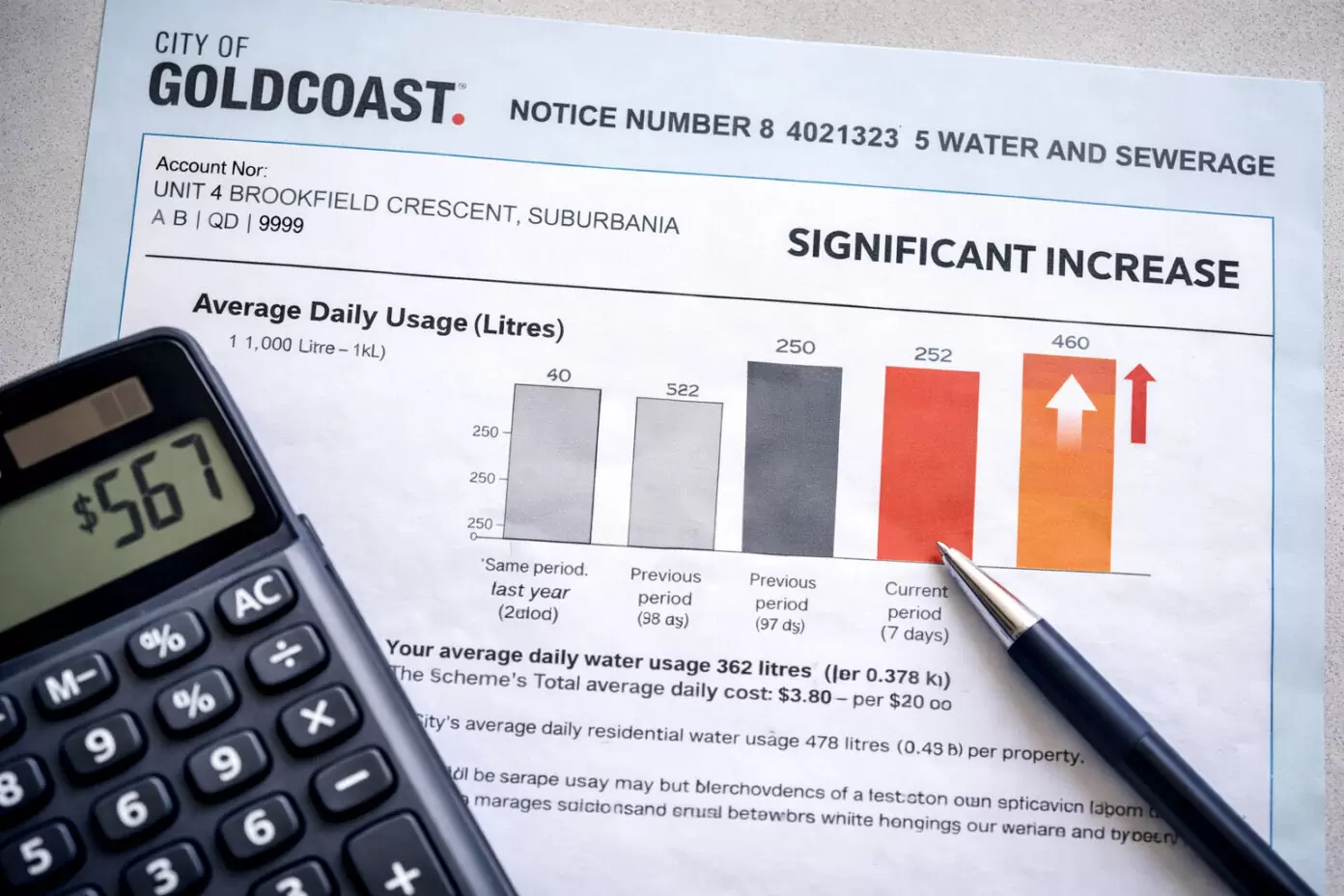
A rising water bill is worth mentioning here, but it’s a symptom covered in detail in our guide to water leak signs Gold Coast homeowners often miss — including the full water meter test walkthrough. If your bill has spiked and you haven’t already ruled out a leak at the fixture level, start there.
What’s specific to pipe deterioration is the pattern rather than the event. A single quarter spike often points to a fixture — a running toilet, a dripping tap. A gradual, multi-quarter creep in kilolitre usage with no obvious source, particularly in a pre-1980 Gold Coast property with galvanised steel or clay pipes, is more likely to indicate a pipe that’s slowly failing. Pinhole leaks in corroding pipe walls lose water consistently but not dramatically — enough to register across billing periods without producing any visible symptom at the surface. If the meter test confirms movement and you’ve already eliminated fixtures, our water leak repairs team can identify whether the source is a fixture fault or deteriorating pipework — without unnecessary excavation.
Damp Patches, Water Stains, and Mould
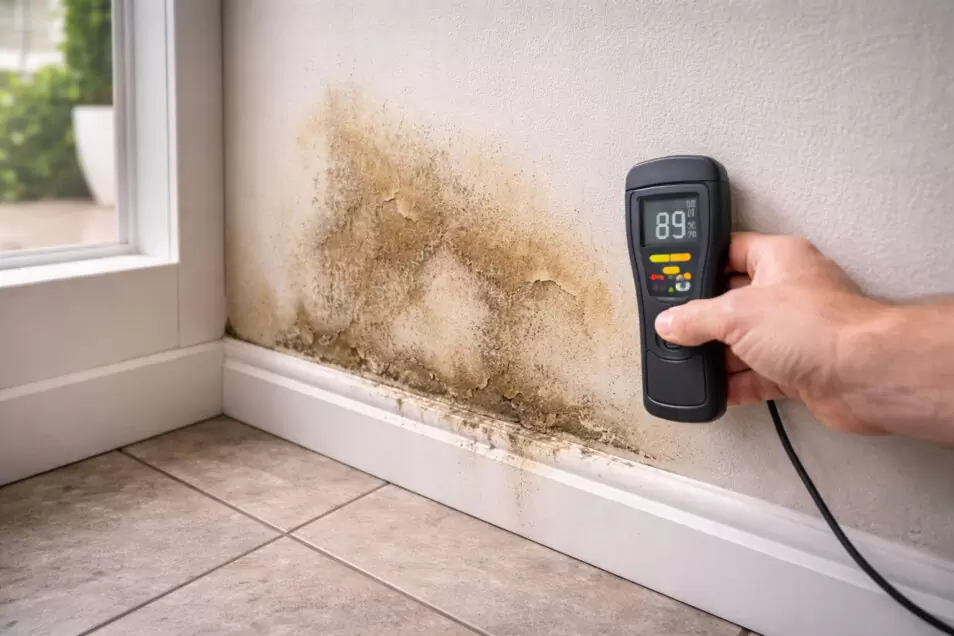
A corroding pipe section or a hairline fracture in an aging pipe will seep slowly for months before it produces enough surface moisture to register. By the time damp patches, water stains, or mould appear on a wall or ceiling that backs onto a pipe run, the pipe has typically been losing water long enough for the surrounding wall cavity to be thoroughly saturated — and for timber framing to have begun absorbing that moisture as well.
On the Gold Coast, this plays out most often in homes with galvanised steel supply pipes. Internal corrosion narrows the pipe wall over time until it develops a slow weep at a joint or a thinned section. The surface signs — a discoloured patch of plaster, a soft ceiling, mould along a skirting board in a room that should be dry — appear well after the damage is established. Repainting or cleaning the mould without identifying the source produces the same result within weeks.
A sagging or visibly soft ceiling is urgent — if you’re seeing that, burst pipe repairs is the immediate priority, and our guide on how to respond when a pipe bursts explains how to release the trapped water safely while you wait. For slower-developing damp patches, our water leak detection service uses acoustic detection and thermal imaging to locate the source without opening walls unnecessarily.
Discoloured or Bad-Tasting Water
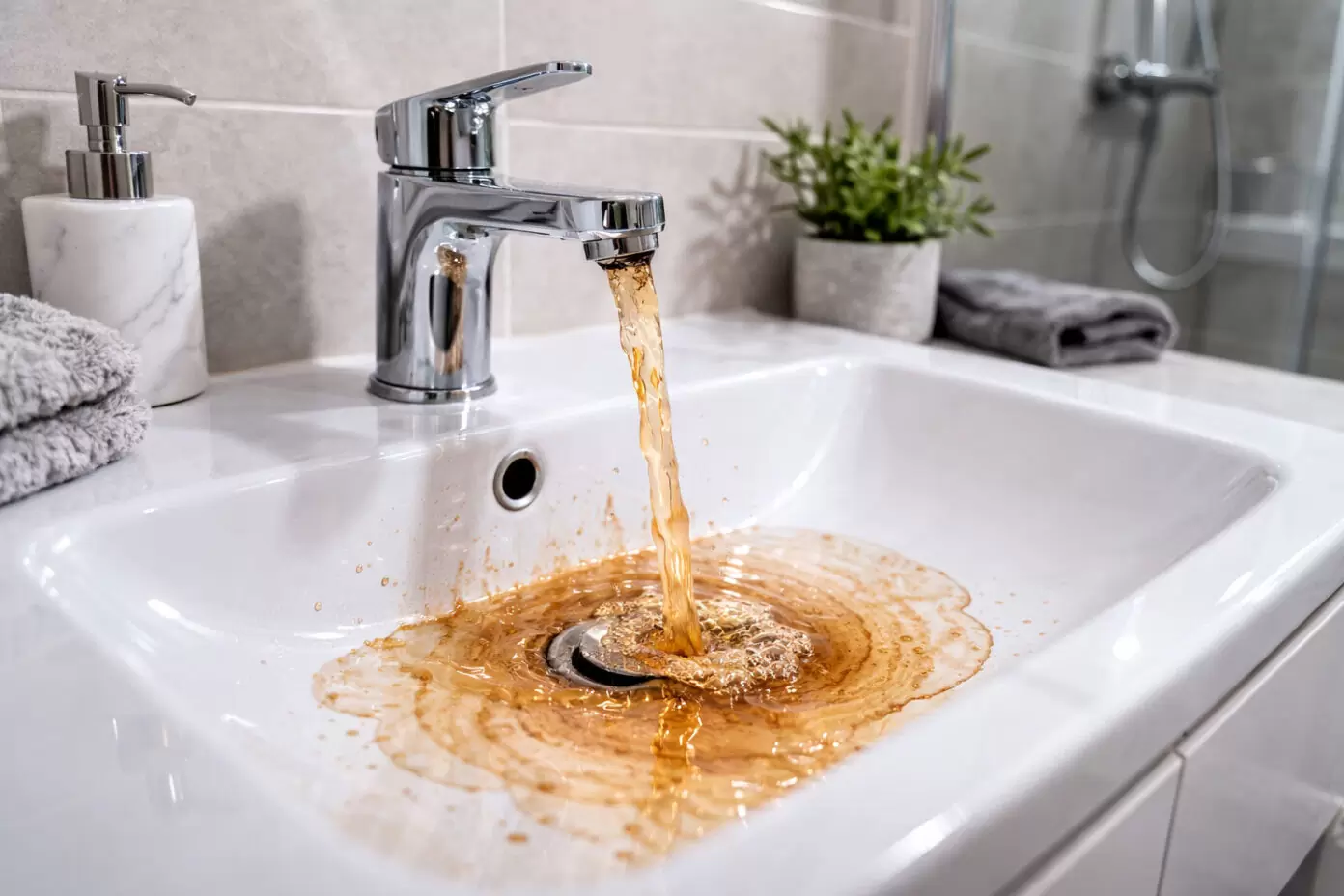
Discoloured water is one of the more confronting signs of pipe damage at home — and one of the clearest. Brown or rust-tinged water coming from your taps, particularly after a period of low use like returning from holiday or after the household wakes up in the morning, points directly to internal corrosion inside the pipe wall.
In pre-1980 Gold Coast properties, galvanised steel pipes are the most common culprit. As the internal zinc coating breaks down over decades, rust builds up along the pipe wall and sheds into the water supply. The discolouration is often worst first thing in the morning when water has been sitting in the pipes overnight, then clears after running the tap for a minute or two. That pattern — rust-tinged water that clears with use — is a reliable indicator of galvanised pipe corrosion rather than a water supply issue from the mains.
Cloudy or sediment-heavy water tells a slightly different story. Pipe scale from mineral buildup can break loose and enter the flow, but sediment in water can also indicate a crack in the line allowing fine debris in from the surrounding soil — particularly relevant in older Gold Coast drainage runs through reactive ground.
Any change in water taste or persistent discolouration warrants a pipe inspection. Don’t assume it’s a supply issue from the water authority without ruling out your own pipe network first — discoloured water pipes are an Australia-wide problem in aging housing stock, and on the Gold Coast the combination of older galvanised supply lines and coastal humidity makes it more common than most homeowners expect.
Unusual Sounds — Banging, Gurgling, or Running Water
Not all signs are visible. Audible symptoms are among the most common signs pipes need repair on the Gold Coast, and they’re often dismissed — written off as the house settling, air in the lines, or just the way older plumbing sounds. Each of the three main pipe noises has a distinct cause and a different level of urgency.
- Banging or knocking from pipes — particularly after a tap is turned off or an appliance finishes a cycle — is water hammer. It happens when fast-moving water is stopped suddenly, sending a pressure spike back through the line. Individual instances aren’t necessarily an emergency, but repeated water hammer stresses pipe joints over time and can eventually cause joint failure or cracked pipe sections. If banging pipes have become a regular occurrence in your home, it’s worth addressing before it creates a bigger problem. Our guide to water hammer and noisy banging pipes covers the causes and fixes in detail.
- Gurgling from drains or a toilet after flushing points to a partial blockage or a blocked plumbing vent stack preventing proper airflow through the drainage system. A single gurgling fixture is usually a localised issue. Multiple fixtures gurgling simultaneously — toilet, shower, and laundry drain all responding to a single flush — is a cracked pipe symptom or a sewer line blockage that needs prompt attention.
- Running water sounds in walls or under floors when all taps are off is the most urgent of the three. Audible water movement with no active fixture running is a strong indicator of an active hidden leak — water moving through a breach in the pipe rather than through the intended line. If you can hear it, it’s already been running long enough to saturate surrounding materials.
Wet Patches or Pooling Water Outside
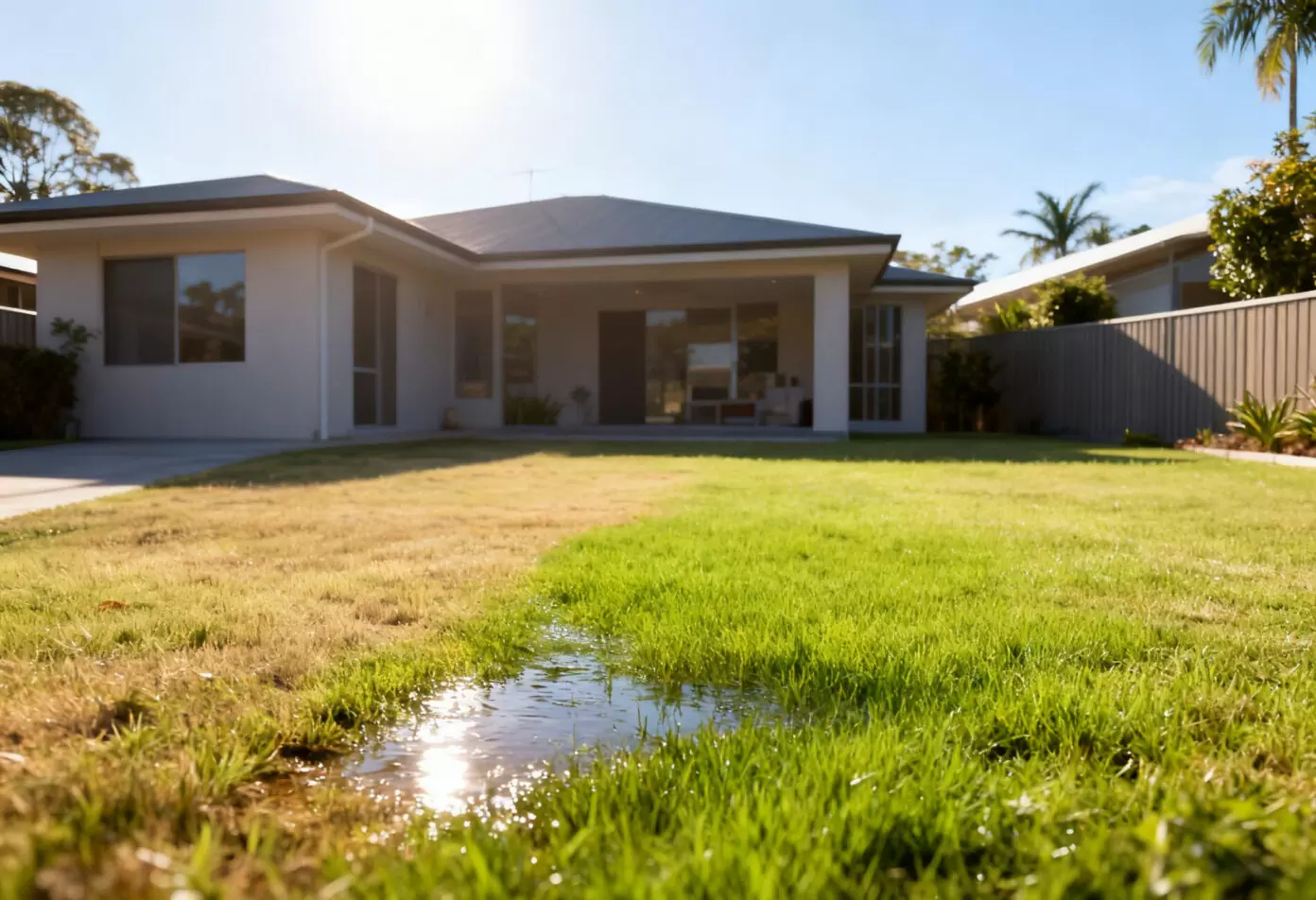
Soggy ground and pooling water in the yard without recent rainfall points to underground pipe damage — but the cause determines the repair, and the two most common causes produce different symptoms.
- Water main leak — a supply pipe losing pressure underground, often accompanied by a bill spike and a noticeable drop in household water pressure.
- Cracked or failing sewer line, which produces a different set of signals: soggy ground with a faint odour, slow drains across multiple fixtures simultaneously, and in some cases unusually lush or accelerated grass growth directly above the line as the soil absorbs nutrient-rich wastewater.
Tree root intrusion is the most common structural cause of both. Ficus, poinciana, and other established trees send roots significant distances in search of water, and underground pipe joints — particularly older clay and terracotta sewer lines in suburbs like Benowa, Ashmore, and Bundall — are a reliable target. Once roots enter a joint, they expand with the pipe over time, eventually cracking the pipe wall and causing both blockage and leakage simultaneously.
A wet patch that persists through dry weather, is accompanied by slow drains or odour, or keeps returning after clearing a blockage points to structural pipe damage rather than a one-off event. Our stormwater drainage team use CCTV inspection to confirm the cause before any excavation is recommended.
Recurring Blockages
One of the clearest signs your pipes need repair on the Gold Coast is a blockage that clears — and then comes back. A drain that responds to plunging or a chemical treatment but blocks again within days or weeks isn’t a usage habits problem. It’s a pipe problem.
Three structural causes produce this pattern.
- Tree root intrusion is the most common — roots that have entered a pipe joint don’t stop growing once the immediate blockage is cleared.
- A cracked pipe section creates a rough internal edge that catches debris with every flush, rebuilding the blockage regardless of what goes down the drain.
- A partially collapsed line narrows the internal diameter permanently, meaning any normal volume of waste will eventually accumulate faster than it can pass through.
When to call Local Plumbing & Gas Co. for pipes rather than just clearing the blockage again: if the same drain has blocked more than twice in a three-month period, or if slow drains are occurring across multiple fixtures simultaneously, the cause is structural. Clearing the blockage treats the symptom. CCTV drain inspection identifies the cause — and on older Gold Coast properties with clay pipe infrastructure in suburbs like Benowa, Ashmore, and Bundall, it’s often the only way to confirm whether root intrusion or pipe collapse is driving the pattern. Our blocked drains team carries out CCTV inspection as a standard first step before recommending any repair.
Visible Corrosion or Rust on Exposed Pipes
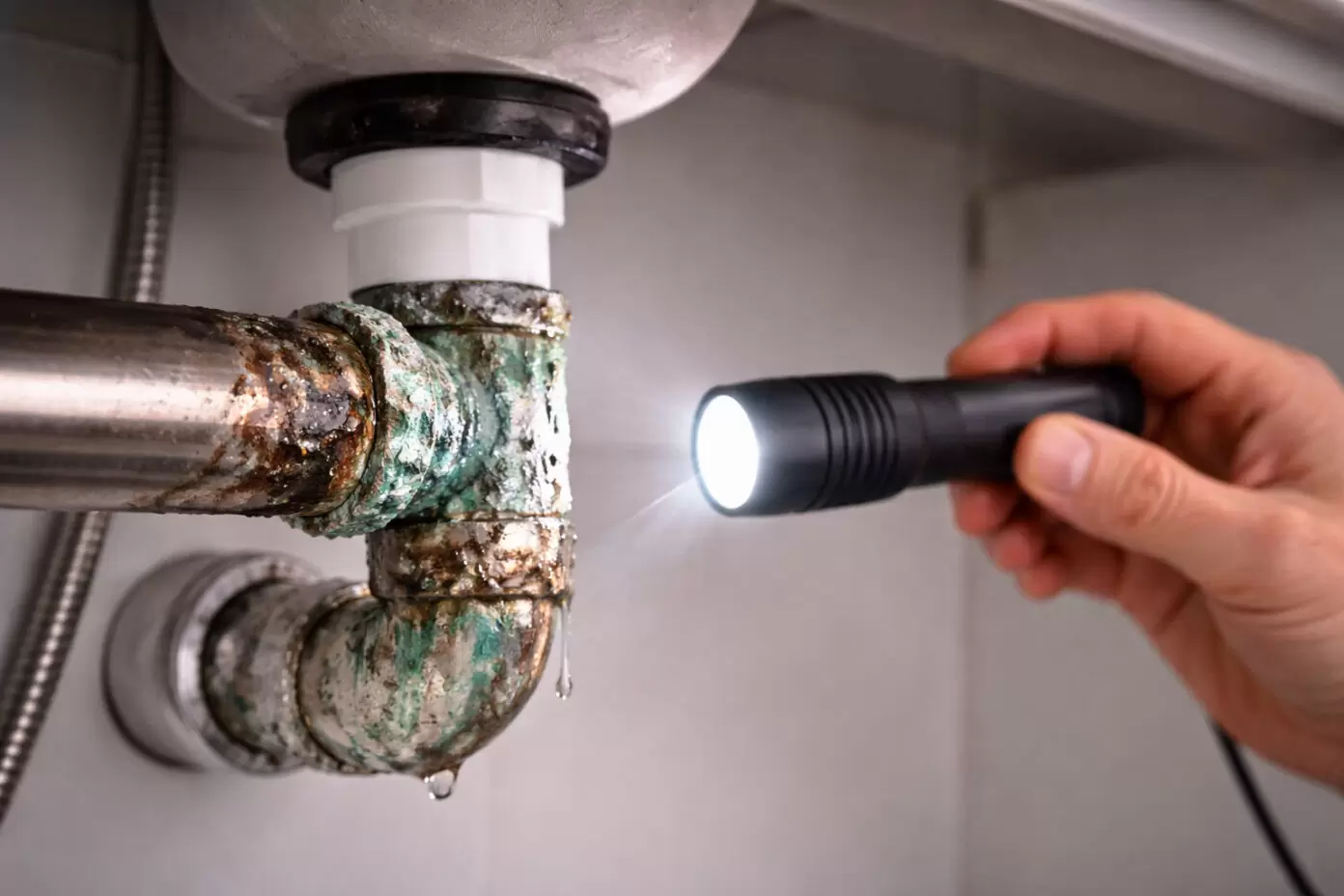
Exposed pipes — under kitchen and bathroom sinks, in roof spaces, at the meter box, behind access panels — are worth inspecting periodically, because what’s visible on accessible sections is usually representative of what’s happening inside concealed ones. Knowing how to tell if pipes need replacing in Australia starts with recognising what deterioration actually looks like.
On galvanised steel pipes, rust spots, flaking, or a rough orange-brown surface texture are signs of pipe damage at home that warrant a broader assessment. Galvanised steel that has reached this stage on its exterior has typically been corroding internally for longer — and a pipe that looks marginal under a sink is rarely in better condition inside the wall. Flaking or pitting galvanised steel is a candidate for pipe replacement rather than repair, not a monitor-and-wait situation.
On copper pipes and fittings, a green or blue-green patina indicates early corrosion. Some surface oxidisation on copper is normal, but a concentrated patina around a joint or fitting — particularly if accompanied by a white mineral crust — points to a slow weep at that connection and a pinhole leak risk developing. White or chalky deposits around any pipe joint, regardless of material, suggest either mineral scale buildup or water seeping and evaporating repeatedly at that point.
What to Do When You Notice These Signs
Every pipe symptom covered in this article follows the same pattern — it starts small and gets worse. A pinhole leak becomes a burst. A partial blockage from root intrusion becomes a collapsed line. Discoloured water from a corroding galvanised pipe eventually means replacing the pipe under emergency conditions rather than planned ones. Early intervention on the Gold Coast is almost always cheaper, less disruptive, and less damaging than waiting until the symptom becomes impossible to ignore.
When to call Local Plumbing & Gas Co. for pipe repair on the Gold Coast: if you’ve recognised more than one of the signs in this article, or if a single symptom has persisted for more than a few days without an obvious explanation, a plumbing inspection is the right next step. All pipe repair and installation work in Queensland must be carried out by a licensed plumber under QBCC regulations — a diagnosis from our team comes with the assurance that any recommended repair is being assessed correctly and quoted honestly. We offer a $0 call out fee across the Gold Coast, and our team is available 24/7 for urgent pipe issues. Whether the job turns out to be water leak repairs, burst pipe repairs, or a broader pipe assessment, we won’t recommend more than the situation requires. Contact our team to book a pipe inspection.