Garbage Disposal Units: What To Know Before Installing One
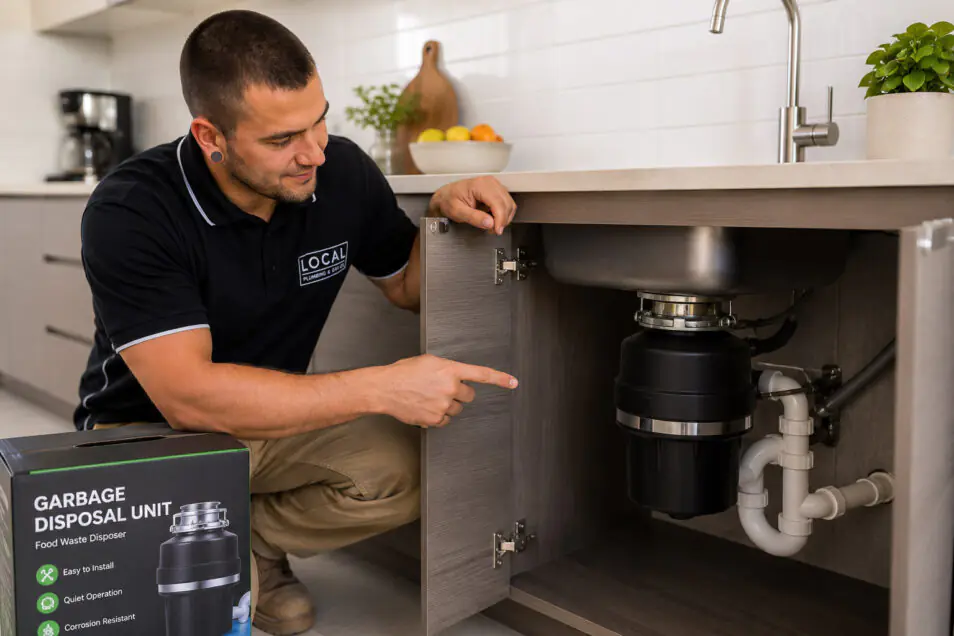
If you are planning a kitchen renovation or replacing an old sink, you may be weighing up whether garbage disposal units are worth adding to your kitchen. These appliances can make cleaning up after meals easier, but they are not automatically the right fit for every Gold Coast kitchen. We often get this question during kitchen upgrades, usually once a new appliance list or benchtop design is already on the table.
Before you buy one, it helps to understand how a garbage disposal unit connects into your existing kitchen sink plumbing, what it can and cannot handle, and where blockage or drainage risks can creep in. This guide walks through what matters most, so you can make a confident decision before any installation work begins.
What Is A Garbage Disposal Unit?
A garbage disposal unit is an appliance fitted beneath a kitchen sink that grinds small food scraps before they pass into the waste line. It can make kitchen clean-up easier, but it needs suitable plumbing, correct use and professional installation to reduce leaks, odours, drainage problems and blocked kitchen sinks.
It is worth being clear on what this appliance actually is, since it gets confused with other kitchen waste solutions. A garbage disposal unit is not a bin and it is not a composting system, both of which sit outside your plumbing altogether. It sits directly under the kitchen sink, connected into the sink drain and the wider waste line that carries wastewater away from your home.
The unit breaks down small, soft food scraps so they can move through the waste line rather than sitting in the sink or going into general rubbish. Because it connects straight into your existing plumbing, the fit matters. The under-sink space, the unit itself and the drain layout all need to work together.
A garbage disposal unit is sometimes called a waste disposal unit or food waste disposer, but it is the same appliance. Once it is tied into your kitchen sink waste setup, plumbing suitability becomes part of the decision, not an afterthought.
Are Garbage Disposal Units Worth It?
Whether a garbage disposal unit is worth it depends on your household, not just the appliance itself. A busy family kitchen with a lot of food scraps will get more use out of one than a household that already composts most of its waste.
There are genuine upsides. A garbage disposal unit can reduce the small food scraps piling up in your kitchen bin, which cuts down on smells and trips to the outside bin. For many Gold Coast homes, that convenience is the main drawcard when planning a kitchen renovation.
That said, garbage disposal units are not suitable for every scrap or every kitchen. Not everything that ends up near the sink should go through one, and misuse can contribute to odours or drainage issues over time. Our plumbers usually look beyond the appliance itself and consider how the household actually uses the sink day to day, since that habit matters more than the unit’s features.
There is also a wastewater consideration worth understanding. Queensland Government guidance notes that disposing of kitchen scraps through in-sink garbage disposal units can add load to sewage treatment systems and add nutrients such as nitrogen and phosphorus to waterways. Composting is often suggested as an alternative for many kitchen scraps, particularly for households already set up for it.
So the honest answer is that a kitchen waste disposal unit is not universally good or bad. It suits some kitchens and habits better than others, which is exactly why it is worth thinking through before you buy one.
What To Check Before Installing A Garbage Disposal Unit
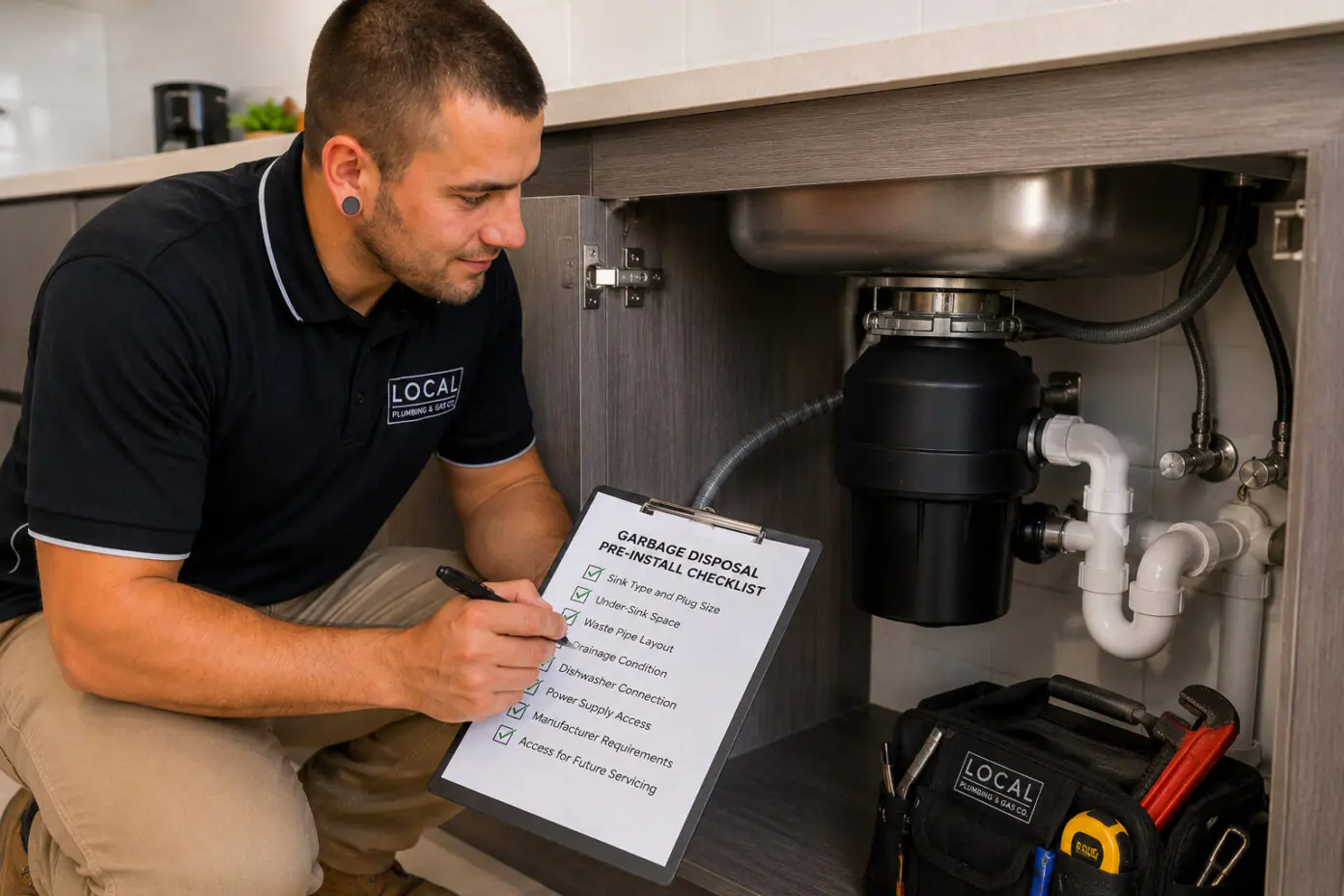
It is tempting to choose a garbage disposal unit based on size and price alone, but the fit with your existing plumbing matters just as much. We often see this in kitchen renovations, where the appliance is chosen before anyone has checked what is actually happening under the sink.
Before you commit to a unit, it is worth checking the following:
- Sink type: Some sinks suit a disposal unit more easily than others, depending on the drain opening and bowl depth.
- Under-sink space: The cabinet needs enough room for the unit, the waste pipe and any dishwasher connection without cramping access.
- Existing waste pipe layout: Older homes and previously renovated kitchens may have a waste pipe run that was never designed with a disposal unit in mind.
- Drainage condition: If the drainage is already slow or prone to blockages, adding a unit can make an existing problem more noticeable.
- Dishwasher connection: Many units connect to a dishwasher drain line, so this needs to work with your current setup.
- Appliance size and manufacturer requirements: Each unit has its own manufacturer requirements for clearance, connection and mounting, set out in the appliance manual.
- Access for future servicing: Whoever installs the unit should be able to access it again later without pulling the kitchen apart.
Older kitchens and previously renovated spaces often need more checking than a straightforward new build, since past changes to the plumbing are not always visible from the cabinet door.
In Queensland, most plumbing and drainage work like this falls under regulated work, which means it should be handled by an appropriately licensed plumber. The QBCC sets out these requirements for a reason: getting the connection right the first time avoids leaks, poor drainage and future callbacks.
If you are planning a wider kitchen upgrade, our kitchen plumbing services can help check the sink, taps, appliance connections and drainage together, rather than looking at the disposal unit in isolation.
Body image placeholder: tidy under-sink cabinet with visible waste pipe layout, photographed from a safe inspection perspective. Alt text: “under-sink plumbing checked before garbage disposal unit installation”
What Should Not Go In A Garbage Disposal Unit?
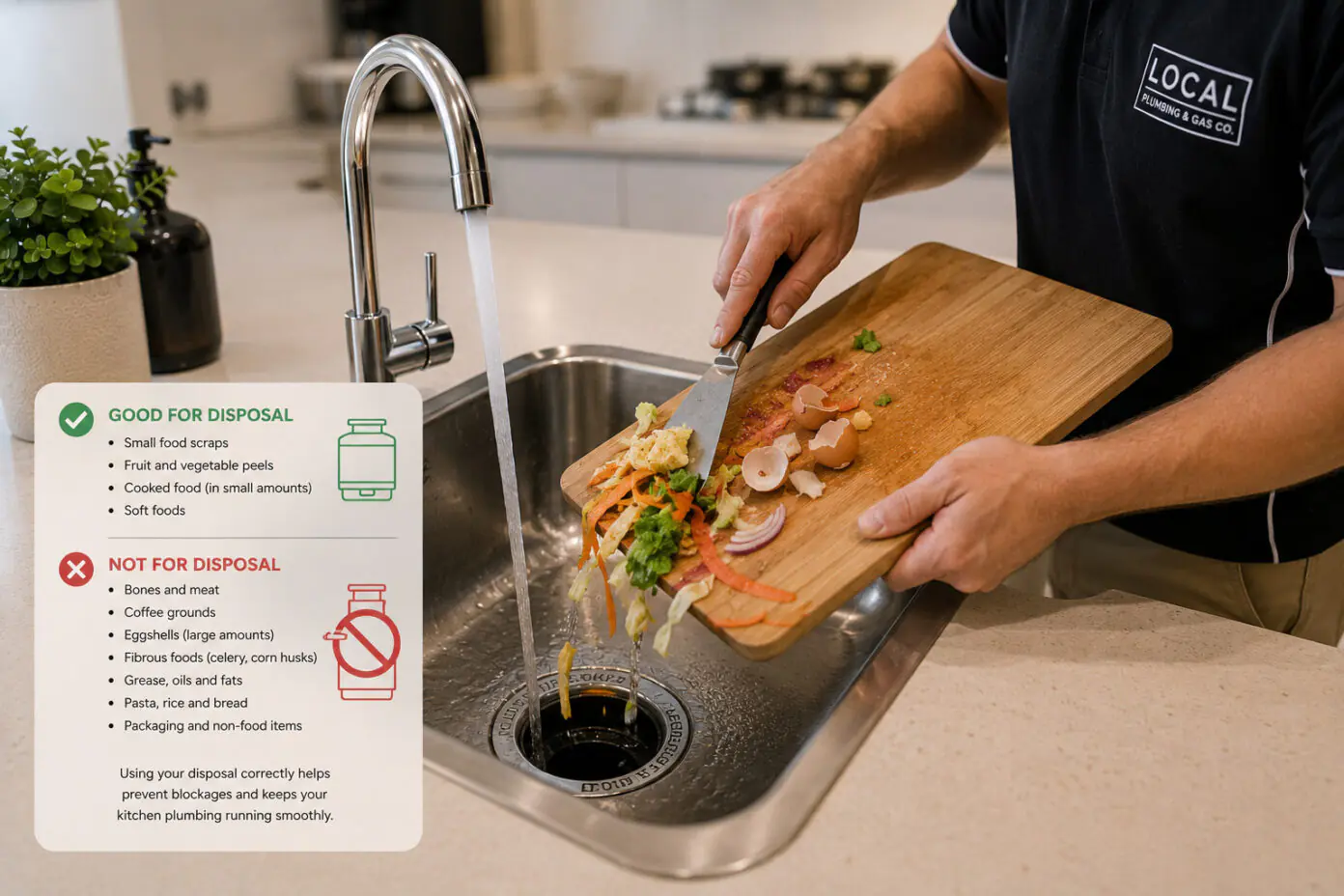
A garbage disposal unit is built for small, soft food scraps, not general kitchen waste. Scraping a full plate of leftovers into the sink is different to rinsing off a few soft scraps after dinner.
Some items are best kept out altogether:
- Grease and fat: These coat the waste pipe and build up over time, even though they seem liquid when hot.
- Bones: Too hard for the unit and pipework to handle safely.
- Coffee grounds: Small and gritty, they settle and compact further down the waste line.
- Fibrous scraps: Celery, corn husks and onion skins can wrap around moving parts or catch in the drain.
- Eggshells: Best avoided or kept to a minimum. They look harmless going down, but the membrane and shell fragments do not break down easily.
- Large quantities of rice or pasta: These expand and can create a soft blockage further along the pipe.
- Fruit stones and seafood shells: Too hard and awkward-shaped for the unit to process properly.
- Packaging and non-food waste: Never suited to a garbage disposal unit, no matter how small.
Eggshells are a good example of why “safe” scraps can still cause trouble over time. We once attended a blocked kitchen sink where the customer was confident she had not put anything harmful down the garbage disposal unit. When our plumbers checked the sink trap, it was clogged with eggshells that had been building up for years. They do not dissolve the way many people expect, so small amounts can keep collecting in the same spot until the sink starts backing up.
The same lesson applies to the rest of this list. Treating a garbage disposal unit like a rubbish bin for months, rather than reserving it for small amounts of food waste, is what leads to smells, residue and a blocked kitchen sink.
If your kitchen sink waste disposal is already backing up, slow or smelling unusual, avoid using that sink and get a licensed plumber to check the cause before running the food waste disposer again.
Body image placeholder: kitchen food scraps beside a sink, showing clear separation between suitable small scraps and items to avoid. Alt text: “food scraps to avoid putting in a garbage disposal unit”
Can A Garbage Disposal Unit Cause A Blocked Kitchen Sink?
Yes, a garbage disposal unit can contribute to a blocked kitchen sink, particularly if it is misused, poorly installed, connected to unsuitable drainage or regularly fed grease, starch or fibrous scraps. But it’s rarely the whole story.
Older pipework, existing build-up from before the unit was even installed, poor fall in the waste pipe, or a deeper drainage connection issue further along the line can all play a part too. In a lot of the blocked sinks we check, the unit gets blamed first simply because it’s the newest thing under the bench, when the real cause turns out to be something that was already there.
The warning signs are usually the same ones you’d expect with any blocked kitchen sink: slower draining than usual, gurgling as the water goes down, smells that don’t clear with normal cleaning, water backing up into the sink, or the same blockage coming back not long after it seems to clear. On their own, none of these prove the disposal unit is at fault. Together, and especially if they started not long after the unit went in, they’re worth getting checked properly.
Our plumbers always look at the whole system rather than assuming the unit is the cause just because it’s there. That means checking the waste pipe, the drainage connection and the general condition of the pipework, not just the appliance itself.
If the sink is already slow, smelly or backing up, it’s worth booking a blocked kitchen sink inspection before using the unit again, rather than waiting for it to get worse.
Do You Need A Plumber To Install A Garbage Disposal Unit?
In most practical situations, yes. It’s safest to have a licensed plumber check and handle the plumbing side of a garbage disposal unit installation, rather than treating it as a straightforward appliance swap.
The job usually involves more than fitting the unit in place. It touches the sink waste connection, drainage suitability, leak prevention and appliance compatibility with your existing setup, and sometimes electrical-adjacent work as well. If electrical work is needed, that part should be handled by an appropriately licensed electrical professional, not folded into the plumbing job.
We usually check the sink drain and waste pipe layout first, since that tells us whether the drainage connection can actually take the extra load before anything gets connected. It’s a different starting point than just checking whether the unit fits under the bench.
Most plumbing and drainage work in Queensland is regulated, which is why you need a plumber to replace a kitchen sink or connect a disposal unit, and the QBCC requires it to be handled by an appropriately licensed plumber where applicable. That’s not just a compliance formality. Getting the waste connection and drainage right the first time is what avoids leaks, poor drainage and callbacks later on.
So while a garbage disposal unit installation might look like something you could manage yourself, the safer and more reliable approach is having Local Plumbing & Gas Co. check compatibility and handle the connection properly.
How Local Plumbing & Gas Co. Helps With Garbage Disposal Unit Installation
If you’ve already picked out a garbage disposal unit and you’re just not sure whether your kitchen is ready for it, that’s exactly where we come in.
Our plumbers can check whether your existing kitchen sink and waste setup actually suit the unit you’ve chosen, and whether installing it is likely to cause any drainage issues once it’s connected. That includes looking for early signs of existing blockage or leaks around the sink, since those are worth fixing before a new appliance goes in, not after.
We’ll also flag anything that needs attention before installation goes ahead, whether that’s the waste pipe layout, the drainage connection, or how the unit will sit alongside your dishwasher if you have one. It’s a straightforward check, not a full renovation, and it means the unit goes in properly the first time rather than causing problems a few months down the track.
If you’re ready to move ahead, our garbage disposal unit installation service covers exactly this, from checking your existing plumbing through to fitting the unit correctly.
Frequently Asked Questions
Are Garbage Disposal Units Legal In Queensland?
Whether garbage disposal units are allowed depends on the property, the existing plumbing setup and local wastewater requirements, so there isn’t a single blanket answer. Rules and suitability can vary from one Gold Coast property to another, particularly around older wastewater systems. Before installing one, it’s worth checking current local requirements or having a licensed plumber look at your setup and confirm whether a unit is suitable for your kitchen and drainage.
Can I Install A Garbage Disposal Unit Myself?
No, a garbage disposal unit isn’t a simple DIY plumbing job, even though it might look that way. Installation usually involves sink waste connections, drainage suitability checks and sometimes electrical-adjacent requirements, all of which need the right trade. A licensed plumber can handle the plumbing side properly and let you know if another licensed professional, such as an electrician, needs to be involved before the unit is connected.
What Foods Should Not Go In A Garbage Disposal Unit?
Grease, fat, bones, coffee grounds, fibrous scraps, large amounts of rice or pasta, fruit stones, seafood shells and any non-food waste should stay out of a garbage disposal unit. These items don’t break down the way soft food scraps do, and over time they can build up in the waste pipe. Putting them through regularly is one of the main reasons units contribute to odours, slow drainage or a blocked kitchen sink.
Can A Garbage Disposal Unit Make My Sink Smell?
Yes, a garbage disposal unit can make your sink smell if food residue builds up inside it, unsuitable scraps have been put through it, or the drainage underneath is already slow. The smell is usually a sign something has built up rather than something you can clean away yourself. If the smell keeps coming back, it’s worth having the sink and waste line checked rather than masking it repeatedly.
Do Garbage Disposal Units Work With Dishwashers?
Garbage disposal units can work alongside a dishwasher, since many models are designed to accept a dishwasher drain connection. Whether it suits your kitchen depends on the appliance, your existing sink, the drainage layout and the manufacturer requirements for that specific unit. Rather than assuming compatibility, it’s best to have a plumber check your setup before the dishwasher and disposal unit are connected together.
What Should I Check Before Buying A Garbage Disposal Unit?
Before buying a garbage disposal unit, check your sink type, the under-sink space, the existing waste pipe layout and how well your drainage already handles everyday use. It’s also worth thinking about how your household actually uses the kitchen, what the appliance requires to install properly, and whether any local wastewater requirements apply. Confirming suitability first avoids buying a unit that doesn’t end up fitting your kitchen.
Make Sure Your Kitchen Plumbing Is Ready First
Garbage disposal units can genuinely make life easier in the kitchen, but only when your sink, drainage and household habits are actually suited to one. Not every kitchen is, and that’s worth confirming before you buy rather than after.
If you’re weighing one up as part of a kitchen upgrade, the safest next step is having your existing plumbing checked first. That means a proper look at the sink, waste pipe and drainage connection, not just whether the unit fits under the bench.
If you’re thinking about installing a unit, Local Plumbing & Gas Co. can check whether your sink, drainage and under-sink setup are suitable before work goes ahead. Our licensed plumbers work across Gold Coast homes and can flag anything that needs sorting first, whether that’s ageing pipework, a slow drain or an existing blocked kitchen sink issue.
Getting that check done early means the unit goes in properly, rather than causing problems once it’s already connected.