Do You Need A Plumber To Install A Kitchen Sink?

A new kitchen sink can look like an easy afternoon job, especially if it is roughly the same size as the one you are replacing. But if you are asking, do you need a plumber to install a kitchen sink, the real issue is what connects underneath: water supply, waste pipes, drainage and tapware.
In Gold Coast homes, especially older ones, that under-sink area often hides more than expected. This is not a step-by-step DIY guide. It is here to help you work out what is safe to prepare and when to call our licensed plumbers.
Do You Need A Plumber To Install A Kitchen Sink?
Yes, use a licensed plumber if installing a kitchen sink involves connecting or altering water supply, taps, waste pipes or drainage. QBCC lists fixing or replacing sinks, taps and other fixtures as regulated plumbing work in Queensland. Even a straightforward sink swap can cause leaks or cabinet damage if these connections are not checked properly.
The visible sink bowl is only one part of the job. What you cannot see, including water supply lines, isolation valves, the waste pipe and trap, is where problems usually start. So, if you are wondering, do I need a plumber to install a sink, it comes down to how much of the plumbing is being touched. Safe preparation is fine. The actual water, waste and drainage connections are best left to a licensed plumber.
Why Kitchen Sink Installation Can Be Trickier Than It Looks
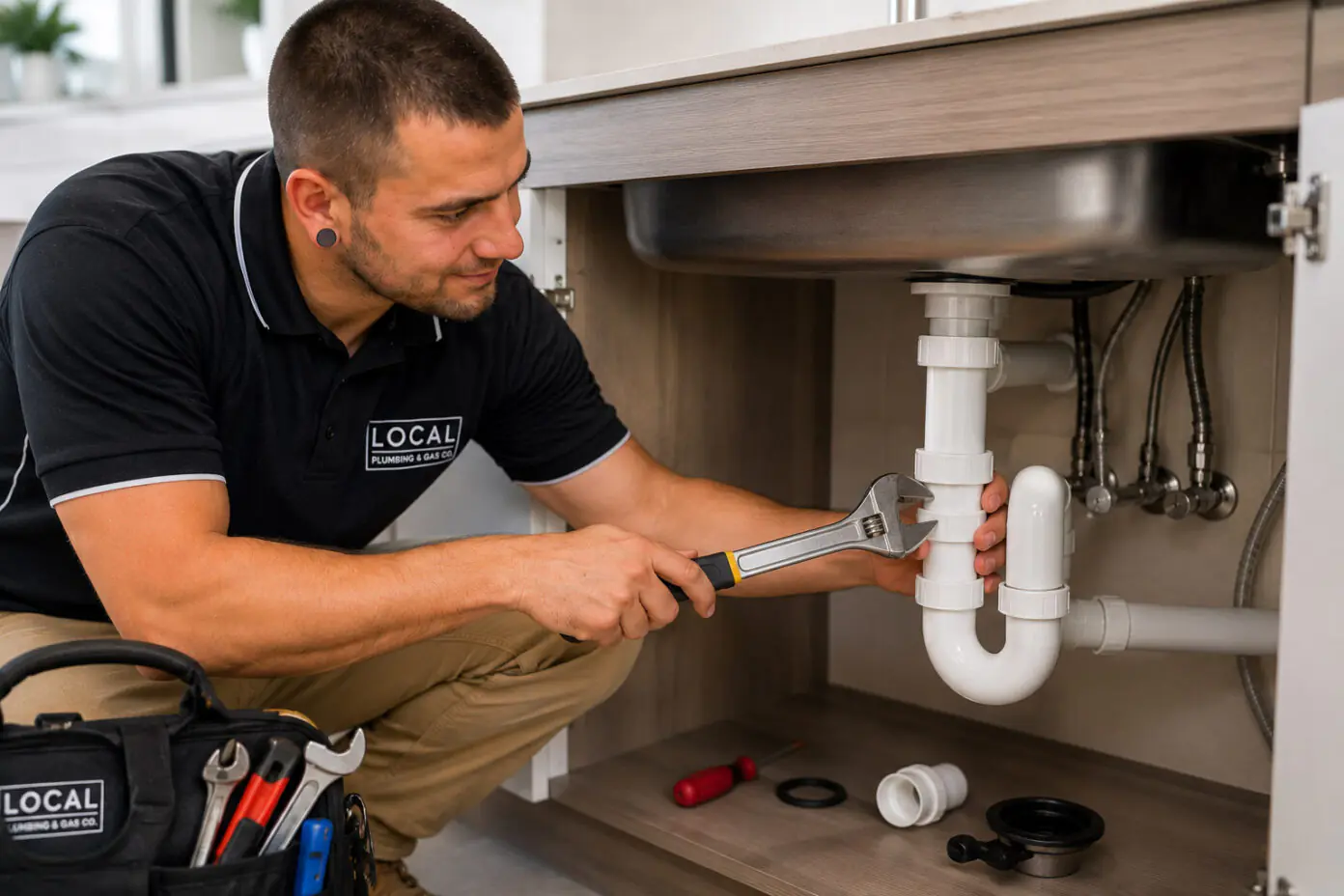
Replacing a kitchen sink is not just about dropping a new bowl into the same hole. Sink size, bowl depth and the benchtop cut-out all affect whether the sink fits properly. A slightly different profile can mean cabinetry or benchtop work you were not expecting.
Cabinet condition matters too, especially if there has been water damage from the old sink. Swollen chipboard or softened timber can make it harder to secure the new one properly. Tapware, mixer position and water connections may also need checking if the new sink layout has changed.
Kitchen sink drain connection, waste pipe and trap alignment are where hidden problems often start. Poor alignment can lead to slow drainage or leaks that do not show up until weeks later. Our plumbers often see this during kitchen updates, where the new sink suits the benchtop but the pipework underneath does not line up cleanly.
This shows up more often in older Gold Coast homes and past renovations, where old pipework can complicate even a simple kitchen sink replacement. That is why kitchen sink plumbing needs to be looked at as more than the visible bowl. If you are updating taps or appliances too, it is worth having the broader kitchen plumbing checked in one visit.
What A Licensed Plumber Checks Before Installing A Kitchen Sink
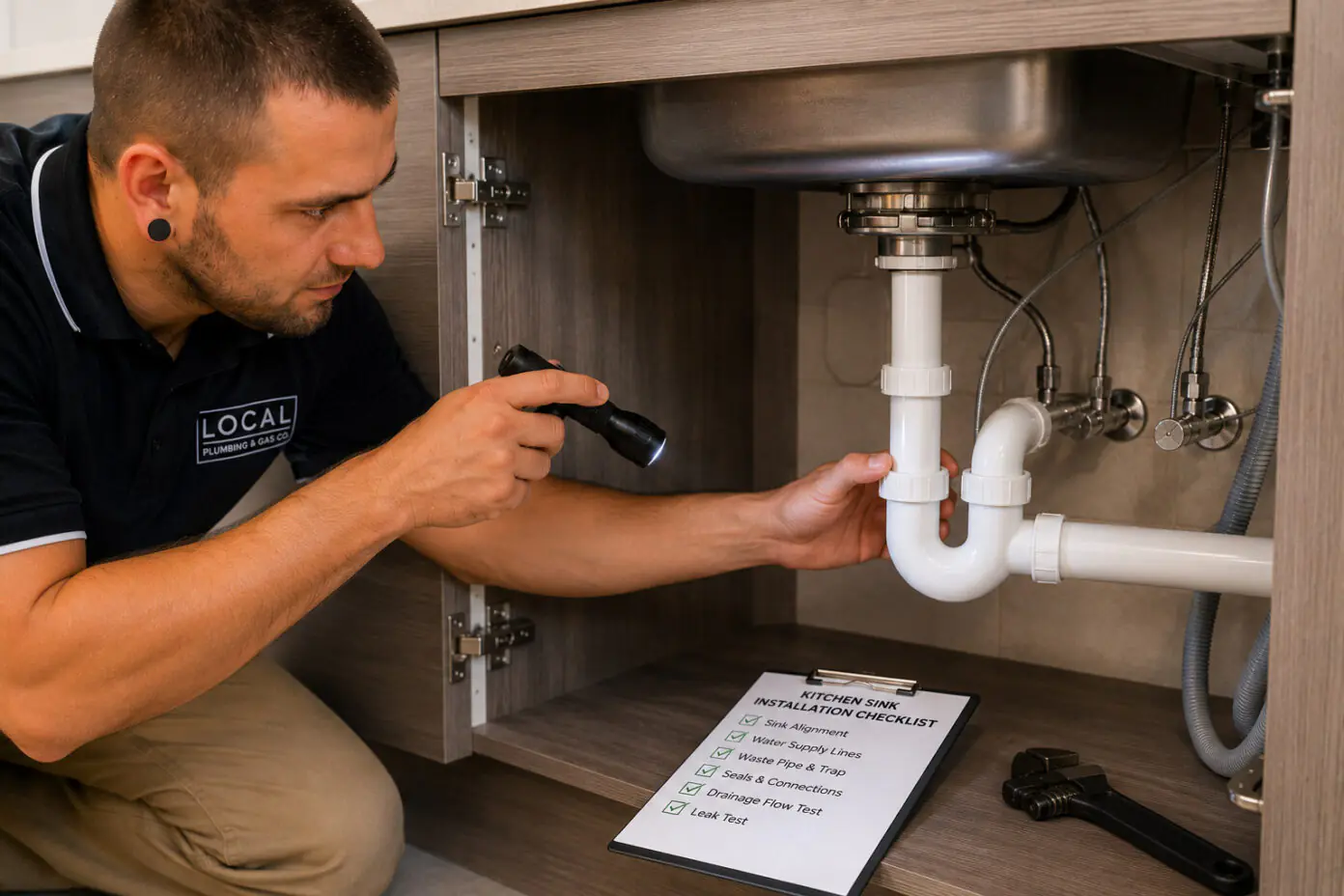
A kitchen sink installation plumber looks beyond the sink itself before the job begins. Whether you have called a plumber to install kitchen sink from scratch or replace an existing one, the checks are largely the same.
| What The Plumber Checks | Why It Matters |
| Sink and benchtop fit | A poor fit can affect sealing, support and water control. |
| Cabinet condition | Swollen or damaged cabinetry can make a new sink harder to secure properly. |
| Tapware and water connections | Existing connections may not suit the new sink or mixer position. |
| Waste pipe and trap alignment | Poor alignment can increase leak, smell or slow drainage issues. |
| Seal and splash areas | Water can track into cabinetry if the sink is not sealed correctly. |
| Existing drainage problems | A new sink will not fix an underlying blocked or poorly draining kitchen line. |
Water supply lines and isolation valves are checked to confirm they are in good condition and shut off cleanly. The plumber also looks at the sink mixer, tapware and kitchen sink water connections together, since a new sink can sit differently to the old one.
If you are planning kitchen sink and tap replacement together, it is often worth arranging kitchen tap replacement in the same visit. The plumber will also flag any existing drainage or blockage issue, since a fresh sink will not fix a line that is already struggling.
What You Can Prepare Before The Plumber Arrives
If you are wondering can I install a kitchen sink myself to save some time, there is safe preparation you can handle before the plumber arrives. It will not replace the plumbing work, but it can make the visit more efficient.
Measure the sink, cabinet opening and benchtop cut-out. Have the sink model, tapware details or product specs ready if you have them. Clear out the cupboard under the sink, and send photos of the existing under-sink area if you are booking remotely.
Mention anything you have noticed, like an existing leak, slow drainage, odd smells or water staining in the cabinet. These details help the plumber prepare properly.
What is not safe to do yourself is disconnecting, altering or reconnecting any water or waste plumbing. Some plumbing-related tasks are unregulated, but most kitchen sink connection work still needs a licensed plumber.
Common Problems After Poor Kitchen Sink Installation
Even a kitchen sink leaking after installation may look minor at first, but the problem can develop underneath before it is obvious. Watch for these signs after a new sink goes in.
- Leaking under the sink, often starting as a small drip around a connection or seal.
- Swollen cabinetry or water staining inside the cupboard, usually a sign that a leak has been running for a while.
- Slow drainage after the new sink is fitted, which can point to a kitchen sink waste pipe or trap that is not aligned correctly.
- Loose tapware or movement around the sink, suggesting it was not secured properly to the benchtop.
- Waste smells coming from under the sink, often linked to a poorly fitted trap or drain connection.
- A blocked kitchen sink that keeps coming back, which usually means the underlying drainage issue was never actually fixed.
Most of these need an on-site look rather than a guess, since the cause can be anywhere from the seal to old pipework further down the line. We often find that a small drip has already started swelling the cabinet base before the homeowner notices it. If a blocked kitchen sink or slow drainage keeps recurring after installation, it is worth having the blocked kitchen sink checked properly rather than living with it.
How Local Plumbing & Gas Co. Helps With Kitchen Sink Installation
Whether you are renovating, replacing a damaged sink or managing a rental repair, Local Plumbing & Gas Co. helps Gold Coast homeowners, renovators, landlords and property managers get kitchen sink installation done properly. Our plumbers check the sink and benchtop fit, tapware, water connections, waste pipe, drain alignment, cabinet condition and older pipework before anything is connected.
If there is an existing drainage issue, older pipework or a tap that needs replacing alongside the sink, we will flag that early. For anyone asking who provides a licensed plumber for sink installation across the Gold Coast, or anyone installing a new kitchen sink, our plumbers can talk you through what is involved and get it connected safely.
Frequently Asked Questions
Can I Install A Kitchen Sink Myself?
You can handle preparation like measuring the space or clearing the cupboard, but installing a kitchen sink myself is not something to take on for the water and waste connections. Queensland plumbing rules treat fixing or replacing sinks, taps and fixtures as regulated work, so the connections are best left to a licensed plumber.
Do I Need A Plumber To Replace A Kitchen Sink?
In most cases, yes, especially if the replacement involves disconnecting or reconnecting plumbing, replacing taps or adjusting waste pipes. Even a like-for-like sink swap can reveal older pipework, poor sealing or cabinet damage that was not visible beforehand.
Can A Handyman Install A Kitchen Sink?
Be careful here. Some cosmetic or cabinetry tasks may suit a handyman, but regulated plumbing and drainage work in Queensland, including connecting or altering water and waste plumbing, must be handled by an appropriately licensed plumber or drainer.
What Does A Plumber Do When Installing A Kitchen Sink?
A plumber checks the sink fit, tapware, water connections, waste pipe, trap and drainage before anything is installed. They will also look for older pipework, poor cabinet condition or existing drainage issues that could affect the new sink.
How Long Does Kitchen Sink Installation Take?
It depends on the sink type, cabinet condition, tapware and whether any leaks or drainage issues turn up once the old sink is removed. There is no fixed timeframe that applies to every job. A licensed plumber can give you a clearer idea after checking the site.
Should I Replace My Kitchen Tap At The Same Time As The Sink?
It can make sense, particularly if the tap is old, leaking or being moved to suit the new sink layout. Replacing the tap and sink together means a plumber can check whether the existing mixer and water connections suit the new setup.
Get Your Kitchen Sink Installed Properly
A new kitchen sink can look simple on the surface, but the water, waste and drainage connections underneath decide whether it goes well. So if you are still asking do you need a plumber to install a kitchen sink, the safest answer is to use licensed help wherever those connections are involved.
Safe preparation, like measuring the space or clearing the cupboard, is genuinely useful. Just leave disconnecting, altering or reconnecting plumbing to a licensed plumber. Local Plumbing & Gas Co. can help Gold Coast homeowners, renovators and property managers get a new sink installed properly, with the water, waste, drainage and tapware checked before daily use.