How Often Should Commercial Plumbing Be Inspected?

For commercial properties, plumbing issues can quickly disrupt staff, tenants, customers and daily operations. The right commercial plumbing inspection frequency is not the same for every site. A quiet office may only need routine checks once a year, while a busy cafe, childcare centre, gym or multi-tenanted property may need plumbing looked at more often.
At Local Plumbing & Gas Co., we often see small commercial plumbing problems become more disruptive when early signs are left too long. Slow drains, water stains, hot water issues or repeated tenant reports can all point to something that needs checking sooner.
This guide explains how often commercial plumbing should be inspected, what changes the schedule, which warning signs matter, and when to book a licensed plumber before a minor issue affects the property.
How Often Should Commercial Plumbing Be Inspected?
Commercial plumbing should generally be inspected at least once a year, but high-use properties often need checks every 3 to 6 months. The right timing depends on the building age, number of fixtures, water use, drainage history, hot water demand and whether the property has compliance-sensitive items such as backflow devices.
For a small office with low fixture use and no history of plumbing problems, an annual check may be enough. For a busy cafe, gym, childcare centre, medical tenancy or multi-tenanted property, more frequent commercial plumbing inspections can help catch issues before they affect customers, tenants or staff.
The main point is that inspection frequency should match the property risk. If a drain keeps slowing down, a hot water system is struggling, toilets are regularly reported, or tenants keep mentioning the same issue, it is better to arrange a plumbing inspection sooner rather than waiting for the next scheduled check.
Backflow is one area that needs separate care. On the Gold Coast, the City of Gold Coast advises property owners are responsible for having testable backflow devices tested annually, so those checks should be planned separately from a general commercial plumbing inspection.
Commercial Plumbing Inspection Frequency By Property Type
The table below is a practical planning guide, not a fixed rule for every commercial property. The right schedule should match the way the property is used, how many people rely on the plumbing, and whether there have been recent leaks, blockages or hot water issues.
| Property Or Situation | Practical Inspection Frequency Guidance | Notes |
| Low-use office or small commercial tenancy | Usually every 12 months | This may suit properties with light fixture use, no recurring plumbing issues and simple amenities. |
| Multi-tenanted commercial property | Every 6 to 12 months | More users can mean more wear on toilets, basins, drains and hot water systems. Small issues can also take longer to be reported. |
| Hospitality, food service, gyms, childcare, medical or high-use amenities | Every 3 to 6 months | These sites often have higher water use, more frequent amenity use and greater disruption if plumbing fails during business hours. |
| Older buildings or properties with recurring plumbing issues | Every 3 to 6 months, or as advised after inspection | Older pipework, repeated blockages, pressure changes or leak history may call for closer monitoring. |
| Properties with testable backflow prevention devices | Annual backflow testing, plus property-specific advice | The City of Gold Coast advises that property owners are responsible for arranging annual testing of testable backflow devices. |
| After leaks, blocked drains, flooding, renovations, fit-outs or tenancy changes | Inspect sooner | A fresh check can help property managers understand whether the issue was isolated or part of a wider pattern. |
For property managers, the pattern is often more useful than one isolated report. In strata-managed buildings, recurring issues involving shared drains, water supply or common-area fixtures may call for coordinated body corporate plumbing maintenance rather than repeated isolated repairs. One blocked basin may be a minor issue. Repeated slow drains, multiple tenant reports or hot water complaints across the same property usually deserve a closer look.
What Changes How Often A Commercial Property Needs Plumbing Checks?
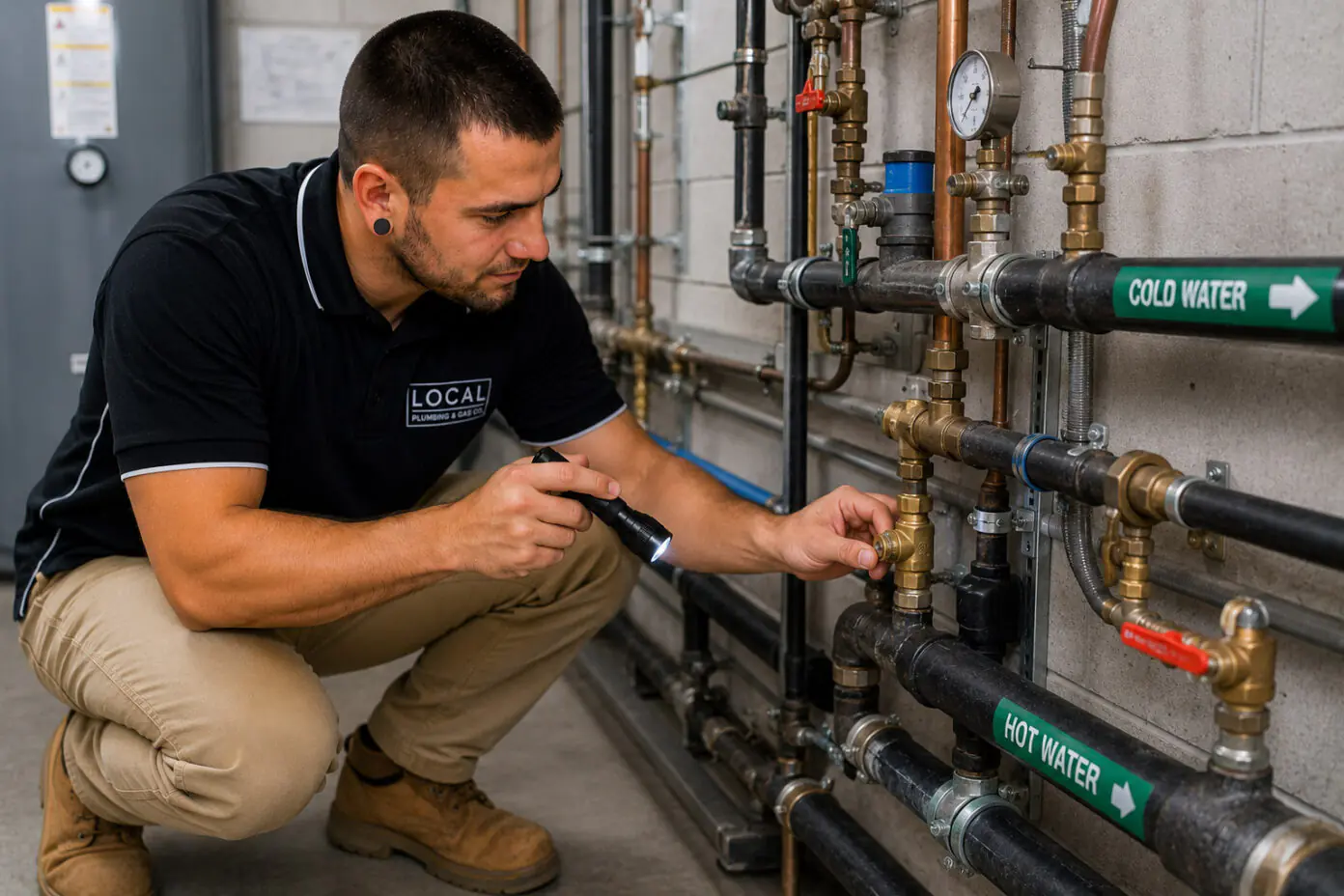
A commercial plumbing inspection schedule should be based on risk, not just the calendar. Two properties can be the same size but need very different inspection timing because of how they are used each day.
The biggest factors are usually water use, fixture use, business type, building age and issue history. A quiet office with two bathrooms places less demand on its plumbing than a busy cafe with kitchen drainage, customer toilets, staff amenities and hot water running throughout the day.
Property managers and business owners should also look at how quickly a plumbing issue would affect operations. If one blocked toilet, failed hot water unit or slow drain could disrupt customers, tenants or staff, the property may need more frequent checks.
Common factors that can change the schedule include:
- High-use fixtures: Toilets, basins, kitchens, laundries and staff amenities wear faster when many people use them each day.
- Food or grease-heavy drainage: Cafes, restaurants and food tenancies can have higher blockage risk if grease and food waste enter the drainage system.
- Older plumbing: Ageing pipework, older valves, corroded fittings and previous patch repairs may need closer monitoring.
- Recurring problems: Repeated leaks, slow drains, smells or hot water complaints are signs the property may need a shorter inspection cycle.
- Tenant turnover or fit-outs: A plumbing check after a tenancy change or renovation can help identify issues before the next occupant starts trading.
- Compliance-sensitive items: Backflow prevention, gas appliances and some commercial systems may need separate checks from the general plumbing inspection.
For broader maintenance planning, the Commercial Plumbing Maintenance Checklist For Gold Coast Properties is a useful companion resource. This article focuses on inspection frequency, while the checklist helps property managers think through the ongoing maintenance tasks that sit around those inspections.
Signs Your Commercial Plumbing Should Be Inspected Sooner
A scheduled inspection is useful, but some warning signs should not wait for the next planned visit. Commercial plumbing problems can affect more people than a home plumbing issue, especially in properties with tenants, customers, shared amenities or high-use wet areas.
Our plumbers often find that repeated symptoms tell the real story. One slow basin may be simple. Several slow drains, recurring odours or repeated toilet reports across the same property can point to a deeper drainage, venting or pipework issue.
Arrange a commercial plumbing inspection sooner if you notice:
- Slow or gurgling drains: This can suggest a blockage, poor drainage flow or an issue further along the pipework.
- Recurring toilet problems: Repeated blockages, weak flushing or frequent tenant reports should be checked before the issue becomes more disruptive.
- Water stains or damp areas: Marks on walls, ceilings, cabinetry or floors can point to a hidden leak.
- Unexplained water use: A higher water bill or unusual meter movement may suggest a leak that is not visible.
- Hot water problems: Temperature changes, slow recovery or repeated complaints from staff or tenants can mean the system needs attention.
- Bad smells from drains or amenities: Odours can come from drainage issues, dry traps, sewer problems or poor ventilation.
- Noisy pipes or pressure changes: Banging pipes, sudden pressure drops or pressure surges should be checked by a licensed plumber.
- Stormwater or outdoor drainage problems: Pooling water, overflowing pits or blocked downpipes can create bigger issues during heavy Gold Coast rain.
For property managers, photos, tenant notes and the date the issue started can help our team understand the pattern before attending. If the same issue keeps coming back, it is usually better to book a plumbing inspection and check the cause rather than keep responding to the symptom.
Inspection Frequency Vs Commercial Plumbing Maintenance Planning
Inspection frequency and maintenance planning are closely related, but they are not the same thing. An inspection checks the condition of the plumbing and looks for problems that may need attention. Maintenance is the ongoing work that helps keep the plumbing system reliable between inspections.
For commercial properties, both matter. A licensed plumber might inspect the drains, toilets, taps, hot water systems, visible pipework and signs of leaks, then recommend whether certain items need repair, monitoring or planned plumbing maintenance. That inspection gives property managers a clearer picture of what needs attention now and what can be planned ahead.
A maintenance plan is broader. It may include regular drain cleaning, leak checks, fixture servicing, hot water system monitoring, backflow testing, stormwater checks and record keeping. The inspection helps guide that plan, especially when the property has repeated issues or higher-use amenities.
The safest way to think about it is:
- Inspection frequency: Answers: “How often should we check the condition of the plumbing?”
- Maintenance planning: Answers: “What should we do regularly to reduce breakdowns, leaks and disruption?”
This is why a low-use office may only need an annual inspection, while a hospitality venue may need more frequent checks and a more active maintenance plan. If you are mapping out ongoing tasks, the Commercial Plumbing Maintenance Checklist For Gold Coast Properties covers that broader planning angle in more detail. For service support, Local Plumbing & Gas Co. can also help with planned plumbing maintenance across Gold Coast properties.
What A Licensed Plumber May Check During A Commercial Plumbing Inspection
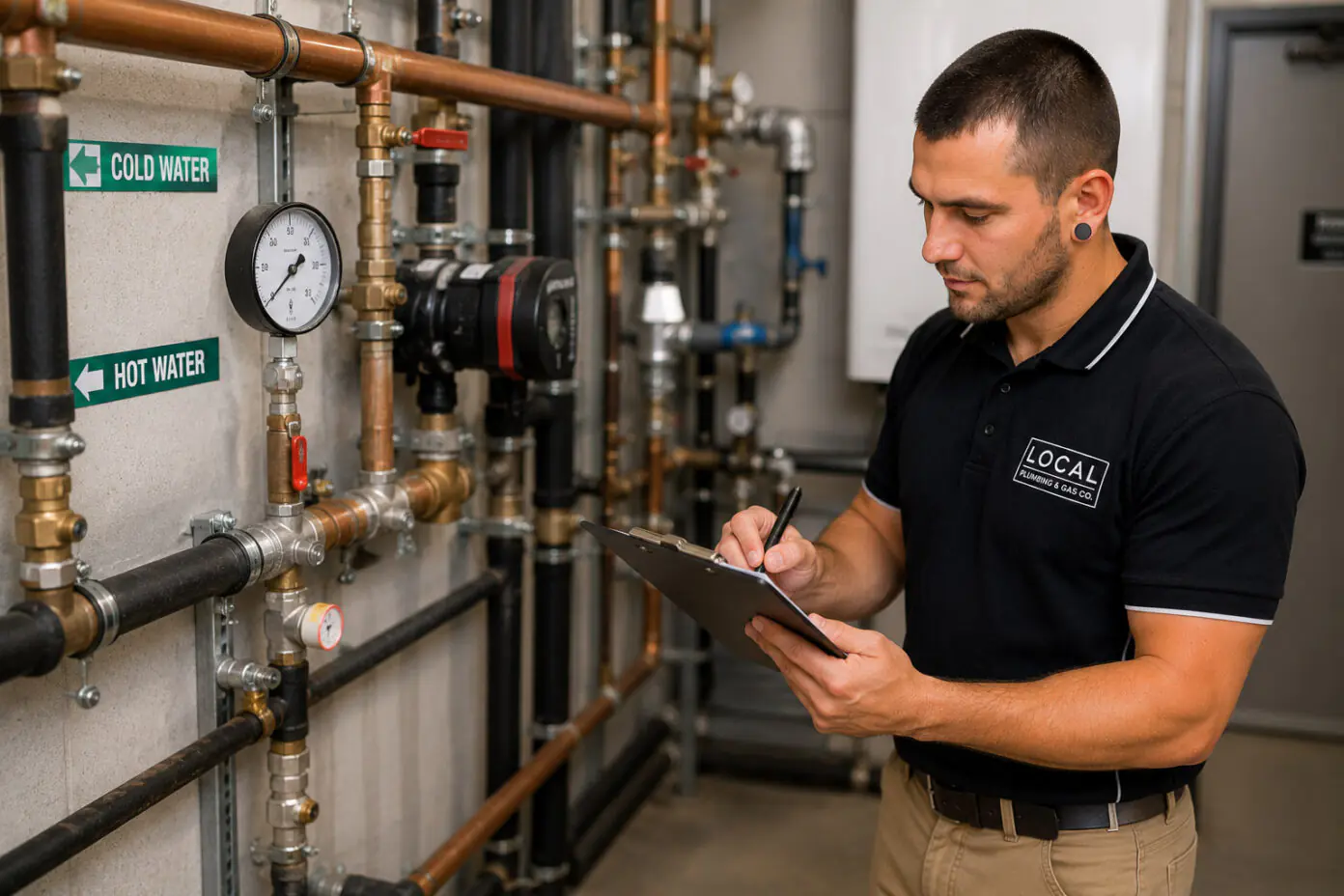
A commercial plumbing inspection is not just a quick look at one fixture. The goal is to check the parts of the plumbing system that could affect the property’s daily use, safety, water efficiency, drainage and reliability.
The exact inspection depends on the site. A small office will not need the same level of checking as a restaurant, gym, childcare centre or multi-tenanted property. The plumber will usually focus on the areas that carry the most risk, show the most wear, or have caused issues before.
A licensed plumber may check:
- Visible pipework and fittings: Looking for leaks, corrosion, damaged fittings or signs of previous patch repairs.
- Toilets, taps and basins: Checking for leaks, running water, poor flushing, loose fixtures or recurring faults.
- Drains and drainage flow: Looking at slow drains, smells, gurgling sounds or signs that a blockage may be building.
- Hot water systems: Checking visible signs of leaks, performance issues or repeated complaints about temperature or supply.
- Water pressure and valves: Looking for pressure changes, noisy pipework or valves that may need closer assessment.
- High-use commercial areas: Reviewing staff kitchens, customer bathrooms, plant rooms, amenities and wet areas that affect daily operations.
- Issue history: Paying closer attention to areas where tenants, staff or customers have reported repeated problems.
Some checks may also point to the need for a more specific service. Recurring drain problems may lead to a CCTV drain inspection, while a property with testable backflow prevention devices will need backflow testing handled separately by a suitably qualified plumber.
For a fuller breakdown of the inspection process, see what happens during a professional plumbing inspection. This article focuses on timing and frequency, while that guide explains what usually happens during the inspection itself.
Why Regular Plumbing Inspections Matter For Gold Coast Commercial Properties
Regular plumbing inspections help commercial property owners and managers make better decisions before small issues interrupt the property. They do not guarantee that problems will never happen, but they can help identify warning signs earlier and give you a clearer plan for what needs attention.
For Gold Coast businesses, plumbing problems can affect more than one person or one fixture. A leaking tap in a staff area may waste water for weeks before anyone reports it. A slow drain in a customer bathroom can affect the way people experience the business. A hot water fault can disrupt food service, cleaning, staff amenities or tenant operations.
Records also matter. When property managers keep notes from inspections, tenant reports and previous repairs, patterns are easier to see. If the same toilet, drain or wet area keeps causing trouble, our plumbers can look beyond the immediate symptom and check whether there is a deeper issue.
Regular checks are especially useful for properties with high-use amenities, older plumbing, busy tenancies or previous water damage. They help turn plumbing from a reactive emergency into a planned maintenance decision, which is usually easier for owners, tenants and businesses to manage.
How Local Plumbing & Gas Co. Can Help With Commercial Plumbing Inspections
Local Plumbing & Gas Co. helps Gold Coast businesses, property managers and commercial property owners check plumbing issues before they become bigger disruptions. Our team can inspect the visible plumbing, look into recurring problems, identify likely service pathways and explain what needs attention clearly.
For commercial properties, we look at the practical impact of the issue as well as the plumbing itself. A slow drain in a customer bathroom, a leaking tap in a shared amenity, or a hot water problem in a food tenancy can affect daily operations quickly. That is why commercial plumbing inspections need to be clear, organised and matched to how the property is used.
Our licensed plumbers can help with general plumbing inspections, commercial plumbing maintenance, leak checks, drainage concerns, hot water issues, fixture problems and recurring reports from tenants or staff. Where the property needs a specific service, such as backflow testing or CCTV drain inspections, we can guide the next step rather than treating every issue the same way.
If you manage a commercial property and are unsure how often it should be checked, our commercial plumbing support can help you inspect the site and understand a practical schedule. For a more inspection-focused service pathway, you can also learn more about our plumbing inspections.
Frequently Asked Questions
Is Annual Plumbing Inspection Enough For A Commercial Property?
Annual plumbing inspection may be enough for a low-use, low-risk commercial property with no history of leaks, blockages or hot water issues. Higher-use properties, older buildings, hospitality venues and multi-tenanted sites often benefit from more frequent checks because the plumbing is under greater daily demand.
How Often Should A High-Use Commercial Property Have Plumbing Checked?
Many high-use commercial properties benefit from plumbing checks every 3 to 6 months, depending on their fixtures, business type and issue history. This can include food service venues, gyms, childcare centres, medical tenancies and multi-tenanted sites where one plumbing issue can affect staff, customers or tenants quickly.
Should Commercial Plumbing Be Inspected After A Tenant Change Or Fit-Out?
Yes, it is often sensible to inspect commercial plumbing after a tenant change, renovation or fit-out. New occupants may use fixtures, drainage, hot water or wet areas differently from the previous tenant, so an inspection can help identify issues before the next business starts trading or problems become harder to manage.
Do Backflow Devices Need Annual Testing On The Gold Coast?
Relevant testable backflow prevention devices need annual testing on the Gold Coast. The City of Gold Coast advises that property owners are responsible for having backflow devices tested annually. Backflow requirements are separate from a general plumbing inspection, so they should be checked and planned as their own compliance-sensitive task.
Can A Property Manager Inspect Commercial Plumbing Themselves?
A property manager can note visible issues, tenant reports, access details and when the problem started. However, regulated plumbing and drainage work should be handled by a licensed plumber. The QBCC advises that regulated plumbing and drainage work in Queensland must be done by a licensed plumber or drainer, so informal checks should not replace licensed inspection or repair work.
What Is The Difference Between A Commercial Plumbing Inspection And Plumbing Maintenance?
A commercial plumbing inspection checks the condition of the plumbing and identifies risks or issues that may need attention. Plumbing maintenance is the planned follow-up, servicing or repair work that helps keep the system reliable between inspections. The inspection helps guide the maintenance plan, especially where problems keep returning.
When Should A Commercial Plumbing Issue Be Treated As Urgent?
Treat a commercial plumbing issue as urgent if there is flooding, sewage overflow, no usable amenities, a major leak, suspected gas issue, or electrical risk around water. If there is immediate danger, keep people away from the affected area if safe and contact emergency services or urgent licensed help.
Book The Right Commercial Plumbing Check Before Small Issues Disrupt The Property
The right inspection schedule depends on the property, not a generic calendar reminder. A low-use office, busy hospitality tenancy, multi-tenanted building and older commercial property can all need different levels of attention.
If you are unsure how often your commercial plumbing should be inspected, Local Plumbing & Gas Co. can check the property, look at any recurring issues and help you understand a practical next step. Our plumbers can assess visible plumbing, drainage concerns, hot water issues, leak signs, fixture problems and any patterns reported by tenants, staff or customers.
For Gold Coast property managers and business owners, regular checks can make plumbing easier to manage. They help you plan ahead, respond to issues sooner and reduce the chance of small warning signs turning into larger disruptions.
To arrange a commercial plumbing inspection or discuss a maintenance schedule for your property, contact Local Plumbing & Gas Co. and we will help you work out what makes sense for the site.