Commercial Plumbing Maintenance Checklist For Gold Coast Properties
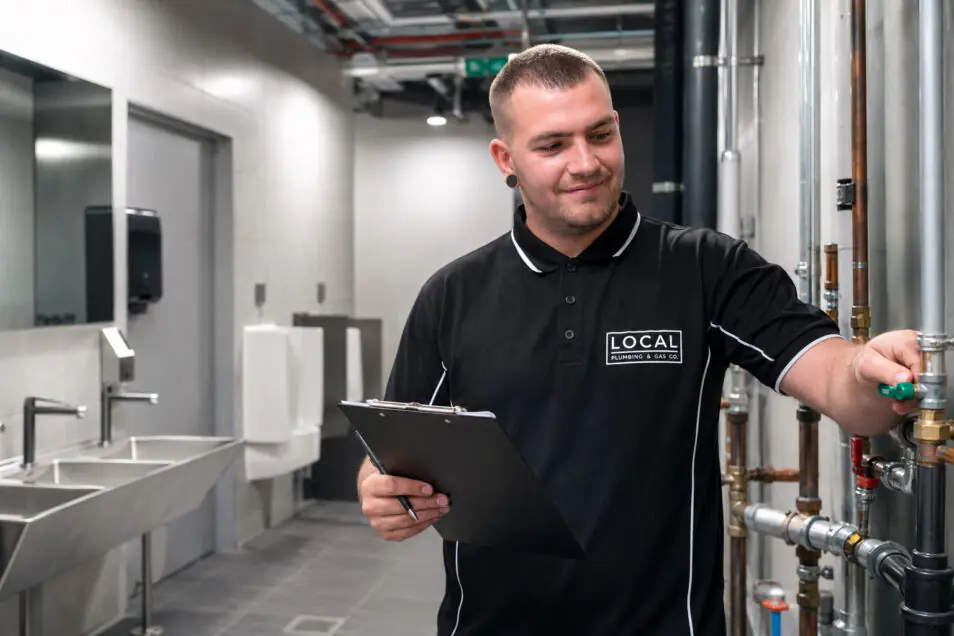
Commercial plumbing problems can interrupt a Gold Coast property quickly. A leaking tap in a shared bathroom, a blocked floor waste in a tenancy or a hot water fault in a cafe can affect staff, customers, tenants and daily trade. This commercial plumbing maintenance checklist gives property managers and business owners a practical way to spot early warning signs before small issues turn into bigger disruptions.
The goal is not to turn your team into plumbers. It is to help you know what to monitor, what to record, what to schedule and when licensed help is needed. At Local Plumbing & Gas Co., we see how much easier maintenance becomes when obvious symptoms are picked up early and recurring issues are tracked clearly. Use this guide as a planning tool for Gold Coast commercial properties, then book professional help when repairs, testing or regulated plumbing work are needed.
What Should Your Commercial Plumbing Checklist Include?
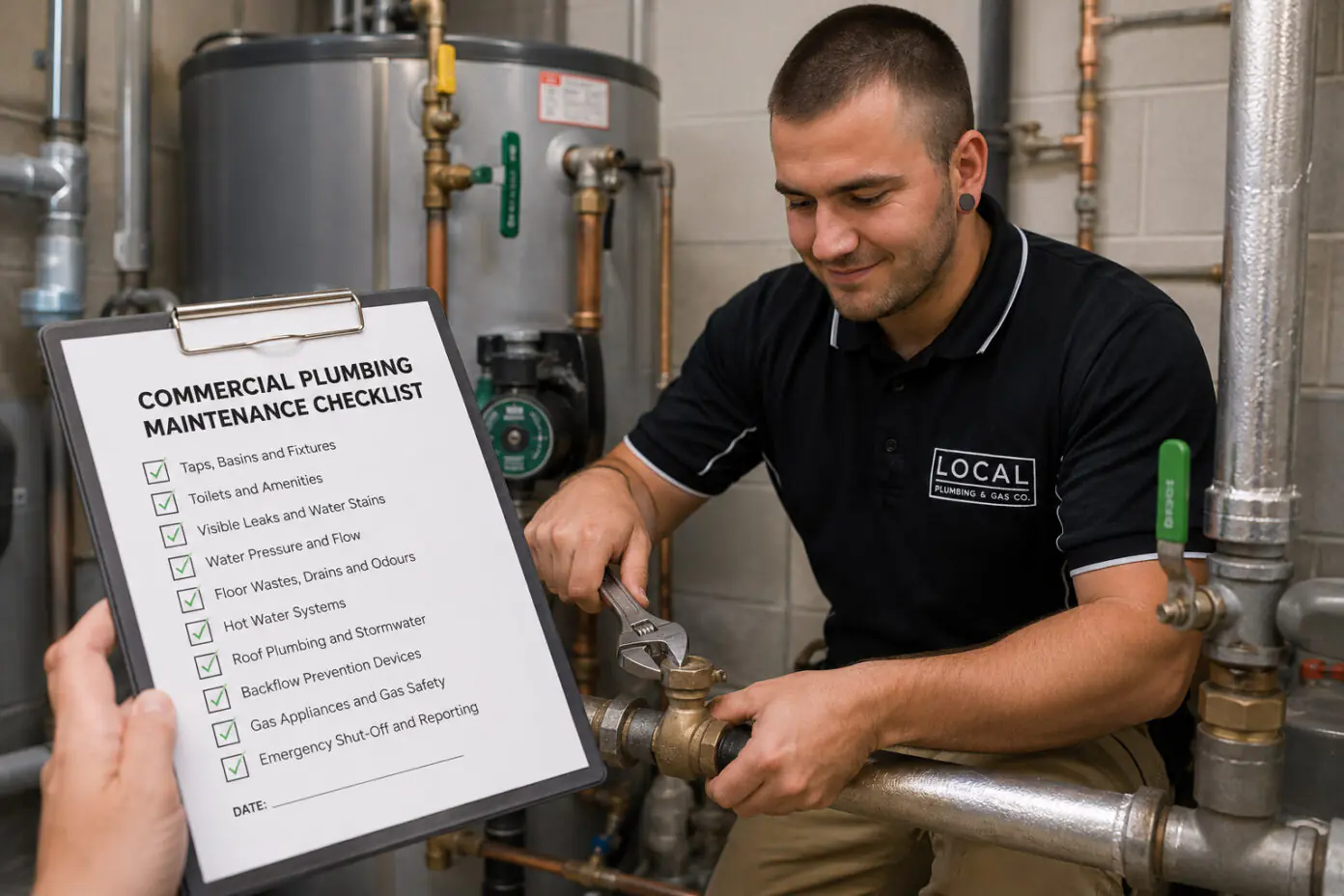
A good commercial plumbing checklist should cover visible leaks, taps, toilets, drains, water pressure, hot water, roof plumbing, stormwater, backflow devices, gas warning signs and emergency readiness. Property staff can monitor obvious symptoms and keep clear records, but licensed plumbers, licensed gas fitters and endorsed backflow testers should handle regulated work.
For Gold Coast commercial properties, we usually suggest starting with the areas most likely to affect tenants, customers or daily trade. A leaking basin, slow floor waste or unreliable hot water system may look minor at first, but in a busy workplace or tenancy it can turn into complaints, hygiene concerns or business disruption quickly.
Use this checklist as a practical starting point.
| Area | What To Watch For | Why It Matters | Who Should Handle It |
| Taps, Basins And Fixtures | Drips, loose fittings, poor flow, stiff handles or visible damage | Small fixture faults can waste water, annoy tenants and point to wear behind the fitting | Property staff can report symptoms. A licensed plumber should repair or replace faulty fixtures. |
| Toilets And Amenities | Running water, weak flushing, leaks around the pan, blocked toilets or repeat complaints | Toilet issues can affect hygiene, comfort and customer access | Staff can close off an affected toilet if needed. Repairs should be handled by a licensed plumber. |
| Visible Leaks And Water Stains | Damp walls, swollen cabinetry, ceiling stains, puddles or mould smells | Hidden leaks can damage walls, floors, stock, equipment and tenancy areas | Staff can record signs and photos. A licensed plumber should investigate the cause. |
| Water Pressure And Flow | Sudden pressure drops, uneven flow or complaints from multiple fixtures | Pressure changes can point to leaks, restrictions, fixture faults or supply issues | A licensed plumber should assess pressure or pipework concerns. |
| Floor Wastes, Drains And Sewer Smells | Slow drainage, gurgling, odours, overflowing floor wastes or recurring blockages | Drainage issues can create hygiene risks and disrupt bathrooms, kitchens or shared areas | Staff can stop using the affected area. A plumber should inspect recurring or serious drain issues. |
| Hot Water Systems | No hot water, inconsistent temperature, visible leaks, rust, unusual noises or repeated complaints | Hot water faults can affect staff amenities, kitchens, bathrooms and daily operations | Staff can report symptoms. A licensed plumber should check the system. |
| Roof Plumbing, Gutters And Stormwater | Overflowing gutters, blocked grates, pooling water, downpipe overflow or leaks after rain | Poor water movement can affect entries, car parks, storage areas and internal ceilings | Staff can monitor from safe areas. Roof plumbing or stormwater issues should be checked professionally. |
| Backflow Prevention Devices | Missing test records, visible damage, leaks or unknown backflow status | Backflow prevention protects drinking water and can be compliance-sensitive | Testing must be handled by an appropriately licensed and endorsed plumber where required. |
| Gas Appliances Or Gas Smells | Gas smell, appliance faults, repeated shutdowns or concerns from staff | Gas concerns can create serious safety risks | Stop using the appliance if safe. Gas work must be handled by a licensed gas fitter. |
| Emergency Shut-Off And Reporting | Unknown water shut-off location, no after-hours contact or unclear reporting process | Delays can make leaks, overflows and urgent faults worse | Property managers should document contacts and access. Emergency repairs need licensed help. |
How Often Should Commercial Plumbing Maintenance Be Done?
Commercial plumbing maintenance timing depends on the property, how heavily it is used and whether there have been repeat issues. A busy hospitality venue, retail centre or shared amenity block will usually need closer monitoring than a small office with only a few fixtures.
For most Gold Coast commercial properties, the best approach is a mix of regular visual checks, seasonal preparation and scheduled professional plumbing maintenance where the site has higher risk, older pipework or ongoing complaints. Preventative plumbing maintenance works best when managers track what happened, where it happened and whether the same fixture or drain has caused trouble before.
Use this as a general guide, then adjust it to suit the property, keeping in mind that commercial plumbing inspection frequency is a separate decision from routine maintenance timing.
| Timing | Best For | What To Focus On | Notes |
| Weekly Or Fortnightly | High-use bathrooms, hospitality areas, staff amenities and shared commercial facilities | Running toilets, leaking taps, slow basins, smells, blocked pans, puddles and tenant complaints | Useful where plumbing problems can quickly affect trade, hygiene or customer access. |
| Monthly | Most managed commercial properties | Visible leaks, water pressure changes, fixture wear, slow drains, hot water complaints and unusual smells | A simple monthly check can help spot patterns before they become urgent. |
| Before Heavy Rain Periods | Properties with gutters, downpipes, stormwater pits, car parks, loading areas or previous pooling water | Blocked grates, overflowing downpipes, roof leak signs, water pooling and drainage issues | Check only from safe areas. Do not climb onto roofs or access unsafe areas. |
| After A Recurring Issue | Any property with repeat leaks, blockages, pressure issues or hot water faults | Same fixture, same drain, same complaint, same area affected after rain or peak use | Repeated symptoms usually need more than a quick clean-up. The cause should be checked properly. |
| Scheduled Professional Checks | Older buildings, high-use sites, tenanted properties, compliance-sensitive sites and properties with known plumbing history | Pipework condition, drainage concerns, hot water systems, backflow records, leaks and repair priorities | The right timing depends on the site, risk level and what has been found previously. |
High-Use Areas To Check First
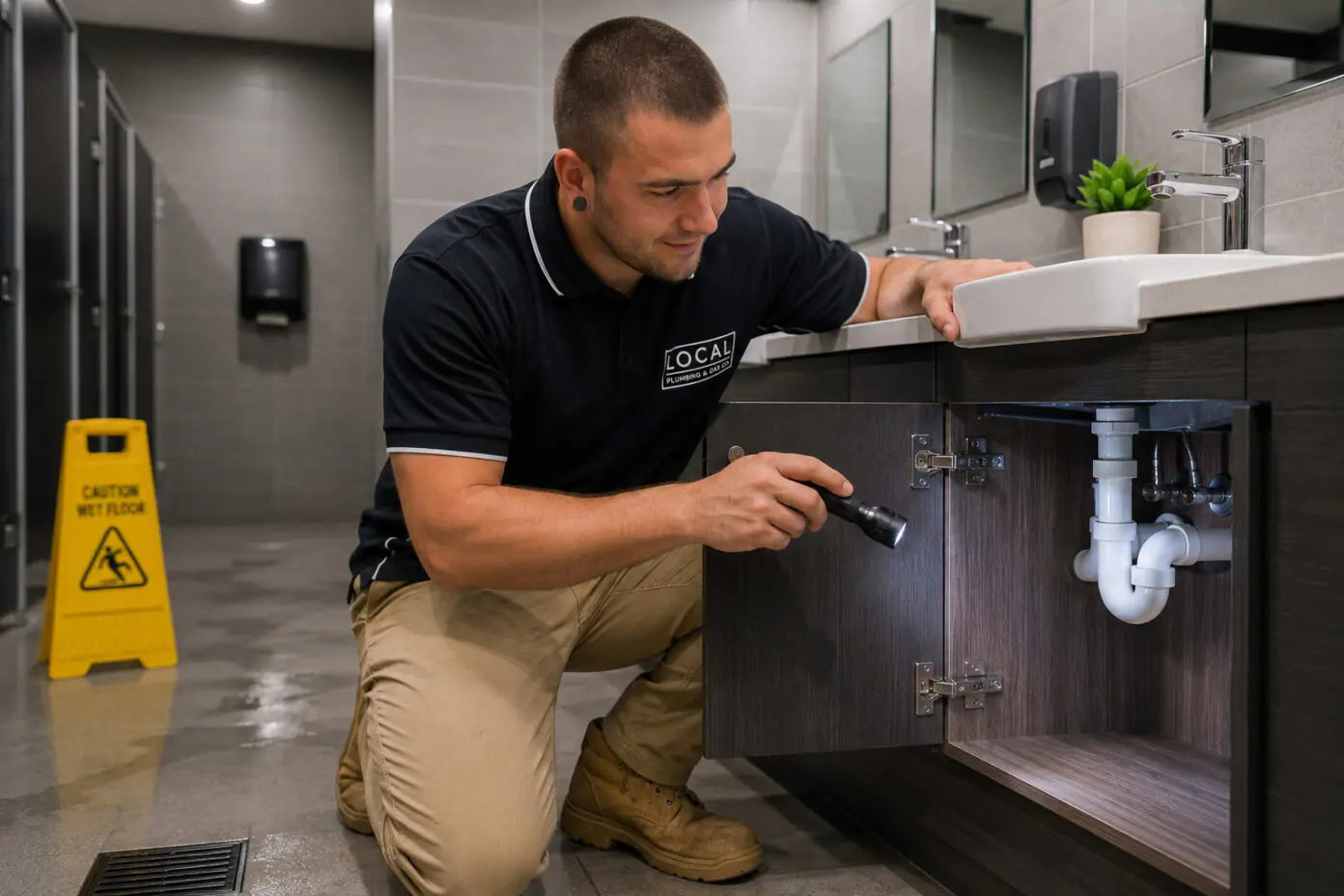
Start with the areas people use most often. In commercial properties, the first warning signs often appear in bathrooms, staff amenities, kitchens, shared laundries, cleaners’ sinks and hospitality areas. These are the fixtures tenants, staff and customers notice quickly when something is not right.
Our plumbers often see repeat complaints start with small symptoms: a toilet that keeps running, a basin that drains slowly, a tap that will not shut off properly or a floor near a fixture that stays damp. One minor report may not always mean a serious problem, but repeated reports from the same area deserve closer attention.
For bathrooms and shared amenities, keep an eye on:
- toilets that keep running after flushing
- weak flushes, blocked pans or repeated toilet paper build-up
- leaking taps, loose mixers or stiff handles
- slow basins, gurgling drains or unpleasant smells
- puddles, damp walls, swollen partitions or stained flooring
For kitchens, staff rooms and hospitality spaces, watch for:
- slow sink drainage
- water pooling under benches or near appliances
- leaking taps or spray hoses
- hot water complaints during peak use
- smells from floor wastes or sink drains
- recurring issues after busy service periods
Property staff do not need to diagnose the fault. The useful step is to record what happened, where it happened and whether it has happened before. If there is active overflow, sewage, an electrical risk near water or a fixture that cannot be used safely, keep people away from the area and arrange licensed plumbing help.
Leaks, Water Pressure And Hidden Plumbing Issues
Some commercial plumbing problems are easy to see. Others show up through small clues before the cause is obvious. A damp wall, musty smell, swollen cabinetry or sudden pressure change can point to a leak or pipework issue that needs checking before it causes more damage.
For property managers, the key is pattern-spotting. If more than one tenant reports low pressure, if the same wall keeps showing moisture, or if water use changes without a clear reason, it is worth taking the concern seriously. Our plumbers usually look at the visible signs first, then work out whether the issue needs leak detection, pipe repairs or another targeted check.
Watch for signs such as:
- water stains on walls, ceilings or skirting
- damp carpet, swollen cabinetry or soft flooring
- mould smells near wet areas or storerooms
- low water pressure affecting more than one fixture
- sudden pressure changes during normal use
- unexplained water use or repeated meter movement
- corrosion, staining or moisture around visible pipework
Hidden leaks can be harder to confirm without the right equipment. Staff can record what they see, take photos, note when the issue appears and avoid using affected areas if there is a safety risk. A licensed plumber can then inspect the issue and recommend the right next step, rather than guessing from symptoms alone.
For commercial properties, early leak checks can help reduce water damage, tenant disruption and repeat callouts. This is especially important in high-use sites where small leaks can be missed until walls, flooring, cabinetry or stock are already affected.
Drains, Sewer And Stormwater Checks
Drainage problems can affect a commercial property quickly because they often show up in the areas people rely on every day. Shared bathrooms, kitchens, floor wastes, loading areas, car parks and stormwater pits can all create disruption if water stops moving properly.
For Gold Coast commercial properties, drainage checks are especially useful before heavy rain periods. We do not recommend property staff climb onto roofs, open pipework or use harsh chemicals. The safer approach is to look for visible warning signs from accessible areas and call a licensed plumber when symptoms keep returning.
Watch for:
- slow drains in bathrooms, kitchens or staff areas
- gurgling sounds from fixtures or floor wastes
- recurring sewer smells
- overflowing floor wastes
- water pooling near grates, car parks or entries
- blocked stormwater pits or surface drains
- downpipes overflowing during rain
- damp areas or staining after wet weather
- repeat blockages in the same fixture or tenancy
Commercial drains can be affected by higher use, paper products, food waste, grease, debris, tree roots or damaged pipework. One slow drain may be a simple warning sign. Repeated blocked drains at a commercial property usually need closer attention because the cause may be further down the line.
Our plumbers often look for patterns across the site. If several fixtures are slow at once, if smells return after cleaning, or if water pools in the same area after rain, that can point to a larger drainage or stormwater issue. In those cases, a CCTV drain inspection or professional drain assessment may be more useful than guessing from the surface symptoms.
If there is sewage overflow, keep people away from the affected area and avoid contact with contaminated water. If water is entering the building, affecting electrical areas or disrupting access, treat it as urgent and arrange licensed plumbing help.
Hot Water, Gas And Backflow Checks
Some commercial checklist items need extra care because they can affect safety, compliance or daily operations. Hot water, gas and backflow systems should never be treated as DIY repair areas. Property staff can watch for symptoms and keep records, but licensed trades should handle testing, diagnosis and repair work.
Hot Water Systems
Hot water problems can disrupt bathrooms, staff amenities, kitchens and hospitality areas quickly. Watch for no hot water, inconsistent temperature, visible leaks, rust around the unit, unusual noises or repeated complaints during peak use.
Our plumbers usually look at the age of the system, the symptoms reported and whether the problem is affecting one area or the whole property. Do not open, adjust or attempt to repair hot water components. Record the issue and book licensed plumbing help.
Gas Appliances
Commercial kitchens, gas hot water systems and other gas appliances need licensed attention when something is wrong. Warning signs can include a gas smell, repeated appliance faults, shutdowns, poor performance or staff concerns about safe operation.
Queensland Government guidance says you need the right licence or authorisation before doing gas work in Queensland. Gas work licences and authorisations are not something property staff should try to work around. If gas is suspected, stop using the appliance if it is safe, avoid ignition sources, move people away from the area and call a licensed gas fitter. Do not test, disconnect, relight, adjust or repair gas appliances yourself.
Backflow Prevention Devices
Some commercial properties have testable backflow prevention devices. These devices help protect drinking water from contamination if water pressure changes or flows the wrong way.
City of Gold Coast guidance says only a Queensland licensed plumber with a backflow endorsement can test a backflow device. It also says property owners are responsible for having their testable devices checked each year and for keeping the device accessible. For backflow testing at a commercial property, keep this on the maintenance schedule if a testable device is installed.
For help with this requirement, Local Plumbing & Gas Co. can arrange backflow testing for relevant commercial properties.
Keep backflow reports, gas safety notes, hot water records and plumber reports together where possible. Good records make it easier for owners, managers and trades to see what has been checked, what has changed and what needs follow-up.
What Property Staff Can Monitor Vs What Needs A Licensed Plumber
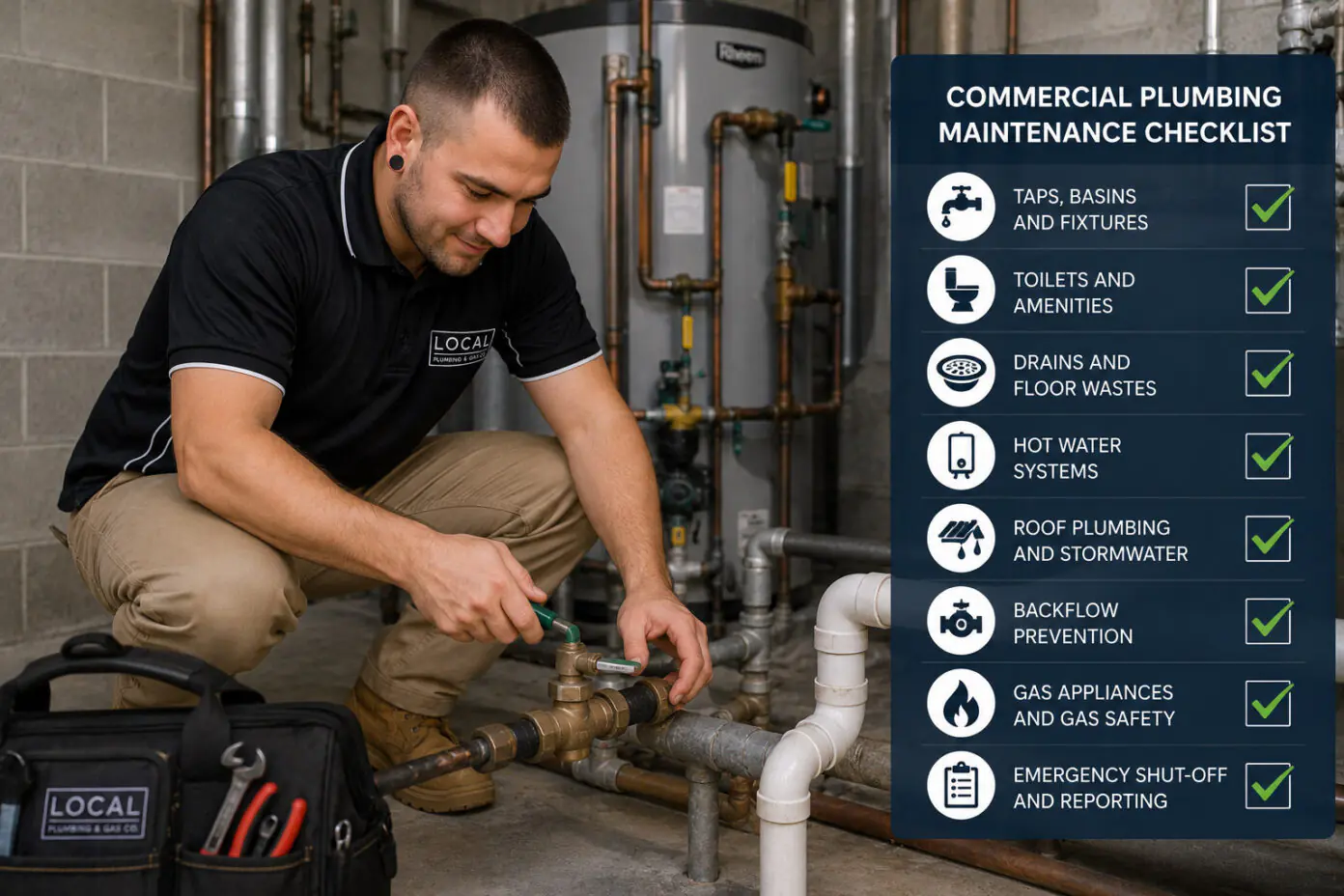
This is the most important safety boundary in a commercial maintenance plan. Property staff can monitor visible symptoms, record issues and keep people away from affected areas, but they should not carry out regulated plumbing, gas, sewer, backflow, hot water or roof plumbing work.
QBCC guidance says most plumbing work in Queensland is regulated and requires a QBCC licensed plumber or drainer. In practice, that means a checklist should help staff recognise problems, not teach them how to repair them.
We often see commercial plumbing problems become harder to manage when the same symptom is treated as a one-off issue. If the same fault keeps coming back, it is time for a licensed plumber to check the cause properly.
| Safe To Monitor Or Report | Do Not Attempt | Who To Call |
| Visible leaks, stains, smells, slow drains, running toilets, pressure changes, photos, access notes and tenant complaints | Pipe repairs, pressure testing, opening pipework, hot water repairs, sewer clearing, backflow testing, gas work or roof access | A licensed plumber for plumbing faults, a licensed gas fitter for gas concerns, or an endorsed plumber for backflow testing. |
| Repeat issues affecting the same fixture, drain, tenancy or roof/stormwater area | Assuming repeated symptoms are fixed because the area has been cleaned or temporarily closed off | Book professional plumbing inspections if the cause is unclear or the problem keeps returning. |
| Overflow, suspected sewage, active leaking or water entering unsafe areas | Touching sewage, using affected fixtures, working near electrical hazards or trying to clear serious blockages | Keep people away and arrange urgent licensed plumbing help. |
If you need a clearer condition check or are dealing with recurring issues across a managed property, professional plumbing inspections can help identify what needs attention, what can be monitored and whether a more targeted check is needed.
Keep Maintenance Records And Issue Notes
Good records make commercial plumbing maintenance much easier to manage. For real estate agencies overseeing rental properties, having reliable plumbers for property managers also helps keep tenant-reported issues, repairs and ongoing maintenance organised. They help property managers see whether a problem is new, repeated, getting worse or affecting more than one part of the property.
A property manager plumbing checklist should be more than a tick-box sheet. The most useful details are usually the date, location, symptom, photo if available, who reported it and what action was taken. For example, “slow basin in ground-floor amenities after lunch rush” is more useful than “bathroom problem”.
For commercial properties with tenants, shared facilities or high-use plumbing, keep clear records of faults, repairs and follow-up work. In unit complexes and other strata-managed buildings, our plumbing maintenance for body corporates can help address ongoing issues involving shared plumbing and drainage systems.
We recommend keeping notes on:
- the fixture or area affected
- when the issue started
- whether it has happened before
- whether more than one fixture is affected
- photos of visible leaks, stains, pooling water or damaged fixtures
- tenant or staff reports
- plumber attendance notes
- repair recommendations or follow-up items
- backflow test records, where relevant
- hot water, gas or compliance-related notes
When customers call us with clear notes, our team can often understand the likely service pathway faster. We still need to check the issue properly on site, but good information helps us prioritise the concern, bring the right context and avoid treating repeat symptoms like isolated problems.
Records are also useful during tenant changeovers, owner updates, annual budgeting and planned maintenance reviews. If the same drain blocks every few months, the same toilet keeps running or the same ceiling area stains after rain, the record helps show that the property may need more than another quick fix.
For larger or multi-tenant properties, it can help to keep plumbing records in one shared place so owners, managers and trades are not relying on memory. This gives everyone a clearer picture of what has been checked, what is still being monitored and what needs licensed plumbing attention next.
Know When A Plumbing Issue Is Urgent
Some commercial plumbing problems can wait for planned maintenance. Others need fast attention because they can affect safety, hygiene, access or business operations. The difference is not always obvious, so it helps to have a clear escalation process before something goes wrong.
As a general rule, treat the issue as urgent if water is actively damaging the property, sewage is involved, gas is suspected, a business-critical fixture cannot be used, or the problem is affecting customers, staff or tenants. An emergency plumbing plan for the property should make it clear who can approve work, where the main water shut-off is, how trades can access the site and who needs to be updated.
| Issue | Why It Can Be Urgent | Safe First Response |
| Active Leak Or Burst Pipe | Water can damage flooring, walls, stock, equipment and neighbouring tenancies | Turn off the water if it is safe and accessible. Keep people away from electrical risks and call a licensed plumber. |
| Sewage Overflow | Sewage can create a hygiene risk and contaminate floors, bathrooms or shared areas | Stop using affected fixtures, keep people away from the area and arrange urgent plumbing help. |
| Suspected Gas Smell | Gas can create a serious safety risk | Stop using the appliance if safe, avoid ignition sources, move people away and call a licensed gas fitter. If there is immediate danger, leave the area and follow emergency service guidance first. |
| No Hot Water In A Critical Area | This can affect kitchens, amenities, cleaning, staff use or tenant operations | Record where the issue is happening and arrange licensed plumbing help. |
| Repeated Blocked Toilets Or Floor Wastes | Repeat blockages can affect hygiene, access and business continuity | Stop using affected fixtures and arrange a professional drain assessment. |
| Water Entering The Building During Rain | Roof plumbing, gutters, downpipes or stormwater problems can damage ceilings, entries and internal areas | Keep people away from wet or unsafe areas and call for licensed help. Do not access roofs or unsafe spaces. |
| Loss Of Water To The Property | This can stop bathrooms, kitchens, cleaning and basic operations | Check whether the issue affects one fixture or the whole site, then arrange help if the cause is not obvious. |
Local Plumbing & Gas Co. provides 24/7 emergency plumbing across the Gold Coast for urgent issues that cannot wait. If there is immediate danger, such as a serious gas concern, electrical risk around water or unsafe building condition, follow emergency service guidance first.
How Local Plumbing & Gas Co. Helps With Commercial Plumbing Maintenance
A maintenance checklist is useful, but it is only the starting point. The real value comes from knowing which symptoms can be monitored, which issues need repair and which problems point to a larger plumbing concern.
Local Plumbing & Gas Co. helps Gold Coast businesses, property managers and commercial property owners manage plumbing issues before they become harder to control. Our plumbers can inspect recurring leaks, slow drains, water pressure concerns, hot water faults, roof plumbing issues, stormwater problems and tenant-reported complaints. We can also help identify whether a problem needs a simple repair, a more detailed inspection or a specialist check.
For commercial properties, the goal is usually to reduce disruption. A blocked toilet in a customer bathroom, a leaking pipe in a tenancy or no hot water in a food business can affect daily operations quickly. That is why clear communication, access details and good issue notes make a difference.
If you manage a business premises, retail tenancy, office, hospitality venue or multi-tenant property, our commercial plumbing services can help with planned maintenance, urgent repairs and practical advice on what needs attention next.
We will not tell you every minor symptom is an emergency. If something can be monitored, we will explain that clearly. If it needs licensed plumbing work, further testing or prompt attention, we will talk you through the next step so you can make a clear decision for the property. Speaking with a licensed commercial plumber also helps keep the service pathway clear when several tenants, fixtures or systems are involved.
Commercial Plumbing Maintenance FAQs
What Should Be Included In A Commercial Plumbing Maintenance Checklist?
A maintenance checklist for a commercial property should include taps, toilets, visible leaks, drains, water pressure, hot water systems, roof plumbing, stormwater, backflow devices, gas warning signs and emergency readiness. It should also make clear what property staff can safely monitor and what needs a licensed plumber, licensed gas fitter or endorsed backflow tester.
How Often Should Commercial Plumbing Be Maintained?
Commercial plumbing maintenance should be based on property use, age, plumbing history and risk. High-use sites may need regular visual checks, while smaller offices may only need routine monitoring and scheduled maintenance. If the same drain, toilet, tap or hot water issue keeps returning, it is worth arranging a professional check sooner.
Can Property Staff Do Commercial Plumbing Maintenance Themselves?
Property staff can safely monitor visible signs, record complaints, take photos and keep people away from affected areas. They should not repair pipework, test gas appliances, clear sewer issues, work on backflow devices, access unsafe roof areas or dismantle plumbing. If the issue involves a leak, blockage, gas concern, sewage, hot water fault or repeat symptom, call a licensed trade.
Do Commercial Properties Need Backflow Testing?
Some commercial properties have testable backflow prevention devices that need regular testing by the right licensed professional. City of Gold Coast says only a Queensland licensed plumber with a backflow endorsement can test a backflow device, and property owners are responsible for annual testing where a testable device is installed. Keep records with your maintenance notes.
Is A Plumbing Maintenance Checklist The Same As A Plumbing Inspection?
No, a plumbing maintenance checklist is not the same as a plumbing inspection. A checklist helps property managers monitor symptoms, keep records and plan maintenance. A commercial plumbing inspection is a professional check by a plumber to assess the issue, identify likely causes and recommend next steps. The checklist can help decide when an inspection is needed.
When Should A Commercial Plumbing Issue Be Treated As Urgent?
Treat a commercial plumbing issue as urgent if there is active leaking, sewage overflow, suspected gas, no hot water in a critical area, water entering the building, repeated blocked toilets or a fault affecting customers, staff or tenants. If there is immediate danger, follow emergency service guidance first, then arrange licensed plumbing or gas fitting help.
Keep Your Commercial Property Ahead Of Plumbing Problems
A maintenance checklist works best when it is used regularly, not only after something has gone wrong. Small symptoms such as slow drains, leaking taps, pressure changes, hot water complaints or damp areas are easier to manage when they are noticed early and recorded clearly.
For Gold Coast businesses and property managers, the aim is simple: reduce disruption, protect the property and know when licensed help is needed. Your team can monitor visible warning signs, keep good notes and act quickly when an issue affects tenants, staff or customers. Repairs, testing, gas work, backflow work and deeper plumbing checks should stay with the right licensed trade.
If you manage a commercial property and want clearer next steps, Local Plumbing & Gas Co. can help inspect recurring issues, plan maintenance and explain what needs attention first. Book commercial plumbing support and we will help you keep the property safer, more reliable and easier to manage.