The Ultimate Guide to Hot Water System Installation on the Gold Coast
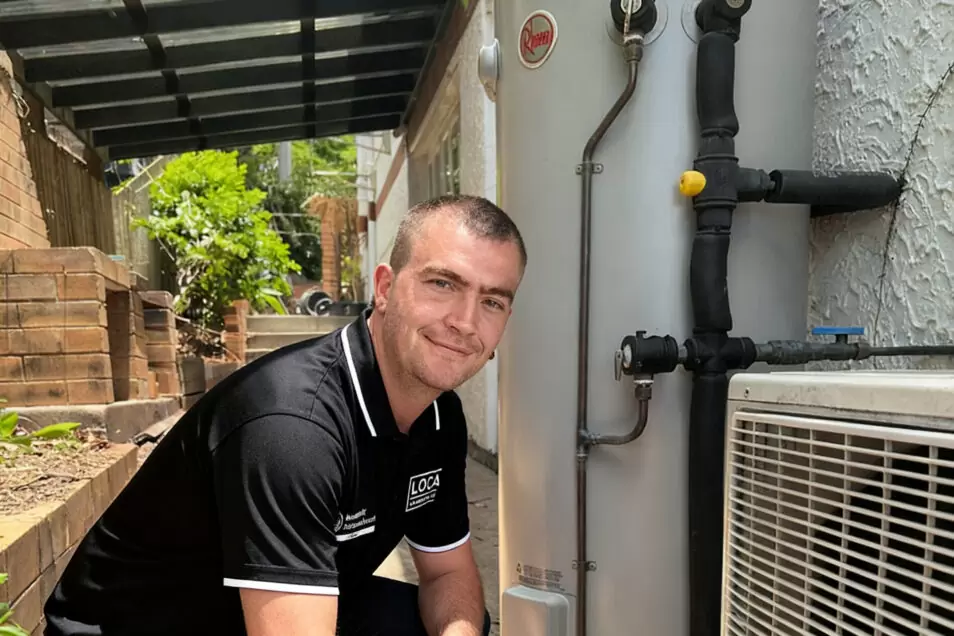
Hot water system installation is one of those jobs that looks straightforward until you’re standing in a cold shower, wondering what went wrong. Whether your current system has finally given up or you’re planning an upgrade, knowing what a proper installation actually involves, from the initial site assessment right through to a commissioned, compliant system, makes the whole process a lot less stressful.
This guide covers everything Gold Coast homeowners need to know: how installation works for each system type, what Queensland’s compliance requirements mean for you, what to expect on the day, and why cutting corners with unlicensed work creates risks that aren’t worth taking.
At Local Plumbing & Gas Co., we supply and install hot water systems across the Gold Coast. Our team holds licensed plumbing and gas fitting credentials, carries the endorsements required for solar and heat pump installations, and charges a $0 call out fee. We’ve helped hundreds of Gold Coast households get their hot water sorted, and we’ll walk you through exactly how we do it.
Hot Water System Installation: What’s Involved? (Quick Overview)
Hot water installation involves considerably more than swapping out an old tank. A professional installation requires a licensed plumber, compliance with Queensland’s plumbing regulations, and correct commissioning of safety valves and pipework before the system can be signed off. For a straightforward like-for-like replacement, most jobs are completed within 2–4 hours, though system type changes and new installations take longer.
Here’s what a compliant hot water system installation covers:
- Initial site inspection and assessment of your existing plumbing infrastructure and installation location
- Disconnection and removal of the old system, including draining the tank
- Installation of the new unit, pipework, and fittings
- Fitting of mandatory safety valves — including a tempering valve and pressure relief valve
- Connection to the relevant energy source — gas, electricity, or solar infrastructure
- System testing, commissioning, and sign-off to confirm safe operation
- QBCC Form 4 notifiable work lodgement by the licensed plumber upon completion
For same-day hot water installation on the Gold Coast, visit our hot water installation service page or contact our team to book a job.
Queensland Compliance: What the Law Requires
In Queensland, hot water system installation is regulated work under the Plumbing and Drainage Act. Meaning it cannot be carried out by an unlicensed person, regardless of how handy they are. All hot water installations must be performed by a licensed plumber or drainer who is authorised to carry out that specific type of work. It’s worth knowing that up to 40% of hot water installations completed without a licensed plumber fail to meet QBCC standards. This can void home insurance, invalidate product warranties, and leave homeowners paying twice to have the job done properly.
Here’s what Queensland’s compliance framework means in practice:
- Notifiable work — Most hot water system replacements in existing homes are classified as notifiable work. The licensed plumber must lodge a Form 4 with the QBCC after completing the installation, which registers the work and allows the council to conduct random compliance audits. The homeowner doesn’t need to manage this — it’s the plumber’s responsibility.
- Permit work — If the installation involves a change of system type, adding a new gas connection where none previously existed, or installing in a new build, the job may be classified as permit work. This requires a Form 1 compliance assessment application to the Gold Coast City Council before work begins. At Local Plumbing & Gas Co., we manage the permit process on behalf of the homeowner.
- Solar and heat pump qualification — A licensed plumber cannot legally install, replace, or maintain a solar or heat pump hot water system in Queensland without holding an additional QBCC qualification specific to these system types. This goes beyond a standard plumbing licence, and homeowners should always ask to verify it before work begins. Our team is fully qualified across both.
- Gas fitting licence — Gas hot water installations — including connecting or disconnecting a gas hot water heater — require a separately licensed gas fitter. Local Plumbing & Gas Co. holds both plumbing and gas fitting licences, so all trades are covered under one roof.
- Certificate of compliance — For gas and electrical connections, the licensed professional must issue a certificate of compliance upon completion. Keep this documentation on file; it’s required to honour manufacturer warranties and may be requested by insurers or a conveyancer if the property is ever sold.
Signs You Need a New Hot Water System
Most hot water systems on the Gold Coast don’t fail without warning. The signs tend to build gradually — and catching them early is the difference between a planned replacement and an emergency callout when you’re left without hot water entirely.
- Age of the system is the starting point. Electric storage systems typically last 8–12 years; gas storage systems 8–12 years; heat pumps and solar systems up to 15–20 years with good maintenance. If your system is approaching or past that range, it’s worth factoring replacement into your plans rather than waiting for a failure.
- Rust-coloured or discoloured hot water coming from taps is a reliable indicator that the storage tank is corroding from the inside. Once corrosion reaches this stage, the tank is compromised. It won’t improve, and a leak or failure is typically not far off.
- Inconsistent water temperature — water that fluctuates between hot and cold, or takes noticeably longer to reheat than it used to — points to a failing heating element on electric systems, a deteriorating burner on gas systems, or sediment buildup reducing efficiency across both.
- Rumbling, popping, or cracking noises from the tank during heating cycles are caused by sediment accumulating at the base of the tank. The heating element is working harder to heat water through the sediment layer, which accelerates wear and reduces the system’s remaining lifespan.
- Visible leaks or pooling water around the base of the unit is a clear sign the tank has failed. A leaking tank cannot be repaired — it needs replacing. Small drips from valves may be a simpler fix, but any pooling around the tank itself warrants an immediate assessment.
- Rising energy bills without a change in usage can indicate a system that’s working harder than it should — a common sign of an ageing or failing unit that’s losing efficiency before it fails entirely.
If your system is showing one or more of these signs, our guide to the signs you need a hot water plumber covers each symptom in detail and helps you work out whether a repair is worth pursuing or whether replacement is the better call.
What’s Involved in Installing Each Type of Hot Water System
The core installation steps are consistent across all system types: site assessment, disconnection of the existing unit, fitting of the new system, pipework connections, safety valve installation, and commissioning. What changes are the complexity, timeframe, and which trades need to be on site. On the Gold Coast, outdoor installations are common thanks to the subtropical climate, which simplifies positioning for most systems. However, it does introduce UV and weather exposure considerations for pipework insulation that need to be handled correctly.
Choosing between these systems involves balancing upfront cost, long-term running costs, household demand, available energy sources, and site constraints.
Electric Hot Water System Installation
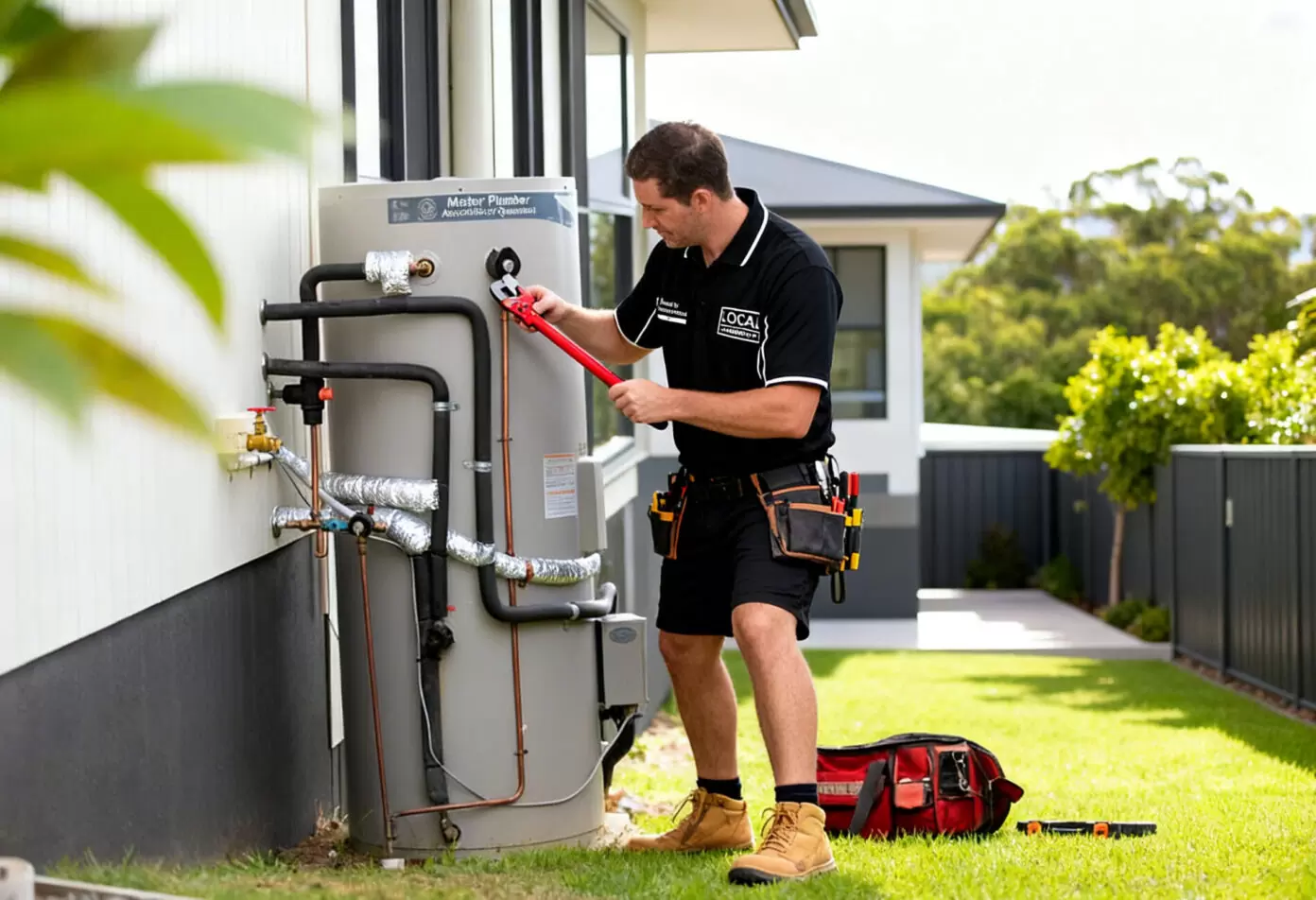
Electric hot water systems are the most common like-for-like replacement we carry out, and for good reason — they’re the most straightforward to install. Most Gold Coast homes have their electric system positioned outdoors, which makes access and removal clean and simple.
The installation process covers disconnection and draining of the old unit, positioning of the new system, and cold water inlet and hot water outlet pipework connections. One point worth understanding: the 240V electrical connection must be handled by a plumber holding a restricted electrical licence or a licensed electrician. It’s not a job for a standard plumber alone, and any installer who glosses over this detail is cutting corners on compliance.
A tempering valve is mandatory on all new electric hot water installations under AS/NZS 3500.4, along with a pressure relief valve. Both are fitted and tested before sign-off. For a like-for-like replacement, most electric installations are completed within 2–3 hours, making same-day hot water installation entirely achievable in most cases. Learn more about our electric hot water installation services here.
Gas Hot Water System Installation
Gas hot water installation involves two licensed trades on site: a licensed plumber for the water connections and a licensed gas fitter for the gas line. If the home is already connected to natural gas, a like-for-like replacement is relatively straightforward.
One thing worth flagging for Gold Coast homeowners specifically: natural gas is not available in all Gold Coast streets. Many properties run on LPG, which has its own compliance requirements around cylinder placement, connection fittings, and regulator sizing. It’s not simply a matter of connecting the same way as a natural gas system.
Storage gas systems also require correct flue and ventilation installation to safely expel combustion gases. The tempering valve and pressure relief valve are fitted as standard. Before sign-off, the gas line is pressure-tested and checked for leaks. One practical advantage of gas systems worth mentioning: they continue to operate during power outages — a relevant point during Gold Coast summer storm season when blackouts aren’t uncommon. Most gas hot water installations are completed within 2–4 hours. Learn more about our gas hot water installation services here.
Solar Hot Water System Installation
Solar hot water system installation is the most involved of all system type, and it’s one that must be carried out by a plumber who holds the additional qualification for solar and heat pump systems, as covered in the compliance section above.
The installation involves roof-mounted collector panels, which means a roof assessment is carried out first to confirm suitable orientation, adequate structural support, and correct positioning for maximum sun exposure. On the Gold Coast, year-round sun exposure means solar systems perform exceptionally well. Our subtropical climate is genuinely one of the best environments in Australia for solar hot water.
From there, pipework is run from the roof collectors down to the storage tank, which can be either roof-mounted or ground-mounted depending on the property. Most Gold Coast solar installations include an electric or gas booster to cover periods of low sun or high demand, and this connection is handled as part of the installation. Integration with the existing plumbing infrastructure is confirmed and tested before commissioning. Solar installations typically take 4–6 hours. Learn more about our solar hot water installation services here.
Heat Pump Hot Water System Installation
Heat pump systems require more careful placement than other system types. They extract heat from the surrounding air to heat water, which means they need adequate open-air ventilation and specific clearances. A cramped corner or enclosed space will compromise performance. As with solar installations, this work must be carried out by a plumber holding the additional qualification for solar and heat pump systems.
On the Gold Coast, heat pumps perform efficiently year-round thanks to the warm climate. Ambient air temperature directly affects how hard the system has to work, and Gold Coast conditions are well-suited to heat pump operation across all seasons, which is why a heat pump is usually the most energy-efficient hot water system for your home in this climate.
Electrical connection is required, condensate drainage must be correctly directed, and noise output is a real siting consideration. Heat pumps produce a low hum during operation, so placement away from bedroom windows is always recommended. Heat pump installations typically take 3–5 hours. Learn more about our heat pump hot water installation services here.
Instantaneous Gas Hot Water System Installation
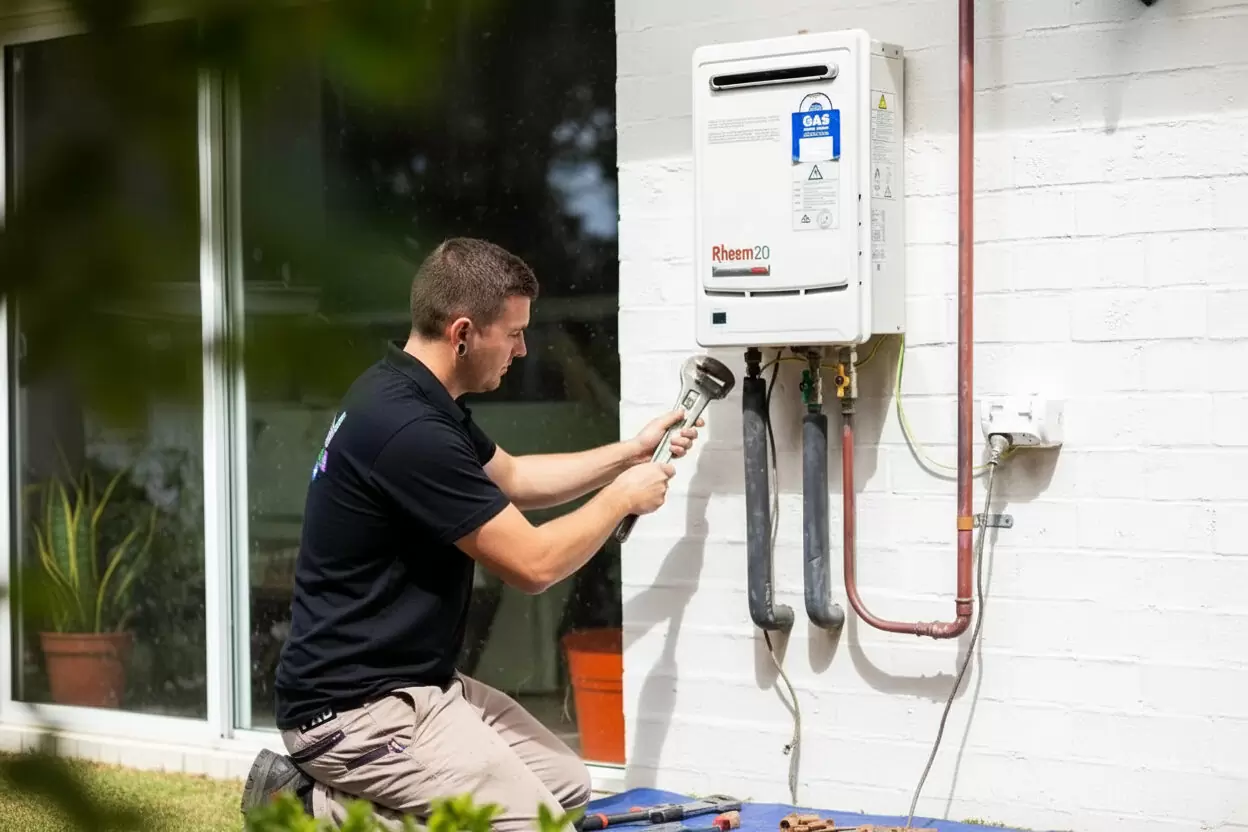
Instantaneous, or continuous flow, gas hot water systems are wall-mounted units that heat water on demand rather than storing it in a tank. They’re popular on the Gold Coast in homes with limited outdoor space, and in larger households where back-to-back hot water demand makes a storage system impractical.
A licensed gas fitter is required for the gas line connection, and correct flue installation is essential for safe operation. Before the system is commissioned, we check water pressure suitability. Continuous flow systems require a minimum flow rate to operate correctly, and low water pressure can cause the unit to underperform or cut out. Pipe sizing is also confirmed to match the household’s hot water demand across simultaneous draw points.
With no tank to drain and a compact wall-mounted footprint, instantaneous installations are typically the quickest gas option. Most jobs are completed within 1.5–3 hours. Learn more about our instant hot water installation services here.
What to Expect on Hot Water Installation Day
Most homeowners have never watched a hot water system get installed, and most don’t want to. You just want it done properly, without disruption, and without discovering three weeks later that something wasn’t connected correctly. Here’s exactly what happens when our team arrives on site, so there are no unknowns.
- Arrival and site review Before any work starts, the plumber confirms the installation location, reviews the existing plumbing infrastructure, and walks through any changes with the homeowner. If there’s anything unexpected — corroded pipework, a non-standard connection, or a location that creates access problems — it gets flagged and discussed before the job begins, not halfway through it.
- Water and power or gas isolation The water supply is shut off at the mains. For electric systems, the circuit is isolated at the switchboard. For gas systems, the gas supply is turned off at the meter or cylinder. Expect a supply interruption of around 30–60 minutes during the main installation phase — we work quickly to keep this window as short as possible.
- Removal of the old system The old unit is drained, disconnected, and removed from site. Local Plumbing & Gas Co. takes care of disposal — homeowners don’t need to arrange a skip bin or council collection. For older Queensland homes where the original system may have been in place for 15–20 years, this stage sometimes reveals non-compliant pipework or missing safety valves that need to be addressed as part of the new installation.
- Installation of the new unit The new system is positioned, secured, and connected to the water supply and energy source. Pipework is fitted, all connections are checked, and the installation is confirmed to meet current compliance requirements before moving to the next stage.
- Safety valve installation A tempering valve is fitted to every new installation — this is mandatory under AS/NZS 3500.4 and limits water temperature at the tap to a maximum of 50°C to prevent scalding. A pressure relief valve is also fitted and tested. These aren’t optional extras; they’re non-negotiable compliance requirements on every hot water system replacement we carry out.
- System fill, test, and commissioning The system is filled, pressure-tested for leaks across all connections, fired up, and confirmed operational. For gas systems, this includes a gas pressure test and leak check before sign-off. The plumber doesn’t leave until the system is running correctly and producing hot water.
- Handover and paperwork The plumber walks the homeowner through basic operation — thermostat settings, what the safety valves do, and what to watch for. All compliance documentation is provided, and Form 4 notifiable work is lodged with the QBCC by our team. The homeowner receives everything they need for warranty and insurance records.
On a recent job in Southport, we replaced a 20-year-old electric storage system with a heat pump unit. When we disconnected the old system, it became clear that a tempering valve had never been fitted. The original installation was non-compliant and had been running that way for two decades. We fitted the tempering valve as part of the new installation, which meant the homeowner’s system met full QBCC requirements for the first time. It’s a situation we come across more often than you’d expect, particularly in older Queensland homes where hot water systems have simply been left untouched.
New Hot Water System Installation vs. Like-for-Like Replacement
Not all hot water system installations are the same job, and the difference matters; both for compliance requirements and for what you can expect on the day. Replacing an existing system with the same type is a straightforward swap that most households can have completed within a few hours. Switching to a different system type is a more involved process that may require additional trades, council permits, and longer on-site time.
Like-for-Like Hot Water System Replacements
A like-for-like replacement means swapping your existing system for the same type. E.g. electric for electric, gas for gas, and so on. It’s the most common scenario we handle, and it’s the most efficient. Existing pipework, gas lines, or electrical connections are reused where they meet current compliance standards, which keeps the job clean and the timeframe short. In Queensland, like-for-like replacements are classified as notifiable work. The licensed plumber lodges a Form 4 with the QBCC after completion, and no council permit is required before work begins. Most like-for-like replacements are completed within 2–4 hours and are well-suited to same-day installation. If you’re unsure whether your current system needs replacing or just a repair, our hot water system replacement guide covers the key signs to watch for.
Changing Hot Water System Type
Switching from one system type to another, whether it be electric to solar, gas storage to heat pump, or adding a gas connection where none previously existed, is a more complex installation. It often involves additional trades, new infrastructure, and in some cases, a Form 1 permit work application to GCCC before any work can begin. Timeframes vary depending on what’s involved, but a full system type change typically takes longer than a standard replacement and should be planned accordingly.
New Hot Water System Installations
A new hot water system installation for a new build, a granny flat, or a property with no existing system is the most complex category. There’s no existing infrastructure to work from, which means pipework, energy connections, and positioning all need to be established from scratch. New installations are always classified as permit work in Queensland and require a Form 1 application to GCCC before work begins. If you’re building or adding a new dwelling on the Gold Coast, our team manages the end-to-end compliance and permit process.
How Much Does Hot Water System Installation Cost on the Gold Coast?
Hot water system installation costs on the Gold Coast vary considerably depending on the system type, whether you’re doing a like-for-like replacement or switching system types, and what the site assessment reveals about your existing infrastructure.
As a general guide:
- Electric storage (like-for-like replacement): $1,200–$2,500 supply and install, depending on tank size and accessibility
- Gas storage (like-for-like replacement): $1,400–$2,800 supply and install for natural gas; LPG systems can vary based on cylinder and regulator requirements
- Instantaneous gas: $1,800–$3,500 supply and install depending on unit capacity and gas line condition
- Heat pump: $3,000–$5,500 supply and install after the federal STC discount, with higher upfront cost offset by lower running costs long-term
- Solar hot water: $3,800–$8,000+ supply and install depending on collector type, tank configuration, and roof assessment requirements
These are indicative ranges. Our full breakdown of hot water installation costs on the Gold Coast goes deeper into what each system type costs to supply and install, including the STC discount and the local factors that push the final price up or down. What drives cost variation includes the capacity of the new unit, whether existing pipework needs updating to meet current compliance standards, whether permit work is required, and the complexity of site access. A straightforward like-for-like replacement on an accessible outdoor unit will always be at the lower end. A full system type change with new infrastructure at the higher end.
We provide upfront pricing after the initial site assessment so you know exactly what the job costs before any work begins. There are no estimates that change mid-job and no surprise charges on completion.
Hot Water System Installation on the Gold Coast: Real Examples
Every Gold Coast home presents its own set of circumstances, from elevated Queenslanders in Burleigh Heads to high-density units in Southport and large family homes spreading across the northern suburbs. These two jobs give a realistic picture of what hot water system installation looks like in practice.
Burleigh Heads — Older Queenslander, Electric to Instantaneous Gas
The call came from a homeowner in Burleigh Heads with an older elevated Queenslander. It had timber framing, a tight under-floor cavity, and an electric storage system that had been installed beneath the house at some point in the home’s history and hadn’t been touched since. Access was difficult, the pipework was non-compliant, and the tank itself was well past its useful life.
After assessing the site, we recommended switching from the under-floor electric storage system to a wall-mounted instantaneous gas unit. Eliminating the tank entirely solved the access problem, freed up under-floor space, and provided the homeowner with continuous hot water without the running costs of an ageing electric system. Our licensed gas fitter managed the gas line connection and compliance requirements, and the installation was completed with Form 4 notifiable work lodged with the QBCC on the same day. The result was a fully compliant installation. The first one the property had seen in a long time.
Northern Gold Coast — Heat Pump Upgrade, Family Home
This job came from a family of five in a relatively new estate in the northern Gold Coast suburbs. The builder had installed a basic electric storage system during construction. It was undersized for the household’s actual hot water demand, and it showed. The family was regularly running out of hot water, and their energy bills reflected a system working harder than it should.
We assessed the household’s hot water demand and recommended a heat pump upgrade as the most effective long-term solution. On the Gold Coast, heat pumps operate efficiently year-round. Our subtropical climate means the system extracts ambient heat easily across all seasons, which directly translates to lower running costs compared to a standard electric unit. Our team is licensed for solar and heat pump installations under Queensland’s licensing requirements, and completed the full supply and install with the old system removed from site. The family now has a correctly sized system, and the hot water runs out considerably less often.
Why Licensed Hot Water System Installation Matters
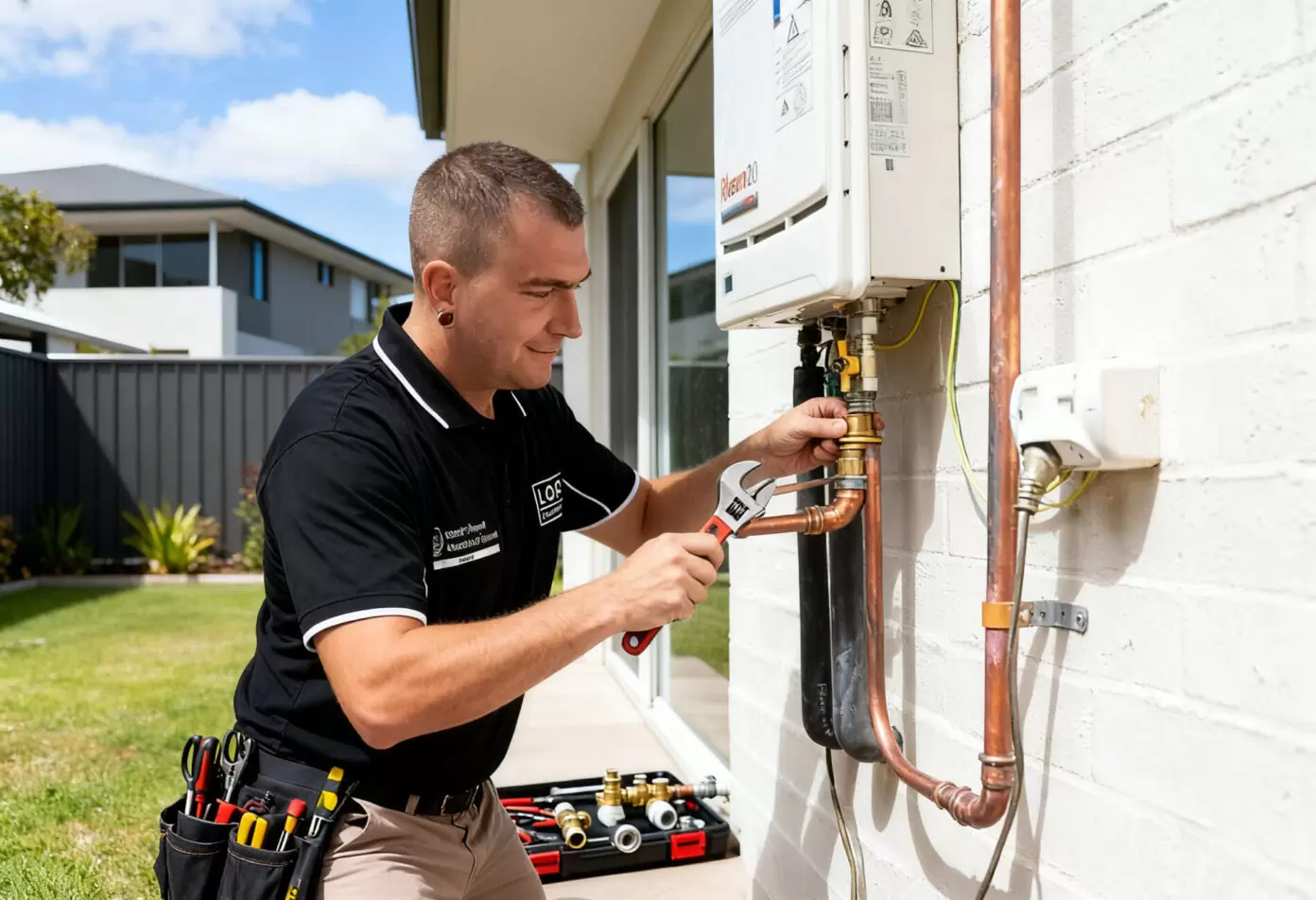
Choosing a cheaper quote from an unlicensed operator is an understandable call when you’re looking at installation costs. But in Queensland, unlicensed hot water installation creates legal and financial exposure that tends to cost far more than the original saving. The risks fall into a few clear categories: insurance, warranties, safety, compliance, and the ongoing cost of work that wasn’t done correctly the first time.
- Home insurance — Many home insurance policies are voided if plumbing work is found to be non-compliant or unlicensed at the time of a claim. A hot water system that develops a leak and causes water damage to flooring, walls, or cabinetry can result in a denied claim if the installation doesn’t meet QBCC standards. This leaves the homeowner to cover the damage out of pocket.
- Manufacturer warranty — Most major brands, including Rheem, Rinnai, Dux, and Stiebel Eltron, require professional installation by a licensed plumber to honour the product warranty. An unlicensed or DIY installation voids the warranty from day one, regardless of whether the system itself is at fault when something goes wrong.
- Safety — Incorrectly installed gas systems create risks of gas leaks, carbon monoxide exposure, and fire. Faulty electrical connections on electric systems create electrocution risk. An improperly fitted or missing tempering valve delivers water at dangerously high temperatures. This is a serious risk for young children and elderly residents that is entirely preventable with a compliant installation.
- QBCC compliance — Building and pest inspectors now check hot water installation compliance as part of property inspections. Non-compliant work identified during a sale can delay or derail settlement, and the cost of bringing a non-compliant installation up to standard falls on the seller. It’s a problem that surfaces at the worst possible time.
- Ongoing cost — A non-compliant installation often fails earlier than it should, runs less efficiently, and requires a second callout to diagnose and fix what the first operator got wrong. The apparent saving on installation day tends to disappear quickly.
At Local Plumbing & Gas Co., every hot water system installation is carried out by our licensed plumbers and licensed gas fitters. We’re fully qualified across all system types, including solar and heat pump systems. All work is backed by a workmanship guarantee, and a certificate of compliance documentation is provided for every gas connection. No shortcuts, no paperwork gaps.
If you’re wondering whether you can install a hot water system yourself in Queensland, the short answer is no. But we’ve covered exactly why and what the rules require.
Ready to Install Your Hot Water System on the Gold Coast?
A hot water system installation doesn’t need to be complicated. Whether it’s a straightforward like-for-like replacement or a full system type change, our team handles everything from the initial site assessment and compliance paperwork through to commissioning and handover. You won’t need to chase permits, manage disposal, or follow up on QBCC lodgements. We take care of it.
- $0 call out fee — no charge to assess the job and provide upfront pricing
- Same-day hot water installation available across the Gold Coast
- QBCC licensed plumbing and gas fitting — fully insured and qualified across all system types
- All compliance paperwork handled — including Form 4 notifiable work lodgement with the QBCC
- All major brands supplied and installed — Rheem, Rinnai, Dux, Stiebel Eltron, Bosch, and Thermann
Contact our team to book a job or ask a question, or visit our hot water installation service page for more information.