Common Causes of Blocked Toilets — And How to Avoid Them
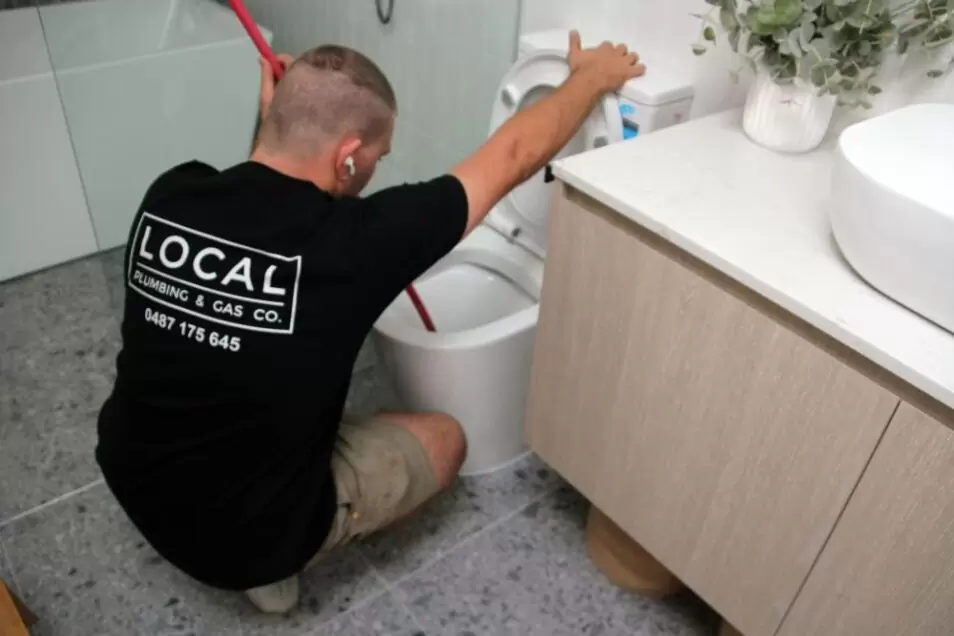
Most Gold Coast residents dealing with a blocked toilet assume the cause is obvious — something flushed that shouldn’t have been. That’s often true, but it’s far from the only explanation. Understanding the common causes of blocked toilets is what separates a permanent fix from a temporary one, and why your toilet keeps blocking despite doing everything right is a question worth answering properly.
On the Gold Coast, toilet blockages have some distinct local characteristics — year-round tree root growth, aging clay pipe infrastructure in established suburbs, and hard water mineral buildup all contribute to recurring blockages in ways that flushing habits alone won’t fix. This article covers each cause individually and pairs it with a specific prevention tip.
Common Causes of Blocked Toilets on the Gold Coast
Understanding why do toilets get blocked starts with recognising that not all blockages have the same origin. Toilet blockage causes on the Gold Coast fall into two broad categories: what goes into the toilet — flushing habits that introduce non-degradable material into the drain — and what’s happening inside the pipes — structural and environmental factors like tree root intrusion, aging clay pipe infrastructure, and hard water mineral buildup that restrict flow regardless of what gets flushed. What causes a blocked toilet in a brand-new home is often very different from what causes one in a property built in the 1970s with established trees in the yard. Both categories are covered below, each paired with a specific prevention tip.
Too Much Toilet Paper
Toilet paper is designed to dissolve in water, but volume matters. A large wad flushed at once can pack into the toilet trap or U-bend before it has time to break down — creating a partial blockage that clears temporarily with plunging but keeps returning until flushing habits change. This is one of the more common causes of a toilet that blocks repeatedly without any obvious explanation, particularly in older Gold Coast properties where low-flush cisterns don’t generate enough water pressure to move a full load cleanly through the drain. What causes a toilet to block isn’t always something dramatic — toilet paper buildup in the trapway accounts for a significant share of call-outs.
How to avoid it: Use moderate amounts per flush. If more is needed, flush in stages rather than loading the bowl all at once. Single-ply toilet paper dissolves more readily than thick multi-ply in water-saving toilets — worth switching to if the toilet blocks regularly without any other apparent cause.
Wet Wipes and Non-Flushable Products
Wet wipes are the single biggest cause of blocked toilets across Queensland’s sewer network — and one of the most common toilet blockage causes we attend on the Gold Coast. The problem is compounded by labelling that actively misleads: can you flush wet wipes down the toilet in Australia? Technically you can, in the sense that they’ll disappear around the bend. But, are flushable wipes really flushable in Australia? No. To genuinely qualify as flushable under the AS/NZS 5328:2022 standard, a product must pass a rigorous disintegration test. Most wet wipes sold in Australian supermarkets — including those explicitly labelled “flushable” — do not meet that standard. They travel far enough into the pipe to seem harmless, then catch on joints, bends, and existing buildup in the drainage system until what started as a partial blockage becomes a fully blocked toilet drain.
Unlike toilet paper, wet wipes are non-biodegradable. They don’t break down in water at any point in the journey through your plumbing system — they simply accumulate until something gives.
Wipes aren’t the only culprit. Knowing what not to flush down the toilet is one of the most effective ways to prevent blocked toilets on the Gold Coast. The following should never go down a toilet — bin them instead: wet wipes and “flushable” wipes, sanitary pads, tampons, baby wipes, dental floss, cotton buds, nappies, paper towels, and cotton balls. None of these break down in water the way toilet paper does, and all are proven common causes of blocked toilets across Queensland’s drainage systems.
The rule is straightforward: only flush the three Ps — pee, poo, and paper. Everything else goes in the bin.
How to avoid it: Place a clearly visible bin next to every toilet in the house. For Gold Coast holiday rental properties, rotating guests are one of the most consistent sources of this type of blockage — unfamiliar bathrooms, no established habits, and a bin that’s hard to find all increase the likelihood of the wrong things being flushed. A small sign near the toilet alongside a visible bin eliminates the majority of guest-related blocked toilet problems before they start.
Foreign Objects in the Toilet Drain
Foreign objects are a more common cause of a blocked toilet drain than most Gold Coast households expect — and one of the more frustrating, because what causes a toilet to block in this case has nothing to do with flushing habits. Children’s toys, toothbrushes, soap wrappers, cotton containers, and small bathroom items either accidentally knocked in or deliberately flushed by curious children account for a significant share of toilet trap blocked call-outs that a plunger simply cannot fix.
This is what distinguishes a foreign object blockage from a paper or wipe blockage: a partial blockage caused by toilet paper will often respond to a plunger or a baking soda and vinegar treatment. A foreign object lodged in the toilet trap or U-bend won’t move with suction — it needs to be physically retrieved with a toilet auger or drain snake. If the object has travelled past the trap and further into the drain connection or sewer pipe, a CCTV drain inspection is the only reliable way to locate it before deciding on a retrieval method. Attempting to force a foreign object through with repeated flushing drives it deeper into the drainage system and turns what was a retrievable obstruction into a sewer line problem requiring significantly more work to resolve.
How to avoid it: Keep the toilet lid closed when the bathroom is unsupervised — this single habit prevents the majority of accidental foreign object blockages. Teach children early what belongs in the toilet and what doesn’t. Remove items like toothbrushes, razors, small containers, and jewellery from the cistern edge and nearby surfaces where they can be knocked in without anyone noticing.
Tree Root Intrusion
Tree root intrusion is one of the most destructive causes of toilet blockages on the Gold Coast — and one of the most locally significant. It’s a problem that’s more acute here than in cooler southern cities for a straightforward reason: Queensland’s warm climate means tree roots grow year-round without the winter dormancy that slows root systems down in Melbourne or Sydney. That accelerates the rate at which roots find and exploit weaknesses in underground sewer pipes, making tree roots blocking toilets on the Gold Coast a persistent issue in established suburbs across the region.
Ficus (fig varieties) and poinciana are the species most commonly implicated in Gold Coast sewer line blockages. Both are widespread in established streets and gardens, and both have aggressive root systems that actively seek out the moisture and nutrients inside sewer pipes. Suburbs with aging clay pipe infrastructure — including Benowa, Ashmore, and Bundall — are particularly vulnerable because clay cracks and joint seals deteriorate faster than modern PVC, giving roots more points of entry.
The mechanism is straightforward but damaging. Roots enter through hairline fractures and deteriorating joint gaps in the sewer pipe, branch rapidly inside once they find the moisture-rich environment, and form a root mat that catches toilet paper, wipes, and debris with every flush until the sewer line is fully blocked. The pattern is distinctive: the toilet appears to clear with plunging, but blockages return within days or weeks because the root mat is still there. A toilet blocking repeatedly on the Gold Coast with no apparent flushing-related cause is one of the clearest indicators of tree root intrusion in the sewer line.
How to avoid it: If ficus or poinciana grow within 10–15 metres of your sewer line, root barriers installed during landscaping or garden renovation work can deflect root growth away from the pipe before intrusion begins. For established trees where barriers aren’t an option, a drain inspection every three to five years provides early warning — tree root intrusion caught at the early stage can be cleared mechanically before it causes structural pipe damage or requires pipe relining to resolve.
Hard Water and Mineral Buildup in Pipes
If your toilet keeps blocking on the Gold Coast and there’s no obvious explanation — nothing unusual being flushed, no tree cover nearby, pipes that appear to be in reasonable condition — hard water mineral buildup is worth investigating. It’s one of the common causes of blocked toilets that rarely gets identified until a plumber is already on site looking for something else, because there’s no single event that triggers it and no dramatic warning sign that something is wrong.
The Gold Coast water supply contains calcium and magnesium. Over time these minerals don’t simply pass through the plumbing system — they deposit on the interior walls of pipes as pipe scale. Scale gradually narrows the pipe’s internal diameter and roughens its surface, creating the conditions for toilet paper, waste, and debris to catch and accumulate where water once flowed freely. A hard water toilet blockage on the Gold Coast develops slowly and silently: the toilet becomes increasingly prone to partial blockages over months or years, the plunger clears it each time, and the cause never becomes obvious because there’s nothing unusual going into the drain.
This is why ‘toilet keeps clogging for no reason’ is such a common search — the reason exists, it’s just invisible without the right diagnostic tools. Mineral buildup is one of the harder toilet blockage causes to confirm without a CCTV drain inspection, which is typically how it’s identified: a plumber investigates a persistent pattern of recurring blockages, runs a camera through the line, and finds scale-narrowed pipes rather than a discrete obstruction.
How to avoid it: Periodic descaling with an enzyme-based drain cleaner breaks down organic buildup before it hardens into scale. A water softener reduces ongoing calcium and magnesium deposition throughout the plumbing system. An annual plumbing inspection catches scale buildup before it reaches blockage point — particularly worthwhile in Gold Coast properties built before 1990, where older pipe surfaces accumulate scale more readily than modern materials.
If you’re worried about using chemicals, take a look at our article on the pros and cons of chemical and manual solutions for toilet clogs to see which sits right with you.
Aging Pipes and Weak Flush Mechanisms
Two related causes that frequently appear together in older Gold Coast properties — and both produce the same outcome: a low-flow toilet that keeps blocking, with partial blockages that clear temporarily but return within days.
Cracked or collapsed clay pipes are a structural issue common in pre-2000 Gold Coast properties where ground movement, root pressure, and general age have caused the pipe walls to fracture or shift. These damaged sections create points where waste and debris accumulate with every flush. The toilet may clear after plunging, but the blockage returns because the pipe itself is the problem — not what’s going into it. Pipe relining addresses this without excavation: a resin liner is inserted inside the damaged section and cured in place, restoring the pipe’s internal surface and eliminating the catch points that cause recurring blockages. For more severe collapse, a plumber will advise whether trenchless repair is viable or whether section replacement is the more practical option.
Weak flush mechanisms are the other half of this equation. Older cisterns and first-generation low-flow models don’t generate enough flush pressure to reliably move waste through the drain — particularly in properties where the pipe run is long or has multiple bends. The toilet keeps blocking despite nothing unusual being flushed, and no amount of plunging resolves it permanently because the cistern simply isn’t doing its job. A modern dual-flush upgrade eliminates weak-flush blockages and improves water efficiency at the same time, making it one of the more straightforward fixes in an older bathroom.
How to avoid it: Cisterns older than 15 years are worth having inspected — a weak flush is often gradual enough that residents adapt to it without realising the mechanism has deteriorated. If the toilet is blocking repeatedly on the Gold Coast and flushing habits aren’t the cause, the flush mechanism is a logical next step to assess. Cracked or collapsed pipe issues require professional diagnosis; a CCTV inspection confirms the extent of the damage before committing to a repair method.
A Blocked Plumbing Vent Stack
Most toilet blockages come down to what’s being flushed or what’s happening underground. But if you’ve addressed both and the toilet is still draining sluggishly with no obvious cause, the plumbing vent stack is worth investigating.
Plumbing vent pipes run from the drainage system up through the roof and regulate air pressure throughout the entire plumbing network. They serve two purposes: allowing sewer gases to escape safely, and maintaining the pressure balance that lets water drain freely through the system. When a vent stack becomes blocked — by leaves, debris, bird nests, or possum activity common in older Gold Coast properties — negative pressure builds inside the drainage system and disrupts drain flow across multiple fixtures at once.
The signs are distinct from a standard toilet blockage. Gurgling that persists after you’ve cleared the toilet itself is the most telling indicator. Slow drainage across more than one fixture simultaneously — the toilet, a basin, and a laundry tub all draining sluggishly at the same time — without evidence of a sewer line blockage also points toward a vent issue. A toilet that drains slowly despite no pan-level obstruction and no history of problematic flushing habits is another prompt to check the vent stack before assuming the problem is in the drain itself.
How to avoid it: Roof vents should be checked and cleared as part of routine plumbing maintenance — annually in properties surrounded by established trees, or every couple of years as a general rule. This isn’t a DIY fix: roof access, safety equipment, and the ability to diagnose vent-related pressure issues correctly all require a licensed plumber.
How to Avoid Blocked Toilets
Prevention comes down to three areas: what goes into the toilet, how well the plumbing system is maintained, and whether aging components have been upgraded before they become a problem.
Flushing habits are the simplest to control. Stick to the three Ps — pee, poo, and toilet paper — and put everything else in the bin. That means wet wipes, sanitary products, cotton pads, and anything marketed as “flushable.” Make sure everyone in the household knows the rule, including children and regular guests. If you’re using larger amounts of toilet paper, flush in stages rather than all at once.
Maintenance catches the causes you can’t see from the surface. An annual plumbing inspection will identify mineral buildup, early root intrusion, and deteriorating pipe joints before any of them reach blockage point. If ficus or poinciana grow within 10–15 metres of your sewer line, a drain inspection every three to five years gives you early warning of root activity. Periodic descaling with an enzyme-based cleaner slows mineral buildup between inspections.
Upgrades are worth considering in older Gold Coast properties. A dual-flush cistern more than 15 years old is likely contributing to weak-flush blockages and is straightforward to replace. Cracked clay pipe sections identified during inspection are best addressed with pipe relining before they collapse or worsen.
For the full prevention breakdown alongside DIY unblocking methods, see our Comprehensive Guide to Clogged Toilets. If the toilet is still blocking despite working through the above, it’s time to look at when to call a blocked toilet plumber.
Toilet Still Blocking? Time to Call a Plumber
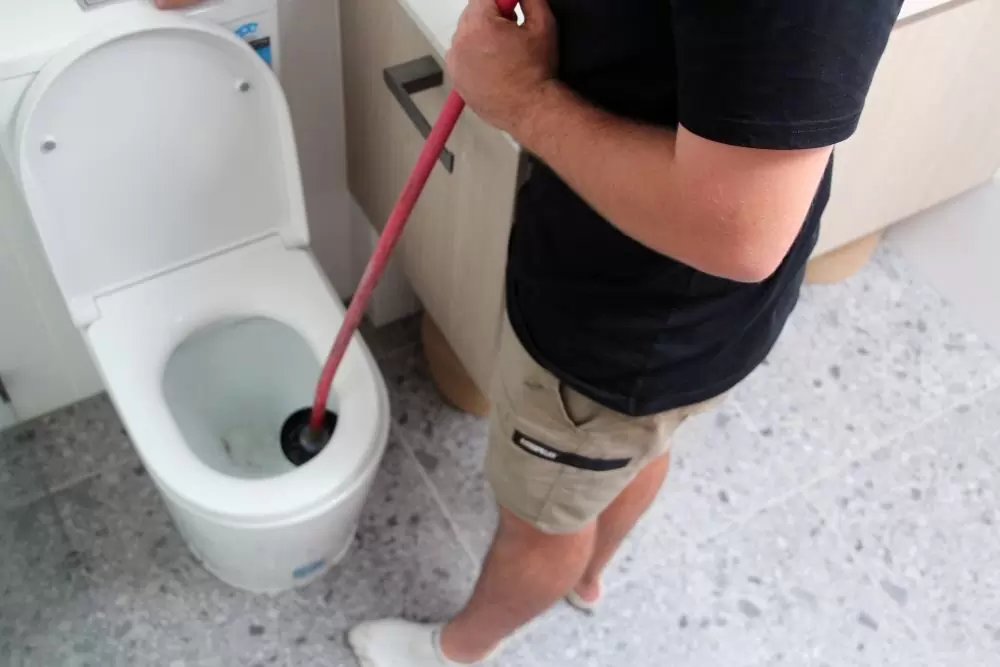
If the toilet is blocking repeatedly on the Gold Coast despite good flushing habits, the cause is almost certainly structural. Tree root intrusion, damaged or deteriorating pipe, mineral buildup, and cisterns no longer fit for purpose are all common causes of blocked toilets that don’t respond to prevention tips — the problem is already established in the plumbing and needs to be diagnosed, not managed.
A CCTV drain inspection identifies the cause in a single visit and points directly to the right fix, whether that’s mechanical root clearing, pipe relining, descaling, or a cistern replacement. There’s no need to keep plunging and hoping.
For recurring blocked toilet on the Gold Coast, look no further than Local Plumbing & Gas Co. We offer a $0 call out fee and 24/7 availability. Contact us to book an assessment.