Chemical vs. Manual Solutions for Toilet Clogs: Pros and Cons
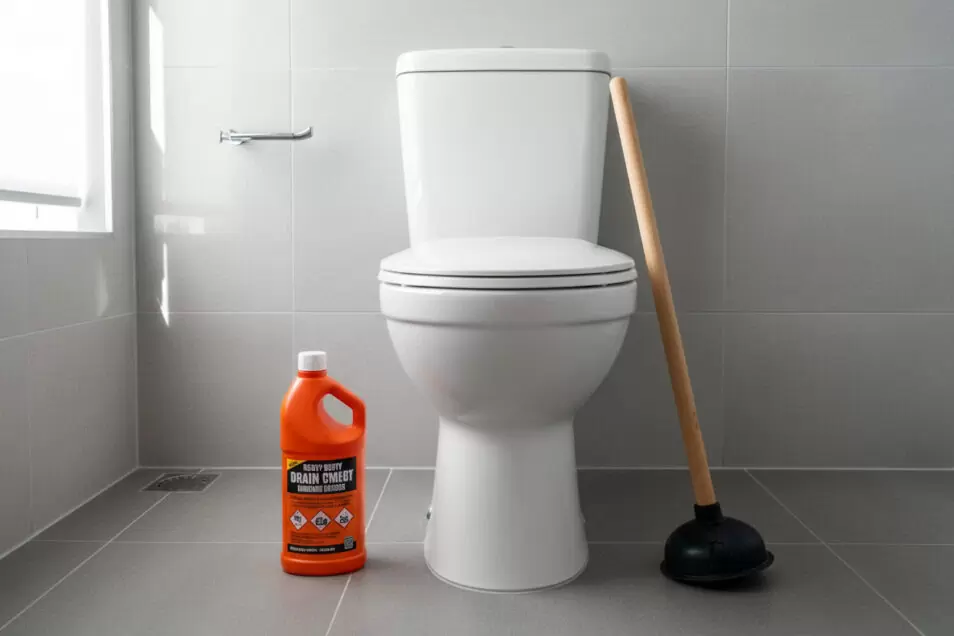
When a toilet blocks on the Gold Coast, most people do the same thing: head to Bunnings or the supermarket, pick up a bottle of caustic drain cleaner, and pour it in. It’s the obvious first move — chemical drain cleaners are cheap, widely available, and the marketing promises fast results. The problem is that most of them aren’t designed for toilets, and using the wrong product on a toilet blockage can leave you with the same clog plus damaged pipes.
Choosing between chemical vs manual solutions for a blocked toilet isn’t complicated once you understand how toilets actually work and what each method can and can’t do. This article covers the three chemical options available to Australian homeowners, why standard caustic drain cleaners fall short on toilets specifically, and which manual methods work best depending on what’s causing the blockage — so you can reach for the right tool rather than the closest one.
Why Toilets Are Different From Other Drains
Before reaching for a chemical drain cleaner, it’s worth understanding why a blocked toilet behaves differently from a blocked sink or shower drain — and why the same product that clears a kitchen drain often does nothing useful in a toilet.
Every toilet has an S-trap built into its base: a curved section of pipe that holds water permanently to block sewer gases from entering the bathroom. That curve is also where most toilet blockages sit. The issue for chemical drain cleaners is a physical one — most standard liquid caustic drain cleaners are denser than water, which means they sink to the bottom of the bowl rather than travelling up and over the trap curve to reach the blockage. The chemical reaction happens in the wrong place, or doesn’t happen at all where it needs to.
This is why the honest answer to does drain cleaner work on toilets is: rarely, and not reliably. Products formulated for sink and shower drains — where the blockage sits directly below the drain opening and gravity works in the product’s favour — aren’t engineered for the geometry of a toilet. Sodium hydroxide sitting in the bowl isn’t clearing the trap.
There’s also a safety issue specific to toilets that’s worth knowing. Caustic drain cleaners generate heat through their chemical reaction, and in an enclosed ceramic bowl that heat has nowhere to go — prolonged exposure can erode the porcelain glaze and, in older Gold Coast properties with clay or ageing PVC pipes, accelerate pipe corrosion at the joints. More importantly: if you’ve poured a chemical drain cleaner into the toilet and it hasn’t worked, do not then use a plunger. Plunging after chemicals forces corrosive liquid back toward the surface and creates a real risk of caustic splash to skin and eyes. If chemicals have gone in, wait — don’t escalate mechanically until the bowl has been thoroughly flushed clear.
Chemical Solutions — What They Are and When They’re Useful
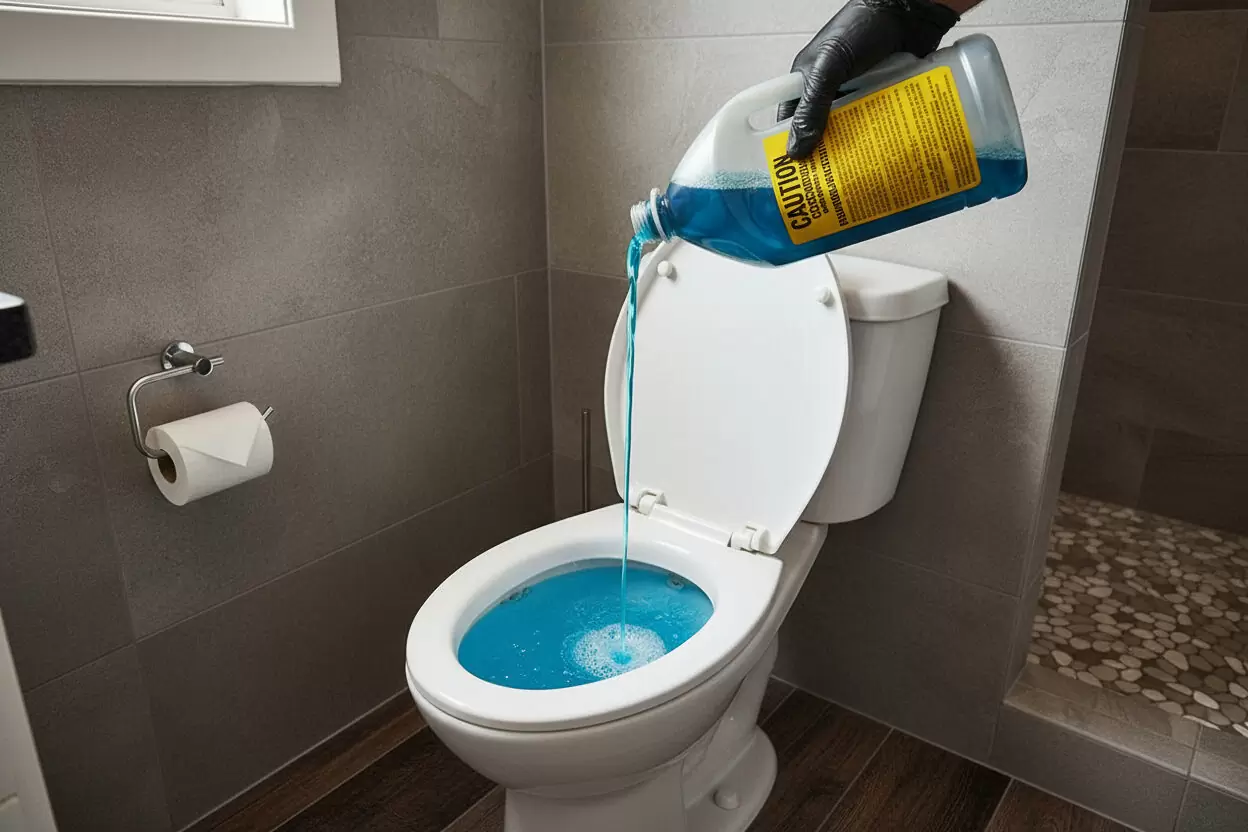
Not all chemical drain cleaners work the same way, and understanding the differences helps clarify why some are more appropriate for toilet use than others.
Caustic drain cleaners
Caustic drain cleaners (sodium hydroxide/lye) are the most common type available at Bunnings and supermarkets — products like Drain Away, Mr Muscle, and similar heavy-duty gel formulas. They work by generating heat through a chemical reaction that breaks down organic material. As covered above, most aren’t formulated for toilets and can’t reliably reach a blockage past the S-trap curve. They’re effective in sink and shower drains where the geometry works in their favour. In toilets, they’re largely the wrong tool.
Oxidising drain cleaners
Oxidising drain cleaners (like bleach or peroxide-based) work by releasing oxygen to degrade organic matter. They’re gentler than caustic products but also less powerful, and carry the same physical limitation in toilets — they still need to reach the blockage to do anything useful.
Acid drain cleaners
Acid drain cleaners (such as sulfuric or hydrochloric acid) are the most aggressive option and are not available to consumers in Australia — these are plumber-only products used in commercial settings. Worth knowing they exist, but not relevant to a DIY context.
Enzyme-based cleaners
Enzyme-based cleaners are the exception worth paying attention to. Unlike caustic or oxidising products, enzyme cleaners use bacteria and natural enzymes to break down organic matter — toilet paper buildup, waste, soap scum — without generating heat or corrosive chemical reactions. They’re safe for all pipe types including PVC and clay, safe for septic systems, and genuinely toilet-safe in a way that standard drain cleaners aren’t. The significant trade-off is speed: enzyme cleaners are slow-acting, typically requiring several hours to overnight to work, and sometimes multiple applications. They’re better suited to maintenance — used monthly to prevent organic buildup before it reaches blockage point — than to clearing an active emergency blockage. As a drain cleaner for a blocked toilet in Australia, they’re the most pipe-friendly chemical option available off the shelf, but if the toilet is fully blocked and you need it cleared today, a manual method will get there faster.
The broader limitation of all chemical solutions — including enzyme cleaners — is that they only work on organic blockages. A foreign object, a solid waste accumulation, tree root intrusion, or a structural pipe issue will not respond to any chemical product. For those causes, manual methods or professional assessment are the only paths forward.
Manual Solutions — The Right First Response for Most Toilet Blockages
For most toilet blockages on the Gold Coast, manual methods are the right first response — not chemicals. The reason is straightforward: the majority of toilet clogs are physical obstructions. Too much toilet paper, a foreign object, solid waste accumulation. These don’t dissolve — they need to be dislodged or broken up mechanically. Physical dislodgement works with the toilet’s geometry rather than against it, reaches the blockage directly, and doesn’t carry the pipe damage or safety risks that caustic products do.
The best approach is to escalate through methods in order, starting with the least invasive.
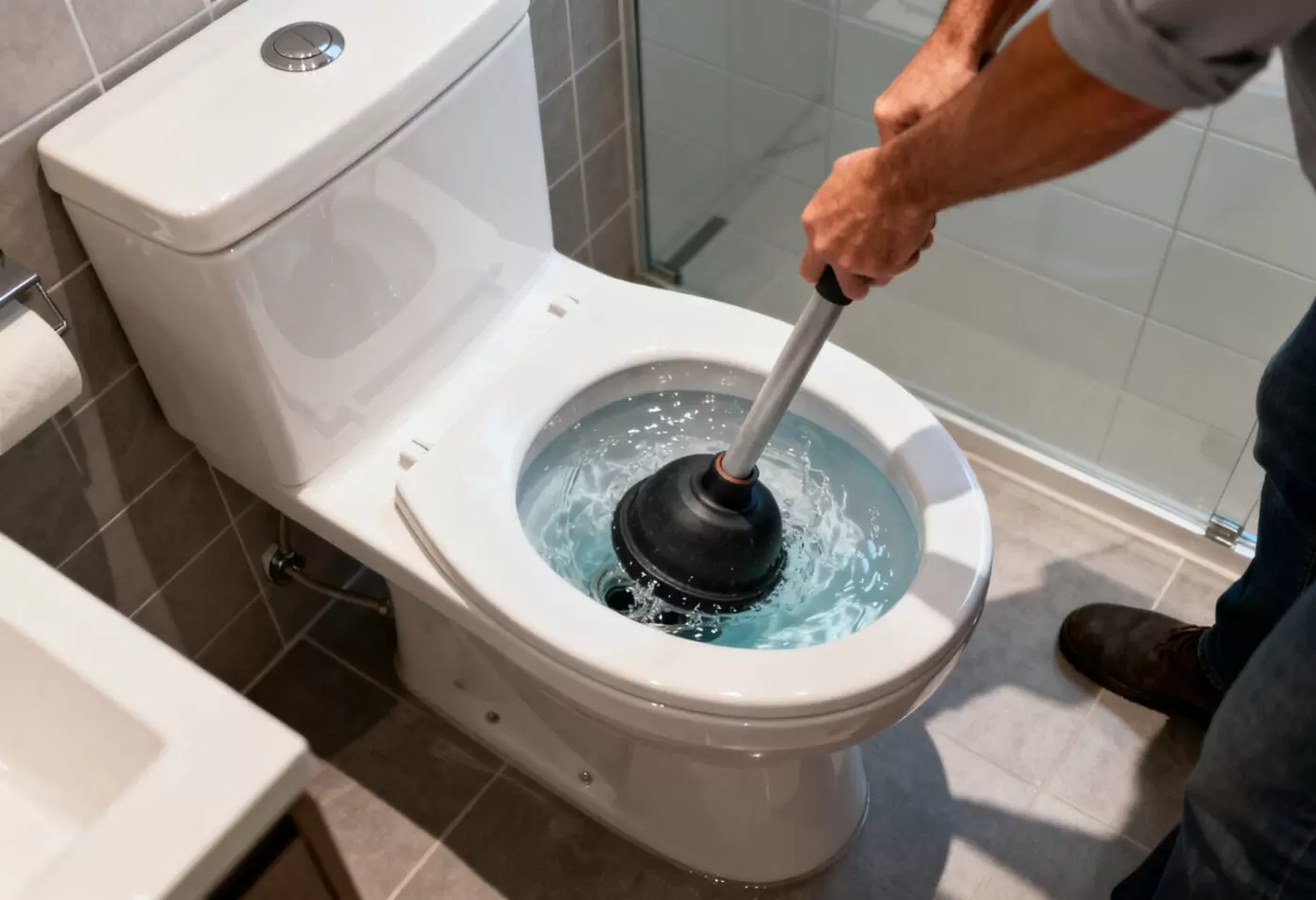
Flange plunger
First move for most blockages.
A flange plunger has a soft rubber flap (the flange) that folds out from inside the cup and seats into the toilet drain opening to create a proper seal. This is important: a standard flat cup plunger — the type sold for sinks — won’t create adequate suction in a toilet drain and is worth skipping entirely. With the flange plunger seated firmly, use slow, deliberate push-pull strokes rather than aggressive force. The goal is to create pressure and vacuum that shifts the obstruction, not to compact it further. If the water level is very high, remove some before plunging to avoid overflow. Five to ten strokes, then check whether water is draining. Repeat as needed.
Baking soda and vinegar
Useful for organic buildup and minor partial blockages.
This isn’t a powerful chemical reaction — the fizzing is largely cosmetic — but the combination can help loosen soft organic matter that’s partially restricting the drain. Pour half a cup of baking soda into the bowl, follow with half a cup of white vinegar, and leave for at least 30 minutes before flushing with hot (not boiling) water. It won’t shift a solid obstruction or a significant paper clog, but it’s a reasonable option if you’re dealing with a slow drain rather than a full blockage and want to avoid chemicals. It’s also the answer to how to unblock a toilet without a plunger if you have neither a plunger nor an auger to hand — with the caveat that it has real limitations.
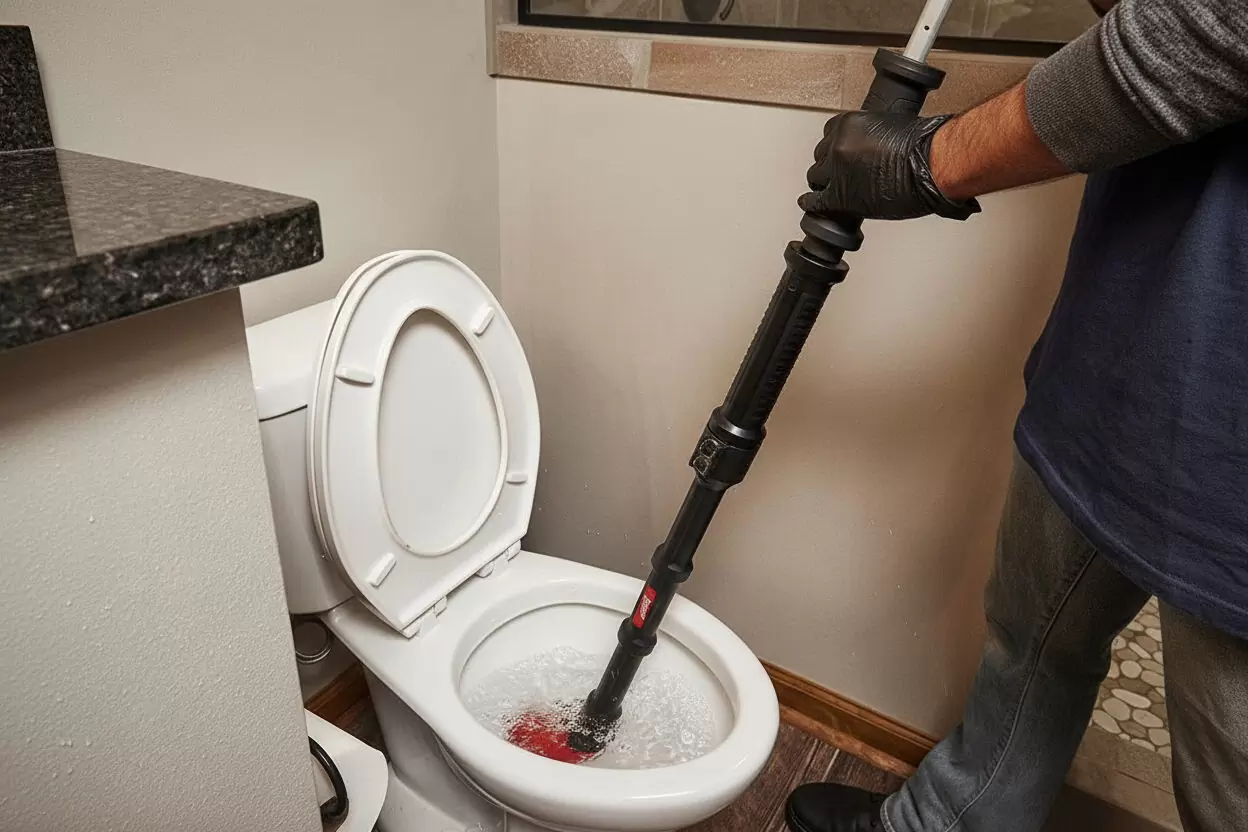
Toilet auger (drain snake)
For blockages that don’t respond to plunging.
A toilet auger is a flexible metal cable with a protective rubber or plastic sleeve that prevents it from scratching the porcelain bowl. The sleeve matters — a standard drain snake without it will mark the ceramic. Feed the cable into the drain opening and crank the handle clockwise to advance it toward the blockage. When you feel resistance, continue rotating to break up or hook the obstruction, then retract. A Kinetic 4.5m toilet auger (available at Bunnings) will reach well past the trap into the drain line for most residential blockages. The auger is the best way to unblock a toilet on the Gold Coast when plunging hasn’t worked — it reaches further, handles solid objects that plunging can’t shift, and gives you a better sense of what you’re dealing with.
If the toilet still isn’t clearing after working through these methods, the blockage is likely beyond the pan or trap. For a full step-by-step walkthrough of each method including what to try first and when to stop, see our DIY plumbing solutions for an emergency blocked toilet.
When Neither Method Will Work
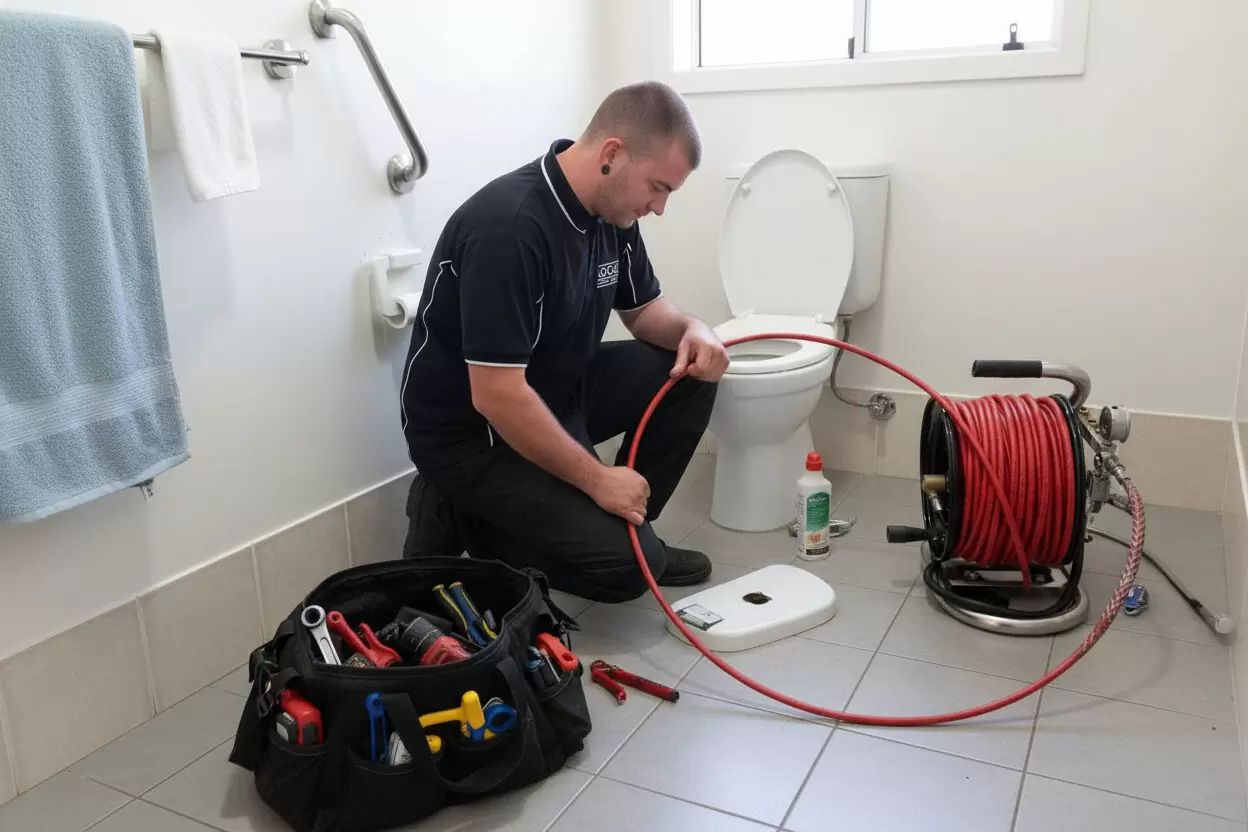
Chemical solutions and manual methods both assume the blockage is something that can be dissolved or dislodged — organic matter, paper buildup, a retrievable object. When a toilet keeps blocking on the Gold Coast despite working through every option, the cause is usually structural, and no product or tool available off the shelf will fix it.
Tree root intrusion, collapsed or cracked pipe sections, significant mineral scale buildup, and blocked vent stacks all produce recurring blockages that clear temporarily with plunging but return within days. The toilet appears to respond to DIY methods because the obstruction shifts enough to restore partial flow — but the underlying cause remains in the pipe. In older Gold Coast properties with clay pipe infrastructure, this pattern is particularly common and particularly easy to misread as a flushing habits problem rather than a plumbing one.
A CCTV drain inspection is the only reliable way to diagnose what’s happening beyond the trap. It identifies the cause, its location, and the appropriate fix — whether that’s mechanical root clearing, pipe relining, descaling, or vent stack clearance — before any work is committed to. For the full breakdown of what causes toilet blockages and how to identify them, see our guide to common causes of blocked toilets and comprehensive guide to clogged toilets.
We specialise in fixing blocked toilets on the Gold Coast — from simple clogs to structural drain issues that DIY methods can’t reach. No call out fee, available 24/7. Contact us to book a service call.
If your drain issues extend beyond the toilet — slow sinks, gurgling floor wastes, or recurring blockages across multiple fixtures — see our guide to expert solutions for blocked drains on the Gold Coast for a full breakdown of professional diagnosis and clearance methods.