Downpipe Repair Or Replacement? Signs Your Downpipes Need Attention
A leaking, cracked or overflowing downpipe can be hard to judge from the ground. The downpipe repair or replacement decision depends on whether the issue is localised damage, a blockage, poor stormwater flow or a downpipe that is no longer doing its job properly.
For Gold Coast homes, this often shows up during heavy rain. Water may spill over the gutter, pool near the base of the house, stain exterior walls or drip from a joint. Coastal conditions, storm debris and older roof drainage systems can also make small downpipe issues worse over time.
This guide explains how to tell whether your downpipe may need repair, replacement, blockage clearing or broader roof plumbing help. We will also cover what you can safely check from ground level, what to avoid, and when to call a licensed plumber or roof plumber.
Do You Need Downpipe Repair, Replacement Or Blockage Clearing?
The right solution depends on what is actually causing the problem. A leaking joint may be repairable, while a rusted, split or undersized downpipe may need replacement. If water is backing up through the gutter or downpipe, the issue may be a blockage rather than damage.
Our plumbers look at the visible symptoms, the condition of the downpipe, how water moves during rain and whether the gutters and stormwater system are working together. That helps avoid replacing something that only needs clearing, or patching a downpipe that is already failing.
| What You Notice | What It May Mean | Best Next Step |
| Water dripping from a joint or one small visible damaged area | The issue may be localised and repairable. | Have the downpipe checked before water damage spreads. |
| Rusted, split, disconnected, poorly placed or undersized downpipes | The downpipe may no longer move roofwater away properly. | Replacement or new installation may be the better long-term option. |
| Water backing up, overflowing near the outlet or slow movement during rain | A blockage may be restricting the downpipe or stormwater flow. | Blocked downpipe clearing may be needed. |
| Gutters and downpipes overflow together, or water enters near the roofline | The issue may involve broader roof drainage. | A roof plumber can check how the gutters, downpipes and drainage work together. |
Signs Your Downpipes Need Attention
Downpipes are easy to ignore until rain exposes a problem. You do not need to climb a ladder to spot many warning signs. Most early clues can be seen safely from ground level during or after rain.
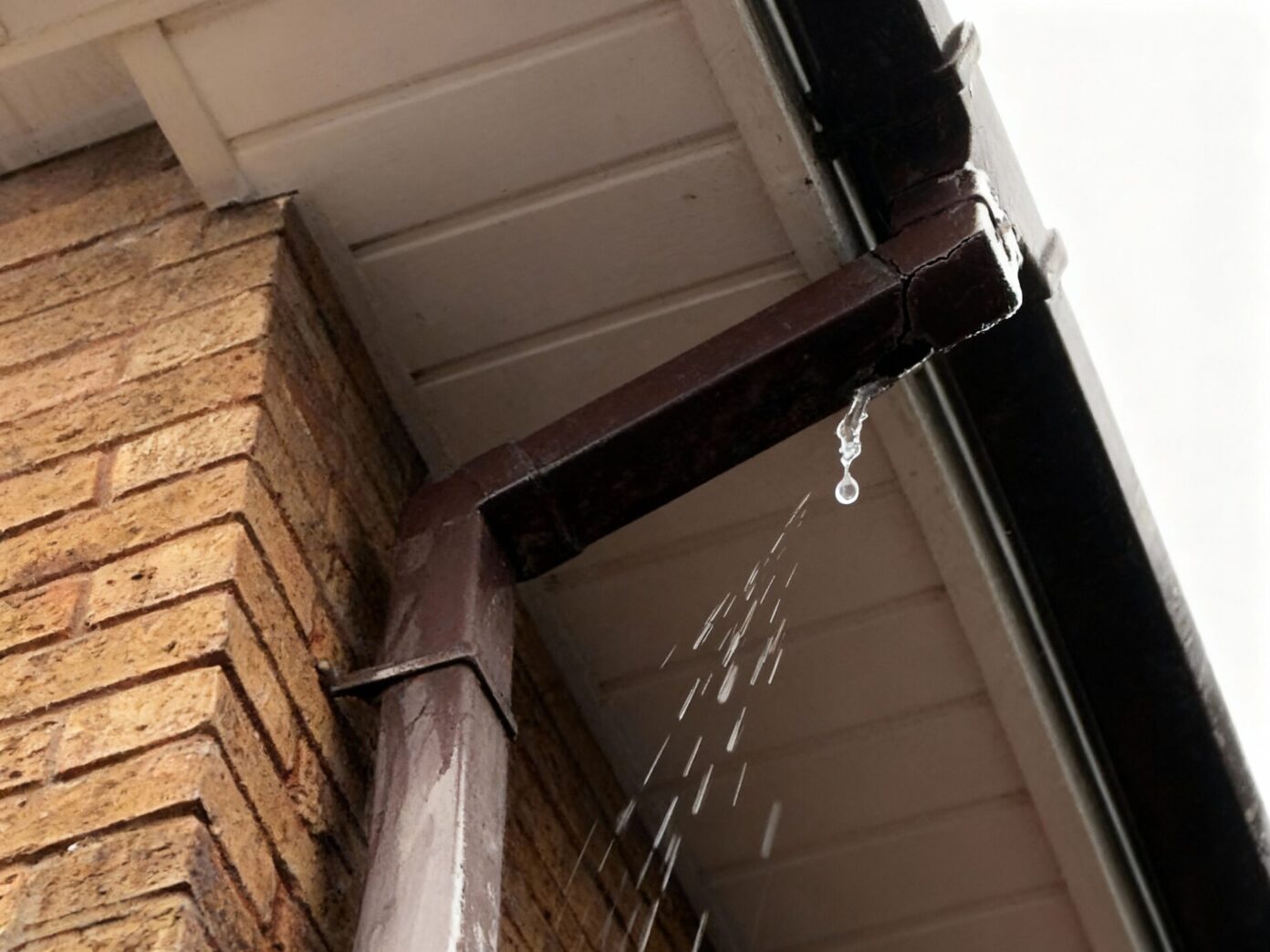
Water Dripping From A Joint: A leaking joint can mean the connection has opened, shifted or deteriorated. It may seem minor, but repeated dripping can stain walls, wet nearby paths and send water where it should not go.
Water Pooling Near The Base Of The House: Downpipes should move roofwater away from the property. If water collects near walls, paths, garden beds or foundations, the outlet, connection or drainage path may need checking.
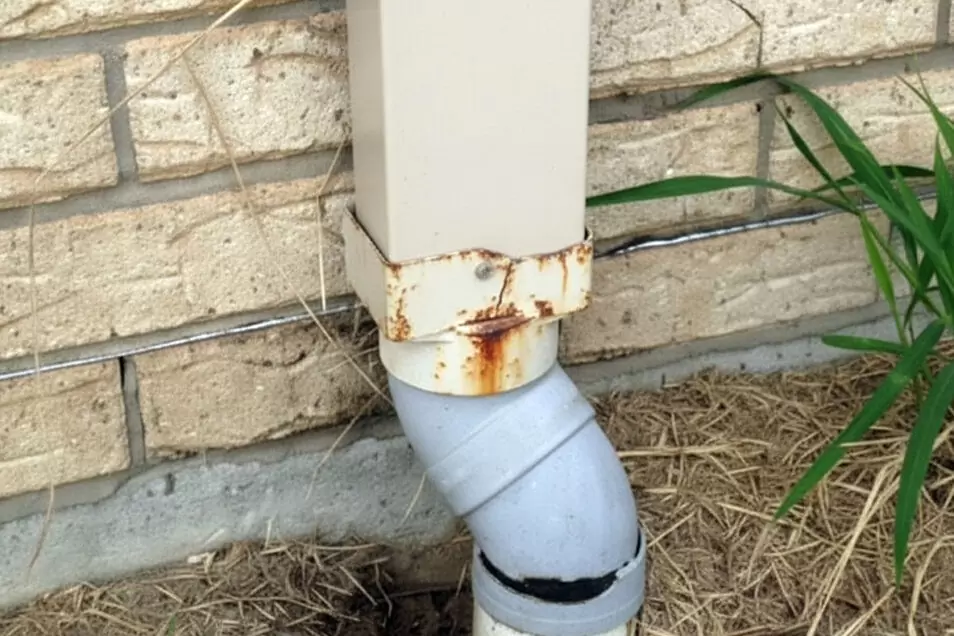
Rust, Splits Or Cracked Sections: Coastal air, age, storm impact and UV exposure can all weaken downpipes over time. Rusted or cracked sections are more likely to leak, split further or fail during heavy rain.
Downpipes Pulling Away From The Wall: Loose brackets or failing fixings can let the downpipe sag or move in wind. Once the pipe starts pulling away, joints can open and water may escape behind or beside the pipe.
Overflow During Heavy Rain: Overflow can happen when the downpipe cannot drain fast enough, is blocked, is undersized or is connected poorly. Gold Coast storms can quickly show up a weak point in the roof drainage system.
Staining, Damp Walls Or Mouldy Smells: Water escaping from a downpipe can run behind walls, along render or into hidden areas. Any dampness near the downpipe path should be checked before it becomes a larger moisture problem.
When A Downpipe Problem May Be Repairable
Some downpipe issues are localised. If the rest of the system is sound, a plumber may be able to address the affected area without replacing every downpipe on the property.
One Leaking Joint: A single joint that drips during rain may be repairable if the surrounding pipe is still in good condition and the downpipe is properly aligned.
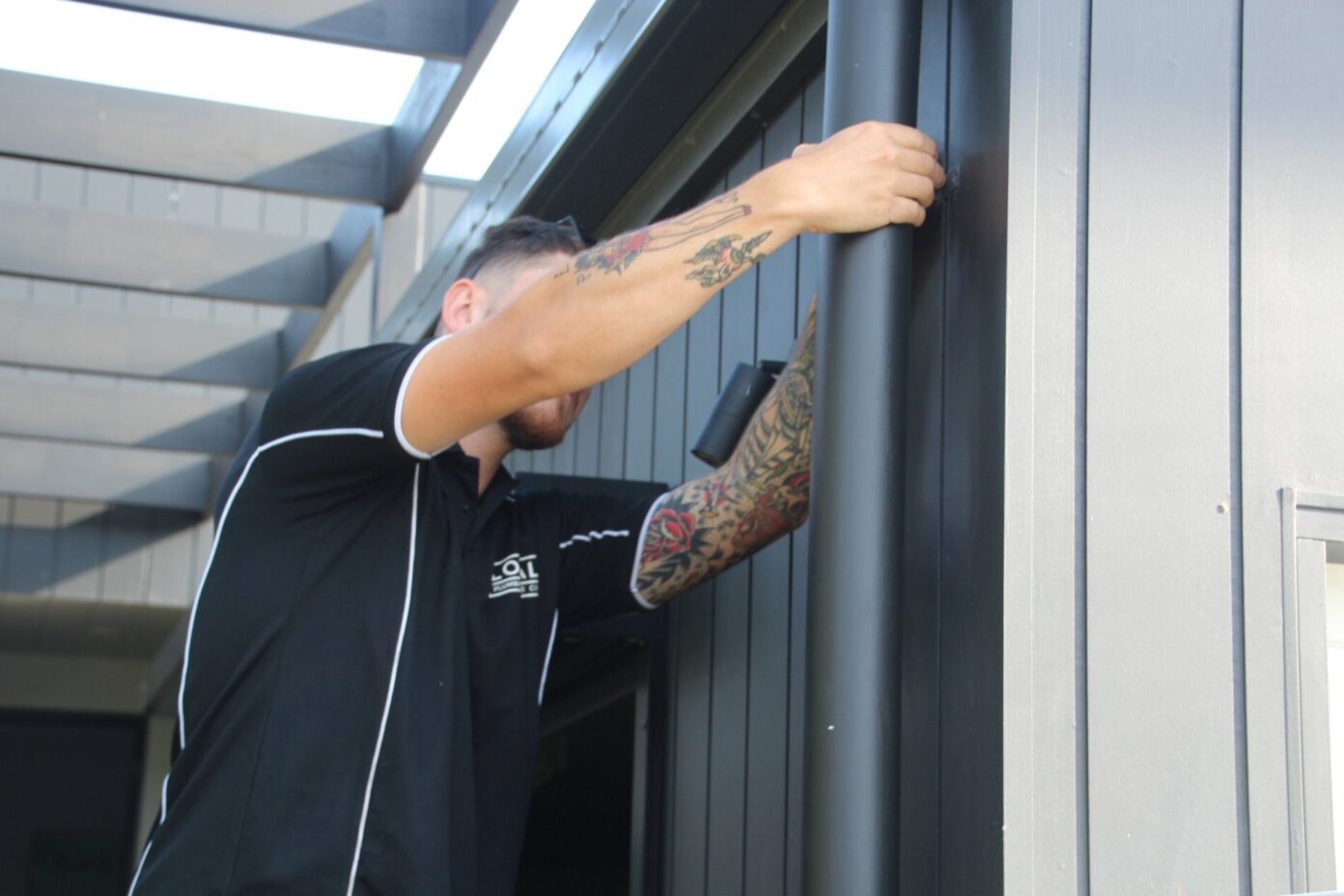
A Loose Bracket Or Fixing: If the downpipe is moving because a bracket has failed, the issue may be limited to securing the pipe correctly. The pipe itself still needs to be checked for cracking, sagging or stress at the joints.
Minor Localised Damage: A small visible damaged area may not mean the whole downpipe run needs replacing. The decision depends on the material, age, access and whether the damage is isolated.
One Affected Section: If one section is damaged but the rest of the run is in reasonable condition, targeted work may be enough. This is different from an older system with several weak points developing at once.
The key is not guessing from one symptom. What looks like a small downpipe repair can sometimes be a sign of poor drainage, a blockage or an ageing system that will keep causing trouble.
When Replacement Or New Downpipe Installation Makes More Sense
Replacement may be the better option when the downpipe is failing, badly positioned or no longer suitable for the amount of roofwater it needs to handle. If your downpipes are rusted, cracked, disconnected, undersized or not directing water away properly, our downpipe installation team can assess whether replacement or a new downpipe setup is the right pathway.
Widespread Rust Or Corrosion: A small rust spot may be localised, but rust across multiple sections often means the material is breaking down. Coastal conditions can speed this up, especially on older metal downpipes.
Cracked, Split Or Disconnected Downpipes: A downpipe that has split, separated or pulled away from the wall may not be able to carry water reliably during heavy rain. Repeated movement can also put stress on the gutter outlet and fixings.
Poor Placement Or Water Discharging In The Wrong Area: A downpipe may still carry water, but discharge it too close to the house, into a poor drainage point or onto an area that already struggles during rain. This may need more than a small repair.
Undersized Downpipes: Some older downpipes struggle with the roof area they are meant to drain. If overflow keeps happening during heavy rain and no blockage is found, sizing and placement need to be checked.
Downpipes Being Updated With Gutter Work: If gutters are being replaced or upgraded, it often makes sense to check whether the downpipes are still suitable. New gutters cannot perform properly if the downpipes cannot move water away.
When The Issue May Actually Be A Blocked Downpipe
A damaged downpipe and a blocked downpipe can look similar from the ground. The main difference is that a blockage restricts water movement, while damage usually lets water escape from a visible area. If water is backing up or overflowing during rain, blocked downpipes may be the more likely issue.
Water Backing Up Into The Gutter: This can happen when leaves, silt or debris stop water from moving down the pipe. The gutter may overflow near the downpipe even if the pipe itself is not cracked.
Slow Or Gurgling Water Movement: If water moves slowly or makes odd sounds during rain, there may be a restriction inside the downpipe or further along the stormwater line.
Recurring Overflow During Heavy Rain: A downpipe that overflows every time rain gets heavy may be blocked, undersized or poorly connected. The cause needs to be checked on site.
Debris Around The Outlet: Leaf litter, roof debris, silt and small branches can collect at outlets and bends. Gold Coast storm season can make this worse, especially where trees overhang the roofline.
Avoid pushing hoses, tools or chemicals into the downpipe. It can damage the pipe, push debris further into the stormwater system or create a bigger blockage. A plumber can clear the restriction safely and check whether there is another cause behind the overflow.
What A Plumber Checks Before Recommending The Next Step
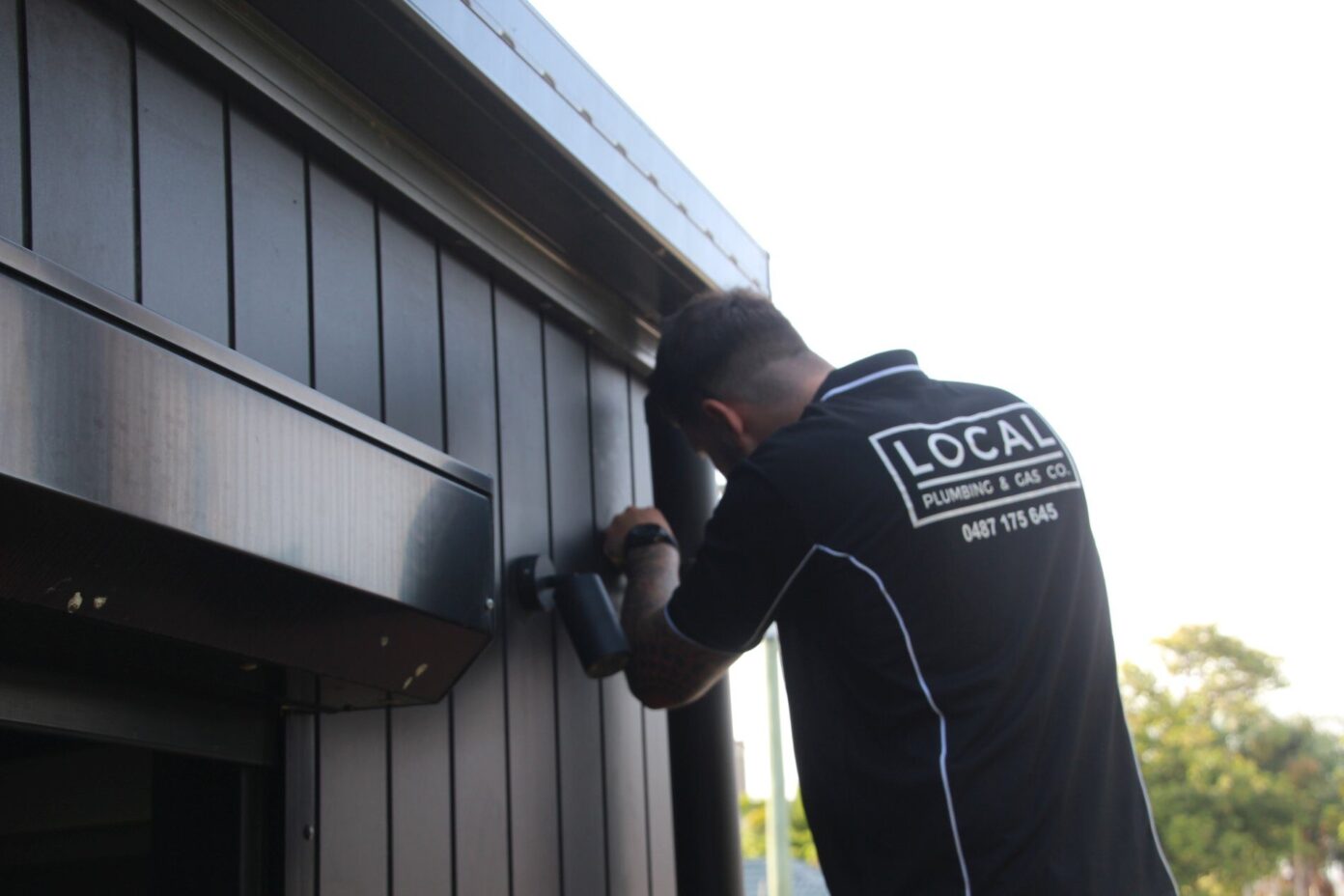
A good downpipe assessment should look beyond the most obvious leak. The aim is to work out whether the problem is localised damage, a blockage, poor installation, an undersized system or a broader roof drainage issue.
The Visible Condition Of The Downpipe: The plumber checks for rust, cracks, loose joints, movement, sagging, missing brackets and damage from storms or impact.
How Water Is Moving During Rain: Overflow patterns matter. Water spilling over the gutter, leaking at a joint or pooling at the outlet can each point to a different cause.
The Gutter And Downpipe Connection: A downpipe cannot work properly if the gutter outlet is blocked, poorly aligned or struggling to move enough water into the pipe.
The Stormwater Discharge Path: Roofwater needs somewhere suitable to go. City of Gold Coast guidance notes that private stormwater drainage should discharge to a lawful point, such as kerb and channel or inter-allotment stormwater drainage.
Whether The Issue Is Part Of A Bigger Roof Plumbing Problem: Sometimes the downpipe is only one part of the issue. If the gutters, downpipes and roof drainage are not working together, our roof plumbers can check the wider system before recommending the next step.
What Affects The Cost Of Downpipe Work?
Downpipe repair or replacement costs depend on what is wrong, how much of the system is affected and what needs to be done safely. Exact pricing should come after an inspection, because a dripping joint, a blocked outlet and a failed downpipe system are very different jobs.
| Cost Factor | Why It Matters |
| Repair, replacement or blockage clearing | The scope changes depending on whether the pipe is damaged, blocked, poorly placed or failing. |
| Number of downpipes affected | One localised issue is different from several downpipes showing rust, leaks or movement. |
| Material and existing condition | PVC, metal and Colorbond-style systems can involve different materials, fixings and matching requirements. |
| Access and height | Difficult access, upper-storey work and unsafe ground conditions can affect the time and equipment required. |
| Stormwater connection | If the problem extends beyond the downpipe outlet, the stormwater path may need further assessment. |
| Related gutter condition | Downpipes rely on gutters feeding them properly. Gutter damage, sagging or poor fall can change the recommendation. |
As a general rule, repeated minor work on an ageing or unsuitable downpipe can become poor value. A plumber should explain whether a local repair is sensible, whether replacement is more practical, or whether the issue is actually a blockage that needs clearing.
Safe Steps Before You Call A Plumber
Downpipe problems often involve rain, slippery surfaces, roof edges and electrical-adjacent risks. Keep your checks simple and ground-level. Do not climb onto the roof, lean over gutters or inspect downpipes from a ladder during wet or unstable conditions.
WorkSafe Queensland identifies fall risks around edges, openings and slippery, sloping or unstable surfaces. It also warns that roof and ceiling-space work can involve risks near electricity. For homeowners, the safest approach is to avoid roof and ladder work and call a licensed plumber or roof plumber when the cause is not obvious from the ground. You can read more from WorkSafe Queensland on work at heights and working on roofs and in ceiling spaces.
Safe steps can include:
- checking visible signs from ground level only
- noting whether the issue happens in light rain or only during heavy rain
- looking for water pooling, damp walls, staining or disconnected sections
- moving belongings away from active water entry if it is safe to do so
- keeping clear of water near electrical fittings, appliances or switchboards
- calling for urgent plumbing help if water is entering the property during heavy rain
Do not cut, seal, patch, remove, replace or alter downpipes yourself. Do not change stormwater connections yourself. A small mistake can send water into the wrong place, create a larger drainage issue or make the original problem harder to diagnose.
Downpipe Repair Or Replacement FAQs
Who Fixes Downpipes?
A licensed plumber or roof plumber can inspect downpipes, check whether the issue is damage or blockage, and explain whether repair, replacement or blocked downpipe clearing is the right next step.
Can A Leaking Downpipe Joint Be Repaired?
A leaking downpipe joint may be repairable if the surrounding pipe is still sound and the issue is localised. If the downpipe is rusted, split, poorly aligned or failing in several areas, replacement may be more practical.
Why Is My Downpipe Overflowing During Heavy Rain?
A downpipe may overflow during heavy rain if it is blocked, undersized, poorly connected or unable to move water away fast enough. The cause needs to be checked on site before deciding whether clearing, repair or replacement is needed.
Should I Fix A Downpipe Myself?
No. You can check visible signs from ground level, but do not cut, seal, patch, remove, replace or alter downpipes yourself. Avoid roof and ladder work, especially during wet or unstable conditions.
Need Help Working Out What Your Downpipes Need?
If you are unsure whether your downpipes need repair, replacement, blockage clearing or broader roof plumbing help, Local Plumbing & Gas Co. can check the issue and explain the safest next step.
Our plumbers look at the visible damage, water flow, roof drainage, gutter connection and stormwater pathway before recommending what makes sense. If the issue is localised, we will explain the repair option. If the downpipe is rusted, undersized, disconnected or no longer suitable, we can talk through replacement or new installation. If water is backing up because of a blockage, we can direct the job toward blocked downpipe clearing instead.
For downpipe problems across the Gold Coast, call Local Plumbing & Gas Co. on 1800 562 251 or contact our team online for practical advice and licensed plumbing support.