How Thermal Leak Detection Works: A Gold Coast Plumber’s Guide To Finding Hidden Water Leaks
Water stains, damp walls, musty smells and a sudden jump in your water bill can all point to a hidden leak. Thermal leak detection helps us find likely moisture patterns by reading temperature changes on walls, ceilings, floors and slabs. It does not let us see through surfaces, but it can show clues that are not visible to the eye.
At Local Plumbing & Gas Co., we use thermal imaging as part of our water leak detection on the Gold Coast. The goal is to narrow down the affected area, confirm what is happening on site and plan the right repair without unnecessary damage to your home.
How Thermal Leak Detection Works
Thermal leak detection uses an infrared camera to read surface temperature differences. A leak can change how nearby materials hold and release heat, especially when moisture has spread through plasterboard, tiles, timber, insulation or concrete. Those changes appear as warmer or cooler patterns on the camera display.
A trained plumber then interprets those patterns alongside the symptoms in the home. Thermal imaging is most useful when it is part of a proper leak investigation, not treated as a stand-alone answer for every leak.
How FLIR Cameras Read Temperature Differences
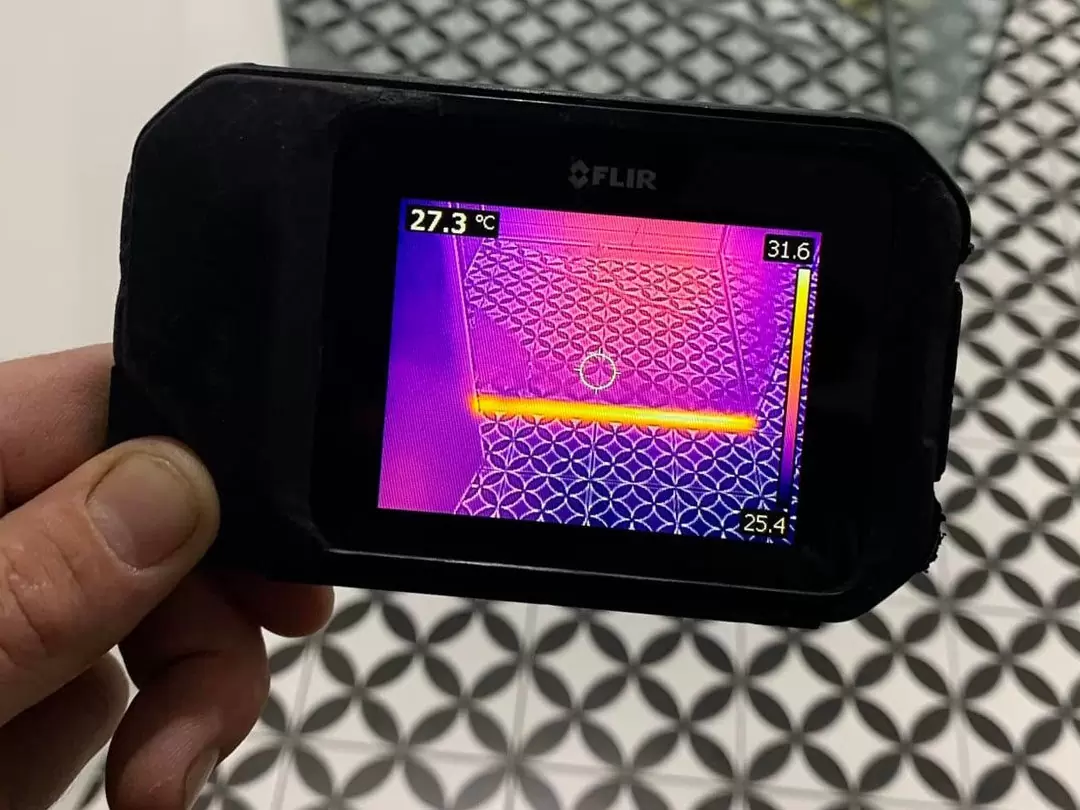
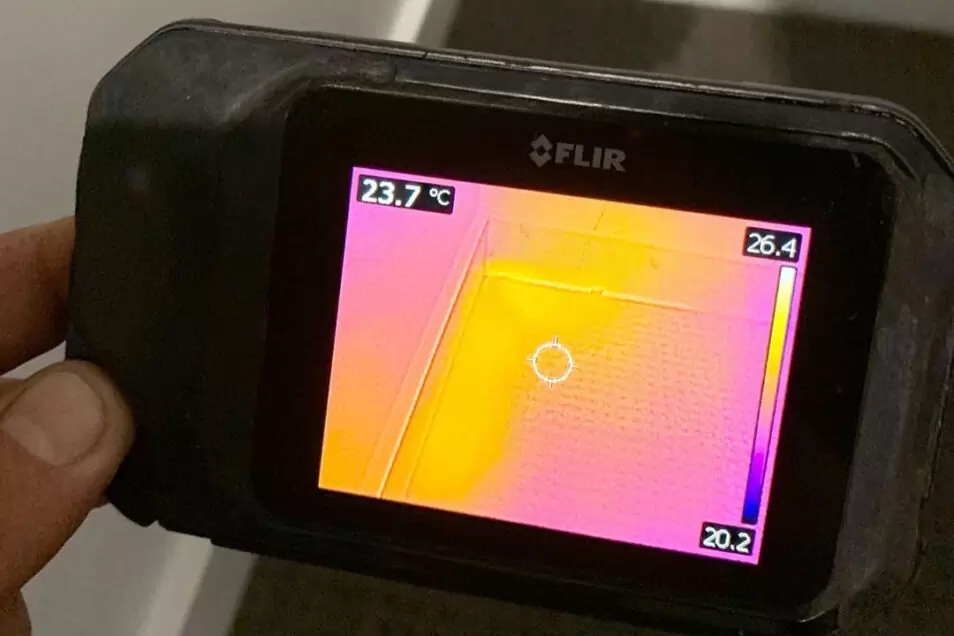
A FLIR thermal imaging camera reads infrared energy from a surface and converts it into a colour image. Warmer areas appear differently from cooler areas, which helps us spot unusual heat patterns across walls, floors and ceilings.
Water can absorb, hold and transfer heat differently from dry building materials. This is why a damp patch behind a wall may show as an irregular cooler area, while a leaking hot water line may show as a warmer trail. The pattern does not automatically prove the exact pipe fault, but it gives us a much clearer place to investigate.
Why Hidden Moisture Can Show Up On Thermal Imaging
Moisture often changes the surface temperature around it. In many homes, wet plasterboard, tiles, timber or insulation cools at a different rate to dry material. That temperature difference is what the camera detects.
For hot water leaks, the opposite can happen. Heat from a pipe may create a warm path under a floor or behind a wall. This can help us trace where the line runs and where the temperature changes become unusual.
Takeaway: thermal imaging highlights likely moisture or heat patterns. A plumber still needs to confirm the cause before repair work begins.
What Thermal Imaging Can And Cannot Tell Us
Thermal imaging is useful because it helps us investigate a hidden leak without cutting into walls or lifting tiles straight away. It also has limits. Understanding those limits helps homeowners make better decisions and avoids the false idea that one camera scan can prove every leak.
| Thermal Imaging Can Help With | Thermal Imaging Cannot Always Confirm |
| Finding unusual hot or cold patterns on walls, floors, ceilings and slabs. | The exact damaged pipe, fitting or waterproofing fault without further checks. |
| Showing where moisture may have travelled behind surfaces. | Leaks hidden too deep inside thick materials or areas with weak temperature contrast. |
| Tracing some hot water line leaks by following heat patterns. | Every slow leak, especially if the surface temperature has not changed enough. |
| Reducing unnecessary exploratory cutting or tile removal. | Whether the problem is plumbing, roof moisture, condensation or another building issue without site context. |
Sun exposure, airflow, insulation, recent shower use, underfloor heating, air conditioning and material thickness can all affect thermal readings. That is why we treat thermal images as strong diagnostic clues, not a shortcut around proper plumbing investigation.
Thermal Imaging Vs Other Leak Detection Methods
Different leaks need different tests. Thermal imaging is often a strong first step for hidden moisture, but it may be used alongside other methods, such as acoustic leak detection, when the leak is slow, deep, underground or difficult to confirm.
| Method | Best For | What It Shows | Important Limitation |
| Thermal Imaging | Hidden moisture behind walls, under floors, near ceilings and around slabs. | Surface temperature changes that may indicate moisture or a leaking pipe. | It does not see through walls or prove every leak on its own. |
| Acoustic Leak Detection | Pressurised pipe leaks where sound can be traced. | Noise or vibration from escaping water. | Very slow leaks or noisy environments can make results harder to interpret. |
| Moisture Checks | Confirming damp materials and mapping how far moisture has spread. | Moisture levels in building materials. | It confirms moisture, but not always the original source. |
| Pressure Testing | Checking whether a water line is losing pressure. | Whether the pipework is holding pressure as expected. | It may confirm a leak exists, but not always the exact location. |
In practice, we choose the method based on the symptoms, property layout and what we find on site. A wet wall, warm floor tile, high water bill and slab concern may each need a slightly different investigation path.
What We Can Find Using Thermal Imaging
Thermal imaging is most helpful when the leak is hidden but still affecting nearby surfaces. It can help us narrow down where moisture is sitting, where heat is moving unusually or where water may have travelled away from the original source.
Leaks Hidden Behind Walls And Ceilings
Water can move through wall cavities, ceiling spaces and framing before it becomes visible. A thermal scan can show cooler or warmer patches that suggest moisture is collecting behind the surface. This is useful when a room smells musty, paint starts bubbling or a ceiling stain appears away from the likely source.
Leaks Under Floors And Tiles
Tiles, floating floors and concrete can hide moisture for a long time. Thermal imaging may show a temperature pattern across the floor that helps us trace where water has spread. In bathrooms, kitchens and laundries, this can help separate a plumbing concern from surface water or a localised spill.
Hot Water Line Leaks
A leaking hot water line can create a warm trail behind a wall or under flooring. Thermal imaging can help us follow that heat pattern and identify where it changes unexpectedly. This can be useful in homes where pipework is concealed under tiles, in walls or through a slab.
Slab And Underground Leak Clues
Slab leaks and underground leaks can be harder to confirm because the pipework is deeper and the surrounding material can affect readings. Thermal imaging may still help identify unusual heat transfer or moisture movement, especially around hot water lines. For deeper or more complex issues, we may recommend underground leak detection so the cause can be checked with the right equipment.
Roof Leaks And Moisture Intrusion
Thermal imaging can sometimes help identify damp insulation or ceiling areas affected by roof moisture. This is most useful from safe internal areas. We do not recommend homeowners climb onto a wet roof or enter unsafe roof spaces to investigate a leak themselves.
When Thermal Imaging Is The Best Option
This approach is a good option when you can see or smell signs of water but cannot find the source. It is also useful when you want a non-invasive first step before cutting into walls, lifting tiles or opening up finished surfaces.
It may be worth booking a leak investigation if you notice:
- a sudden increase in your water bill with no clear reason
- damp smells that keep coming back
- water stains on ceilings, walls or skirting boards
- warm or cool patches on flooring
- wet carpet, swollen cabinetry or bubbling paint
- signs of moisture after heavy Gold Coast rain
- suspected leaks behind bathroom, kitchen or laundry tiles
- possible slab leaks or water movement under flooring
If water is spreading quickly, near electrical fittings or causing active damage, treat it as urgent. Turn off the water at the mains if you can do so safely and call a licensed plumber.
How Thermal Imaging Helps With Repairs
Finding the affected area early can make the repair process more targeted. Instead of opening up large sections of wall or flooring, a plumber can use thermal readings to decide where to investigate first. This can reduce disruption and help protect finished surfaces.
Once the source is confirmed, we can explain the likely repair options and carry out the required water leak repairs. The right repair depends on the pipe location, access, material, age of the plumbing and the amount of moisture damage already present.
Thermal imaging also helps with communication. When homeowners can see the moisture pattern on screen, it is easier to understand why further testing or a targeted repair is recommended.
FAQs About Thermal Leak Detection
These are the questions Gold Coast homeowners often ask when they are dealing with hidden moisture or trying to understand how a plumber finds a concealed leak.
What is thermal leak detection?
Thermal leak detection is a non-invasive way to identify likely moisture patterns by reading surface temperature changes. A thermal camera does not see through walls, but it can show unusual hot or cold areas that may point to hidden water behind plasterboard, tiles, floors, ceilings or slabs.
How Does A Thermal Leak Detector Work?
A thermal leak detector reads infrared energy from a surface and turns it into a colour image. Wet materials often hold or release heat differently from dry materials, so moisture can appear as an unusual temperature pattern. A plumber then interprets that pattern alongside other site evidence.
Can Plumbers Detect Leaks Behind Walls?
Yes, plumbers can often detect leaks behind walls using tools such as thermal imaging, moisture checks, acoustic equipment and pressure testing. The right method depends on the symptoms and the type of pipework. Thermal imaging can help narrow down the affected area before any wall is opened.
Can Thermal Imaging Find All Water Leaks?
No, thermal imaging cannot find all water leaks. It works best when a leak creates a clear temperature difference near the surface. Very slow leaks, deep underground leaks or moisture hidden inside thick materials may need other tests before the source can be confirmed.
Can Thermal Cameras See Through Walls?
No, thermal cameras cannot see through walls. They detect temperature differences on the surface of the wall, floor or ceiling. Those temperature patterns can suggest that moisture or heat is present behind the surface, but the cause still needs to be confirmed by a trained plumber.
Does Thermal Imaging Work On Hot And Cold Water Lines?
Thermal imaging can work on both hot and cold water lines when there is enough temperature contrast. Hot water leaks may create warm trails, while cold water leaks may create cooler damp areas. If the contrast is weak, another leak detection method may be needed.
How Long Does Thermal Leak Detection Take?
The scan itself may be relatively quick, but the total inspection time depends on the size of the property, the leak symptoms and how far moisture has travelled. A plumber may also need to check water pressure, moisture levels or nearby fixtures before recommending a repair.
Is Thermal Leak Detection Accurate?
It can be very useful when the readings are interpreted correctly, but accuracy depends on the property conditions and the plumber’s investigation. It is best treated as part of a broader leak detection process, not a guarantee that every leak source will be confirmed by camera alone.
Need Help Finding A Hidden Water Leak?
Thermal imaging can be a smart first step when you suspect a hidden leak but cannot see where the water is coming from. It helps identify likely moisture patterns, reduces guesswork and gives us a clearer path before repair work begins.
If you have damp walls, unexplained stains, warm floor patches, musty smells or a higher-than-usual water bill, call Local Plumbing & Gas Co. for practical help with water leak detection on the Gold Coast. We can inspect the issue, explain what we find and recommend the safest next step before the leak causes more damage.