Signs Your Gutters Need Repair: What Gold Coast Homeowners Should Look For
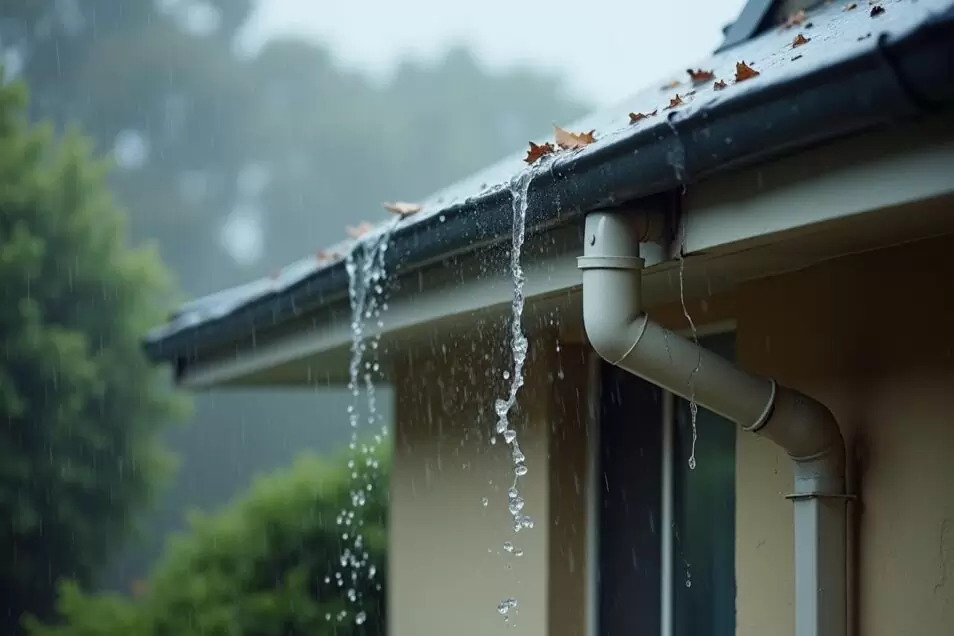
The signs your gutters need repair are not always dramatic. Sometimes they show up as a small drip at a join, water running down a wall, or a section of gutter that only overflows during heavy rain. On the Gold Coast, storm season and coastal conditions can make weak guttering show up quickly.
As local roof plumbers, we look at what the gutter is doing during rain, where the water is going, and whether the issue is localised enough to repair. This guide explains the warning signs to watch for from ground level, what they can mean, and when it is time to get professional help.
What Are The Main Signs Your Gutters Need Repair?
The main signs your gutters need repair include sagging sections, overflowing water, cracked or rusty areas, leaking joins, damp walls, peeling paint, mould smells, water running behind the gutter and persistent drips around corners or outlets. These signs usually mean the gutter system is no longer moving rainwater away from the property properly.
The issue may be repairable if the damage is limited to a section, join, bracket, outlet or connection. If the problem is widespread, keeps returning, or the guttering is badly corroded, replacement may be the safer long-term option.
| Visible Sign | What It Can Mean | Likely Service Pathway |
| Sagging or pulling away | Loose brackets, extra weight, failing fixings or gutter movement | Often repair-led |
| Overflow during rain | Blocked outlet, poor flow, damaged section or drainage issue | Repair-led after inspection |
| Cracks, local rust or leaking joins | Small damaged areas, worn seals or corrosion starting in one section | Usually repair-led if localised |
| Water behind the gutter | Misalignment, gaps, loose sections or water missing the gutter line | Repair-led, but check damage extent |
| Widespread rust or repeated leaks | Old or failing guttering that may no longer hold repairs well | Replacement decision point |
Sagging Gutters Or Sections Pulling Away

Sagging gutters are one of the easiest warning signs to spot from the ground. You may notice a section dipping, pulling slightly away from the fascia, or sitting lower than the rest of the gutter line.
This often happens when leaves, storm debris or trapped water add weight to the system. Loose brackets, rusted fasteners and older fixings can also let the gutter move out of position. Once that happens, rainwater may overflow, spill behind the gutter or miss the downpipe connection.
A slightly sagging section may be repairable if the guttering itself is still in reasonable condition. Our plumbers usually check whether the brackets, fall, joins and surrounding fascia are sound before recommending the right repair. If the guttering has pulled badly away or the fascia is damaged, the fix may need more than a quick realignment.
Water Overflowing During Heavy Gold Coast Rain
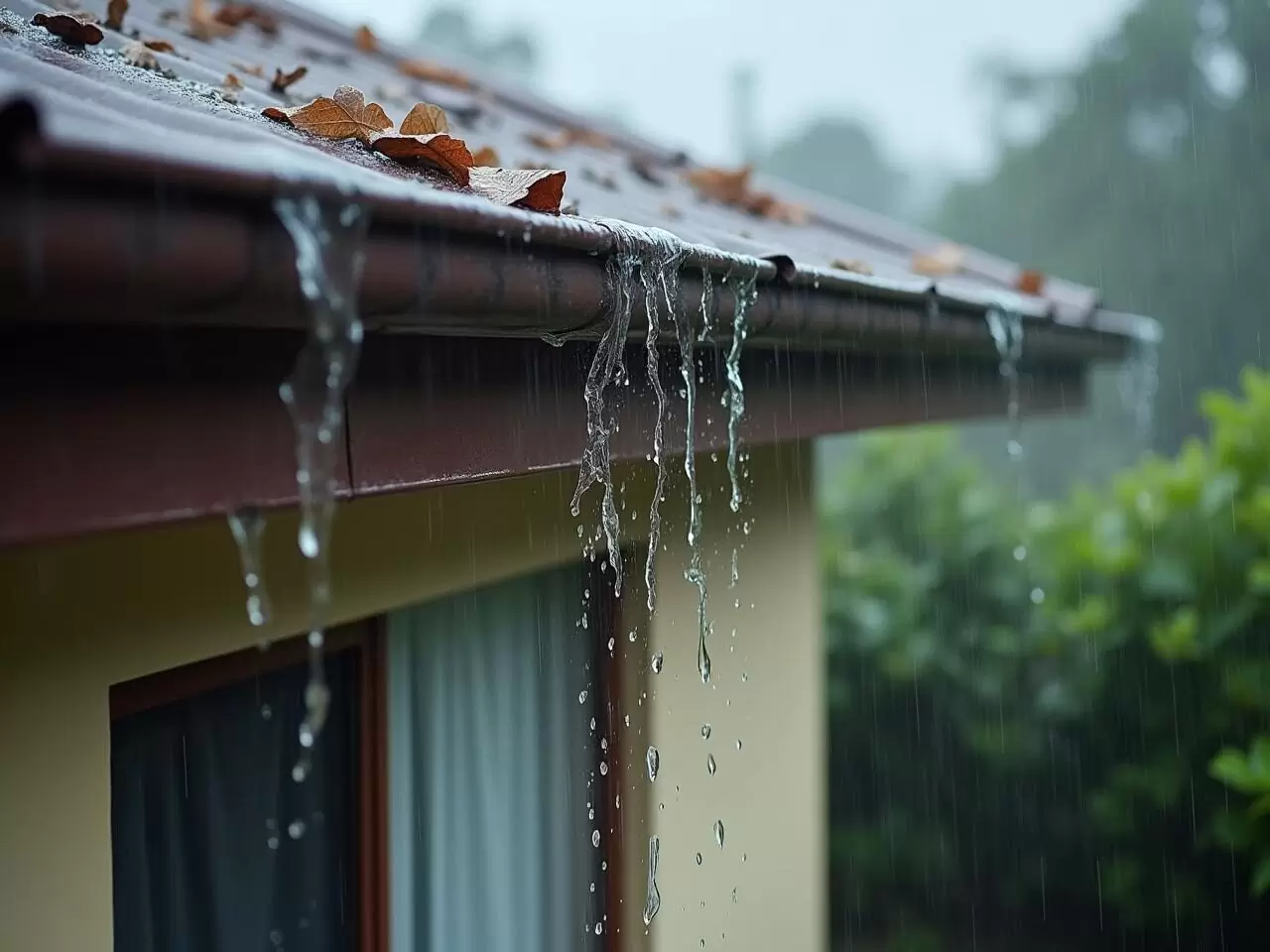
Overflowing gutters are common during heavy Gold Coast rain, but they should not be ignored. If water is spilling over the front, back or corners of the gutter, the system is not carrying water away properly.
The cause may be a blocked outlet, trapped leaf debris, a damaged section, poor gutter fall, a loose connection or a downpipe issue. Sometimes the gutter looks fine in dry weather, then fails as soon as a storm puts it under load.
Do not climb onto the roof or inspect gutters from a ladder to find the cause. Check only what you can see safely from ground level, such as where the overflow starts, whether it happens in one spot, and whether water is pooling near the building. Those details can help a roof plumber work out whether the issue is likely to be a repair, a downpipe problem or a broader roof plumbing concern.
Cracks, Localised Rust Or Leaking Joins

Small cracks, local rust spots and leaking joins are signs your gutters need repair before the damage spreads. You may see water dripping from a join, rust bubbling along one section, or a split that only leaks during steady rain.
Localised damage is often repair-led. A roof plumber can check whether the affected section can be resealed, refixed, realigned or partly replaced. The important point is to confirm the cause rather than covering the leak and hoping it holds through the next storm.
Temporary tapes, silicone patches and quick sealants are not a reliable long-term answer for gutter problems. They can hide the symptom for a short time while water continues to track behind the gutter, into eaves or down external walls. If the same spot keeps leaking, the join, fall, corrosion or connection needs to be checked properly.
For localised leaks, dripping joins or damaged sections, our gutter repairs service is the main pathway for getting the issue inspected and repaired safely.
Water Running Behind Gutters Or Down Walls
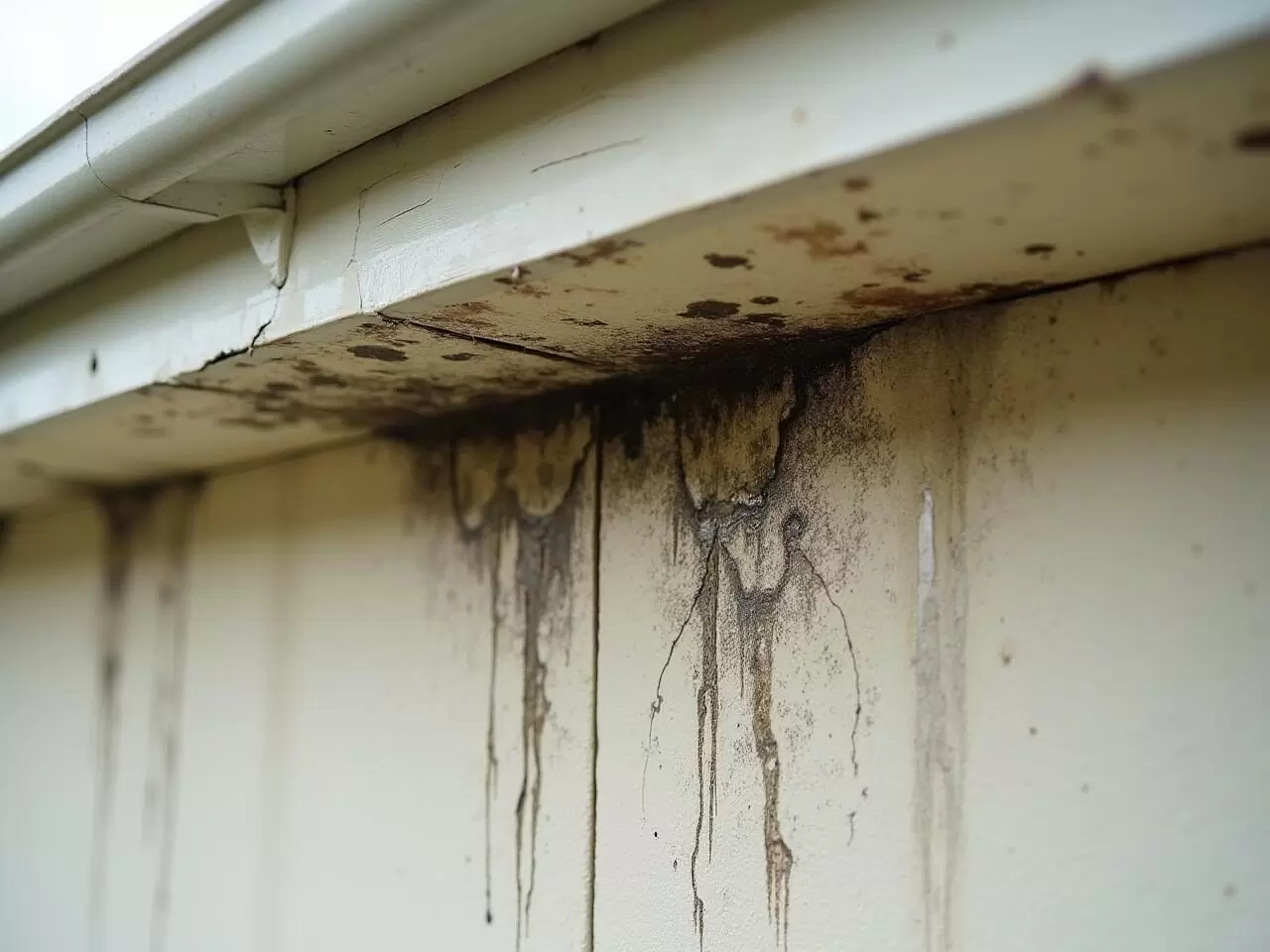
Water running behind the gutter is a serious warning sign because the problem is not always visible from inside the home straight away. You may notice damp patches on external walls, water marks under the eaves, peeling paint, mould smells or staining around the fascia line.
This can happen when gutters pull away, sit out of alignment, overflow at the back edge, or leak at a joint near a wall. On coastal Gold Coast homes, corrosion and storm exposure can make these weak points worse over time.
If water is entering the roof edge, wall cavity or ceiling space, the issue can move beyond a simple gutter nuisance. Keep away from wet areas near electrical fittings and avoid touching damp ceiling materials. If water is actively entering the property during heavy rain, call for urgent plumbing help.
Persistent Drips Around Corners, Outlets Or Connections

A steady drip from a gutter corner, outlet or join after rain can mean the seal has failed, the section has moved, or water is sitting where it should not. It may look minor, but repeated dripping can stain walls, pool near paths and keep moisture around the roof edge.
Corners and outlets take a lot of strain because they are key points where water changes direction or leaves the gutter. If a blocked outlet or restricted downpipe pushes water back into the gutter, it can place extra pressure on joins and weak seals.
Our plumbers look at the whole water path, not only the drip. That can include the fall of the gutter, the condition of the join, the outlet connection and whether the downpipe is taking water away properly. This helps avoid repairing the same leak more than once.
When Gutter Repair May Not Be Enough
Not every gutter problem is best solved with another repair. If the damage is widespread or the guttering is near the end of its life, repairing one section may only delay the next leak.
Replacement may need to be considered if there is widespread rust, multiple leaks across the guttering, repeated repairs that do not last, poor fall across long sections, major storm damage, or guttering pulling badly away from the fascia.
That decision should be made after the guttering is inspected. If the system is failing rather than locally damaged, our gutter replacement service is the better pathway to understand the next step.
What To Do If You Notice Gutter Problems
If you notice gutter problems, the safest first step is to observe what you can from ground level and avoid roof or ladder work. Working at heights and working around roof edges can be dangerous, especially in wet weather.
For safety-sensitive roof access, WorkSafe Queensland identifies working at heights and working near electricity as major risks. Keep your checks simple and safe.
- Look for visible water stains, damp eaves, mould smells or peeling paint from ground level.
- Note where overflow happens during rain and whether it is one section or several areas.
- Check inside for ceiling stains, musty smells or water marks after heavy rain.
- Move belongings away from active internal leaks if you can do so safely.
- Keep away from water near light fittings, power points or electrical equipment.
- Call a licensed plumber or roof plumber if water is entering the property, the gutter is pulling away, or the issue keeps returning.
How Local Plumbing & Gas Co. Can Help With Gutter Repairs
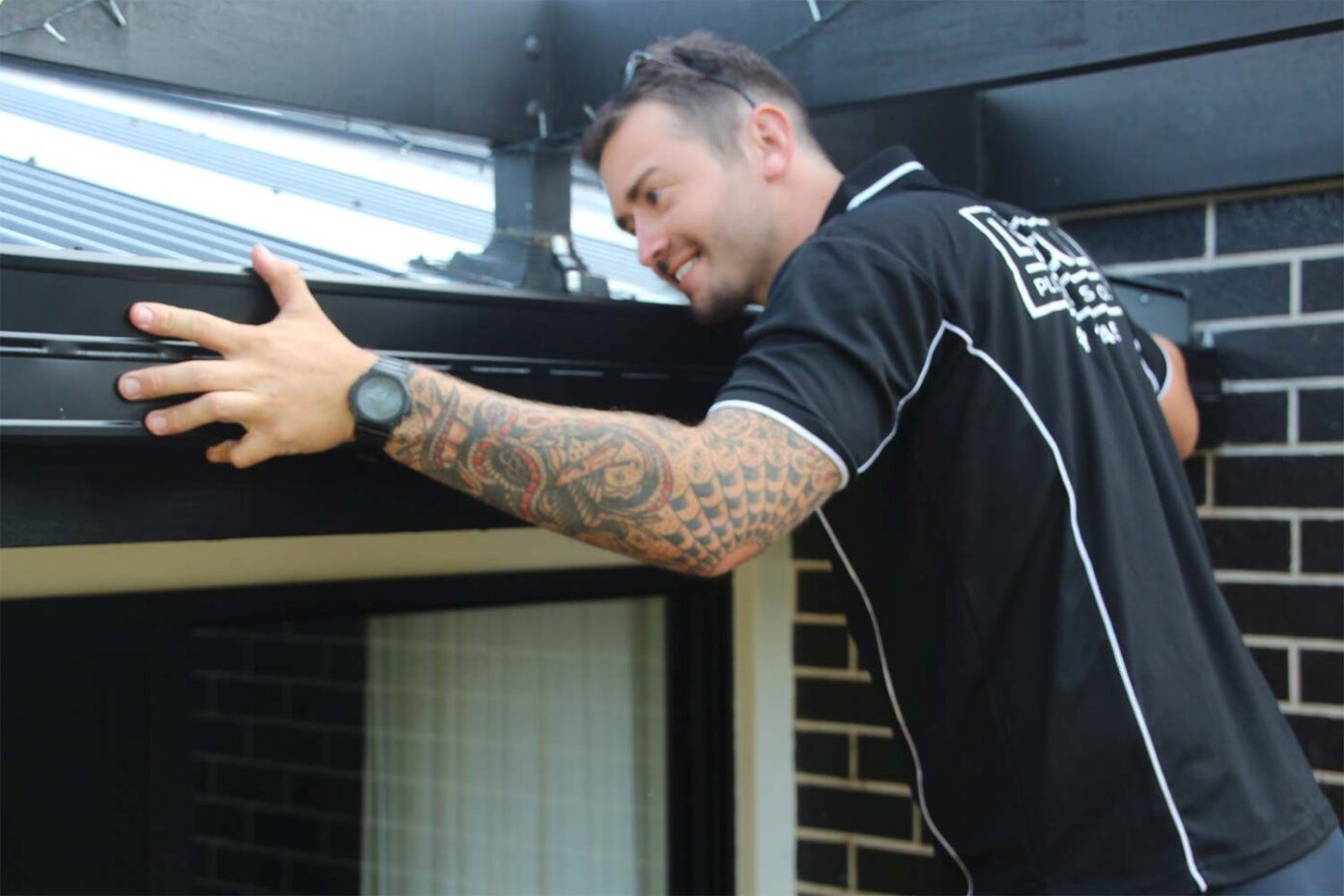
Local Plumbing & Gas Co. helps Gold Coast homeowners work out whether a gutter issue is repairable, whether a section needs replacing, or whether the broader roof plumbing system needs attention.
We check the visible symptom and the likely cause. That may include leaking joins, sagging sections, loose brackets, damaged outlets, corrosion, water running behind the gutter or overflow that only appears during heavy rain.
If the issue is repair-led, we can help with practical gutter repairs that suit the condition of the guttering and the way water moves around your property. If replacement makes more sense, we will explain why before you commit to the next step.
Frequently Asked Questions
How Do I Know If My Gutters Need Repair?
You may need gutter repair if you notice sagging sections, overflowing water, leaking joins, local rust, damp eaves, peeling paint, water running behind the gutter or persistent drips after rain. These signs suggest the gutter system is not moving water away from the home properly.
Can Leaking Gutters Damage Walls Or Ceilings?
Yes, leaking gutters can damage walls or ceilings if water tracks behind the gutter, enters the roof edge or runs into wall cavities. You may notice stains, damp smells, peeling paint or ceiling marks after heavy rain. If water is near electrical fittings, keep clear and call for help.
Should Sagging Gutters Be Repaired Or Replaced?
Sagging gutters may be repairable if the issue is limited to loose brackets, local movement or a small affected section. Replacement may be needed if the guttering has pulled badly away, is badly rusted, has poor fall across longer sections, or keeps failing after previous repairs.
Can Blocked Gutters Cause Roof Leaks?
Blocked gutters can contribute to roof leaks because trapped water may overflow, back up under roof edges or run behind the gutter line. The exact cause needs to be checked on site because roof leaks can also involve flashing, downpipes, stormwater drainage or other roof plumbing issues.
Who Should I Call For Gutter Repairs On The Gold Coast?
Call a licensed plumber or roof plumber for gutter repairs on the Gold Coast. Gutter work can involve height, roof edges, stormwater flow and hidden water damage, so it is safer to have the issue inspected and repaired by someone who understands roof plumbing.
Get Gutter Problems Checked Before Heavy Rain Makes Them Worse
Gutter problems often look small in dry weather, then become obvious as soon as heavy rain hits. A leaking join, sagging section or overflowing corner can send water into places it should never go.
If you have noticed the signs your gutters need repair, Local Plumbing & Gas Co. can inspect the issue and explain the safest next step. Call 1800 562 251 or submit an online enquiry to book gutter help with our Gold Coast team.